Aphorism: On Religious Criminalization, Part Deux

By Madison S. Hughes (08.30.2011)

On 08.29.2011 I posted I posted a YouTube video on my blog titled, “Janet Porter Prays for Control of Government,” below which I penned the caption, “WOW! How disturbing is this? Religion should be criminalized before we find ourselves back in the Dark Ages.” As one may imagine, some found my caption as disturbing as the video itself. What follows is my response to a comment left by a fellow blogger. “dannyraysongs”responded to my comment as follows:

“I have to say that I’m also very disturbed by your comment Madison. It’s seems apparent here on your blog that you desire to get your message out. Are you really that naive to think that Christians, Jews and/or Muslims don’t desire to have more of their fellow believers in government positions? It seems quite apparent (or at least inferred) in your blog that you would like less devout believers (or atheists) in positions of government. Should we now police what people pray? Who would qualify to be hired as a Prayer Police Officer? I really do appreciate your talent as a writer, but I’m one of those right-wing Christians you obviously feel are so dangerous and deserving of criminal charges.”

I responded as follows:

Continue reading

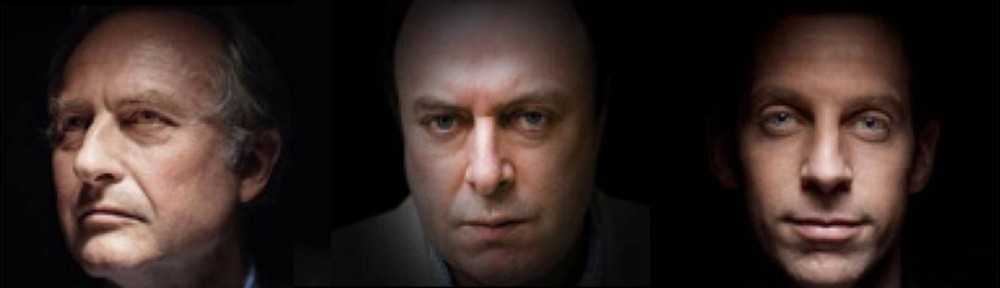
Sam Harris, “Whither Eagleman?”

. . . Dawkins, Dennett, Hitchens, and I have never claimed that we can establish the nonexistence of God. We simply observe, as you do, that the God of Abraham has the same empirical status as Poseidon and that the books attesting to His existence bear every sign of having been cobbled together by ignorant mortals. This is all one needs to judge Judaism, Christianity, and Islam to be incorrigible cults peddling ancient mythology . . . In place of genuine ignorance, humility, and wonder—and even in place of real knowledge—religious people erect false idols and false certainties. Read more . . .  

Aphorism: On Religious Criminalization

By Madison S. Hughes (08.29.2011)

On 08.29.2011 I posted I posted a YouTube video on my blog titled, “Janet Porter Prays for Control of Government,” below which I penned the caption, “WOW! How disturbing is this? Religion should be criminalized before we find ourselves back in the Dark Ages.” As one may imagine, some found my caption as disturbing as the video itself. What follows is my response to a comment left by a fellow blogger. “jodaph970”responded to my comment as follows:

“Sure, it’s disturbing, but I also find your comment (“Religion should be criminalized before we find ourselves back in the Dark Ages.”) to be just as disturbing. Embracing a tyrannical dictation of what others should and shouldn’t do is the very antithesis of America.”

I responded as follows:

Continue reading

Where do Observant Jews and Conservative Christians get their Morals, Theologically Speaking?

. . . Now, it’s true that the Bible may well be the most cherry-picked, quote-mined text of all time. Given this, . . . Indeed, the more grim, authoritarian theme of the Old Testament appears – to me, at least – to jibe far better with modern day American Conservative values of respect for authority, tradition, corporal punishment, capital punishment, and thoroughly retributive justice . . . What exactly is the Right taking from the New Testament? Read more . . . 

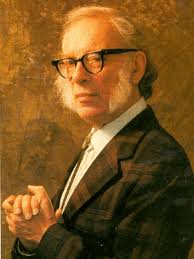
Quote: Isaac Asimov

Isaac Asimov, Ph.D.  (c. January 2, 1920 – April 6, 1992)
Russian-born American Author and Biochemist, Humorist, Atheist

I don’t believe in an afterlife, so I don’t have to spend my whole life fearing hell, or fearing heaven even more. For whatever the tortures of hell, I think the boredom of heaven would be even worse.

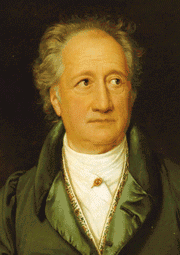
Johann Wolfgang von Goethe, FFRF: Freethought of the Day

On this date in 1749, Germany’s most famous poet, Johann Wolfgang von Goethe,was born in Frankfurt am Main, to a comfortable bourgeois family. He began studying law at Leipzig University at the age of 16, and practiced law briefly before devoting most of his life to writing poetry, plays and novels. In 1773, Goethe wrote the powerful poem “Prometheus” [quoted below], which urged human beings to believe in themselves, and not in the gods. His first novel was The Sorrows of Young Werther (1774), a semi-autobiographical tragedy about a doomed love affair. A line from that novel: “We are so constituted that we believe the most incredible things: and, once they are engraved upon the memory, woe to him who would endeavor to erase them.” In his 1797 Hermann and Dorothea, Goethe observed: “The happy do not believe in miracles.” Goethe typified the Sturm und Drang romantic movement, celebrating the individual. The Grand Duke of Weimar appointed him an administrator in 1775, where, according to historians, Goethe turned Weimar into “the Athens of Germany.” In supervising the arts and sciences, Goethe discovered the human intermaxilary bone, also known as the Goethe bone (1784), among other discoveries. After a sojourn in Italy from 1786 to 1788, Goethe returned to his art, writing for a journal edited by freethinker Friedrich von Schiller and starting his own. Inspired by Christopher Marlowe‘s play “Faust,” Goethe wrote part 1 of his most famous play, published in 1808. Part 2 was published in 1832. From Part 1, Scene 9: “The church alone beyond all question/ Has for ill-gotten gains the right digestion.” Although Goethe’s beliefs ebbed and flowed, he was uniformly anti-Christian and, at most, a pantheist. D. 1832.

Continue reading

Homer & the Gospel of Mark: Is Mark’s Gospel Based on Homer’s Odyssey?

 . . . [O]ne recent line of research has involved tracing much in Mark to the influence of the Greek epics of Homer. Dennis MacDonald is the primary proponent of this view, and his argument has been that the gospel of Mark was written as a conscious and deliberate imitation of the stories in the Homeric epics. The goal was to give readers a familiar context to discover the superiority of Christ and Christianity over pagan gods and beliefs . . . MacDonald argues that Mark’s tales about Jesus are explicit imitations of Homeric tales about characters like Odysseus, Circe, Polyphemus, Aeolus, Achilles, and Agamemnon and his wife, Clytemnestra. Read more . . . 

The Most Hated Family in America Documentary

The Most Hated Family in America is a TV documentary written and presented by the BBC’s Louis Theroux about the family at the heart of the Westboro Baptist Church. At the heart of the documentary is the Westboro Baptist Church (WBC), headed by Fred Phelps and based in Topeka, Kansas.

The church bases its work around the belief expressed by its best known slogan and the address of its primary website, “God hates fags,” and expresses the opinion, based on its Biblical interpretation, that nearly every tragedy in the world is God’s punishment for homosexuality – specifically society’s increasing tolerance and acceptance of gay, lesbian, and bisexual people. It maintains that God hates homosexuals above all other kinds of “sinners,” and that homosexuality should be a capital crime.

See, ” Louis Theroux: Most Hated Family In America,” via Documentary Heaven.