Where do Observant Jews and Conservative Christians get their Morals, Theologically Speaking?

. . . Now, it’s true that the Bible may well be the most cherry-picked, quote-mined text of all time. Given this, . . . Indeed, the more grim, authoritarian theme of the Old Testament appears – to me, at least – to jibe far better with modern day American Conservative values of respect for authority, tradition, corporal punishment, capital punishment, and thoroughly retributive justice . . . What exactly is the Right taking from the New Testament? Read more . . . 

Essay: “Modern American Poetry” / Madison S. Hughes

By Madison S. Hughes (12.16.2009)

While enrolled as a student in a graduate Poetry class, I was pleasantly surprised to find many peculiar, and fascinating aspects to modern American poetry. To begin with, I had a huge misconception of American poets as a whole. I was under the impression that American poets would not be anywhere near the caliber of their European counterparts. What I found was that not only were they, dare I say, probably some of the best poets in all of history, but additionally, the historical time frame of which they were part concerning class, race and politics was absolutely fascinating. My goal in this paper is to dispel some of the misconceptions others may have concerning American poets, and share some of the fascinating history of their time. Continue reading →

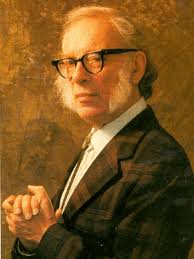
Quote: Isaac Asimov

Isaac Asimov, Ph.D.  (c. January 2, 1920 – April 6, 1992)
Russian-born American Author and Biochemist, Humorist, Atheist

I don’t believe in an afterlife, so I don’t have to spend my whole life fearing hell, or fearing heaven even more. For whatever the tortures of hell, I think the boredom of heaven would be even worse.

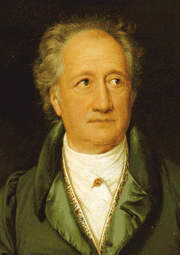
Johann Wolfgang von Goethe, FFRF: Freethought of the Day

On this date in 1749, Germany’s most famous poet, Johann Wolfgang von Goethe,was born in Frankfurt am Main, to a comfortable bourgeois family. He began studying law at Leipzig University at the age of 16, and practiced law briefly before devoting most of his life to writing poetry, plays and novels. In 1773, Goethe wrote the powerful poem “Prometheus” [quoted below], which urged human beings to believe in themselves, and not in the gods. His first novel was The Sorrows of Young Werther (1774), a semi-autobiographical tragedy about a doomed love affair. A line from that novel: “We are so constituted that we believe the most incredible things: and, once they are engraved upon the memory, woe to him who would endeavor to erase them.” In his 1797 Hermann and Dorothea, Goethe observed: “The happy do not believe in miracles.” Goethe typified the Sturm und Drang romantic movement, celebrating the individual. The Grand Duke of Weimar appointed him an administrator in 1775, where, according to historians, Goethe turned Weimar into “the Athens of Germany.” In supervising the arts and sciences, Goethe discovered the human intermaxilary bone, also known as the Goethe bone (1784), among other discoveries. After a sojourn in Italy from 1786 to 1788, Goethe returned to his art, writing for a journal edited by freethinker Friedrich von Schiller and starting his own. Inspired by Christopher Marlowe‘s play “Faust,” Goethe wrote part 1 of his most famous play, published in 1808. Part 2 was published in 1832. From Part 1, Scene 9: “The church alone beyond all question/ Has for ill-gotten gains the right digestion.” Although Goethe’s beliefs ebbed and flowed, he was uniformly anti-Christian and, at most, a pantheist. D. 1832.

Continue reading →

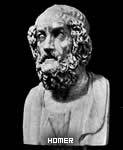
Homer & the Gospel of Mark: Is Mark’s Gospel Based on Homer’s Odyssey?

 . . . [O]ne recent line of research has involved tracing much in Mark to the influence of the Greek epics of Homer. Dennis MacDonald is the primary proponent of this view, and his argument has been that the gospel of Mark was written as a conscious and deliberate imitation of the stories in the Homeric epics. The goal was to give readers a familiar context to discover the superiority of Christ and Christianity over pagan gods and beliefs . . . MacDonald argues that Mark’s tales about Jesus are explicit imitations of Homeric tales about characters like Odysseus, Circe, Polyphemus, Aeolus, Achilles, and Agamemnon and his wife, Clytemnestra. Read more . . . 

The Most Hated Family in America Documentary

The Most Hated Family in America is a TV documentary written and presented by the BBC’s Louis Theroux about the family at the heart of the Westboro Baptist Church. At the heart of the documentary is the Westboro Baptist Church (WBC), headed by Fred Phelps and based in Topeka, Kansas.

The church bases its work around the belief expressed by its best known slogan and the address of its primary website, “God hates fags,” and expresses the opinion, based on its Biblical interpretation, that nearly every tragedy in the world is God’s punishment for homosexuality – specifically society’s increasing tolerance and acceptance of gay, lesbian, and bisexual people. It maintains that God hates homosexuals above all other kinds of “sinners,” and that homosexuality should be a capital crime.

See, ” Louis Theroux: Most Hated Family In America,” via Documentary Heaven.

British Secularists Plan Big Protest Against the Vatican’s Interference in Politics

NEXT month – on September 17 – a large-scale protest by secular groups against the Vatican’s persistent interference in politics is due to take place in London . . . Marco Tranchino, who is organising the Secular Europe Campaign, said: We want a secular Europe where there is room for everyone, whether they have a religious belief or not, where policy is directed only by elected politicians, not by priests who are answerable to no-one. Read more . . . 

Wall Street Journal Exposes Egregious Tax-free Housing Privileges for Clergy

Our Constitution protects citizens from having religion forced upon them, meaning no individual should have to subsidize anyone else’s religious organization through their tax dollars. As federal lawmakers consider ways to reduce our country’s deficit, these costly tax privileges for ministers should be among the first programs put on the chopping block. Read more . . . 

There is no controversy; creationism doesn’t belong in our public schools.

The sole purpose of creationism is to defend the biblical book of Genesis. It exists only for religious purposes and it abandons anything that even remotely approaching scientific research. Creationism is an insult to the collective of human intelligence.  Living a life according to myths and fairy tales is nothing short of childish and those who would cause detriment to the proper education of our children amount to little more than the “blind leading the blind” and they should have no place in deciding who is taught anything. Read more . . .