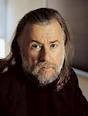
Quote: Mark Edmundson

Mark Edmundson, Ph.D. (born 1952)
University Professor, Romantic Poetry, Literary Theory, Author

On how reading changes your life?

We all get socialized one time around, by parents, and teachers, and schools, and Priests, and Ministers, and what have you. And for a lot of people those values will do just fine. They’re community values, they’re long tested, and they’re long tried, and there’s something eminently respectable about them.

But there are other people who, for whatever reason, just don’t fit right in established values. They find themselves disgruntled, dissatisfied even with the best-meaning teachers, and parents. Those people go a lot of different directions, but one of the best directions they can go is to become obsessed readers. They read, and read, and read until they start to find people who see the world in way that’s akin to theirs. And then they feel that they’re home. They got a second set of parents, and a second set of teachers, and they can start seeing the world for themselves. A little bit different from the way the community sees it often.
Quote: Arthur M. Schlesinger, Jr.

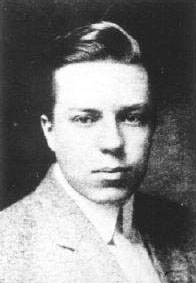
Image via Wikipedia

Arthur M. Schlesinger, Jr., (October 15, 1917 – February 28, 2007)
American Historian, Writer, Social Critic, and Agnostic

As a historian, I confess to a certain amusement when I hear the Judeo-Christian tradition praised as the source of our concern for human rights. In fact, the great religious ages were notable for their indifference to human rights in the contemporary sense. They were notorious not only for acquiescence in poverty, inequality, exploitation and oppression but for enthusiastic justifications of slavery, persecution, abandonment of small children, torture, genocide.

Telling Children Hell Exists is Child Abuse

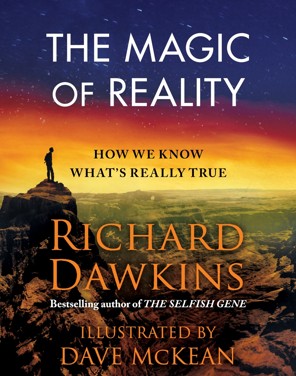
Mythology, which is a category that for Dawkins includes all the major religions, is explained as a collection of ancient Just So stories. Enjoyable as the story of the Garden of Eden (or the Tasmanian aboriginal god who forgot to give humans knees) may be, The Magic of Reality insists that science composes stories as thrilling as those found in Homer, as profound as the story of Job, and as entertaining as anything written by Kipling. . . The other one I thought of was telling children about hell – telling them they’ll go to hell if they’re bad. I think that’s child abuse because it’s genuinely frightening. Many adults, especially Catholic adults, never really manage to shake off that fear and guilt they imbibed as children . . . ” “It’s almost as though in America they’ve become a different species. There are the reasonable people who are educated and believe in science education and then there are the know-nothings, who mostly vote Republican, and they’re kind of diverging . . . ” “Sensible Christians don’t try to fight science but evangelicals do and Muslims do.”
Read more. . .

Quote: George Bernard Shaw

George Bernard Shaw (26 July 1856 – 2 November 1950)
Nobel Prize in Literature (1925),
Academy Award for Writing Adapted Screenplay (1938),
Playwright, Critic, Political Activist, Socialist

The reasonable man adapts himself to the world; the unreasonable one persists in trying to adapt the world to himself. Therefore, all progress depends on the unreasonable man.

Dawkins teaches children how, not what, to think

The great virtue of this volume, enchantingly illustrated by Dave McKean, is that it leads the young along the path of logical thinking instead of piling fact upon fact in an effort to tell children what they should think . . .

Nowhere in the developed world is this issue more important than in the United States, where the Christian right is actively engaged in trying to reshape public school curriculums to conform to its religious doctrines, keep evolution out of science classes and promote the lie that the founders established a Christian government . . . 

Dawkins’s book is dedicated to the proposition that the truths of nature are just as pleasurable and awe-inspiring as any fairytale.
Read more . . .  

Quote: Chuang Tzu

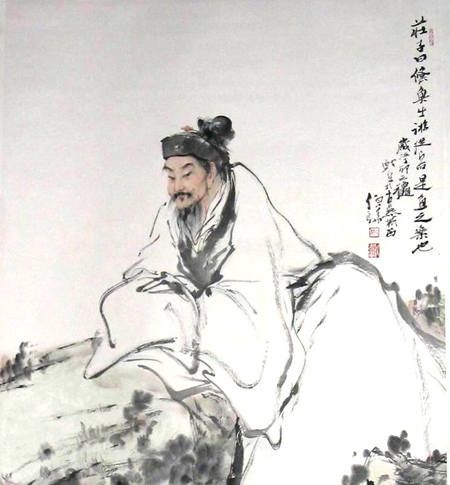
Chuang Tzu, a.k.a. Zhuangzi (369 BCE – 286 BCE)
Chinese Philosopher

Once Chuang Chou dreamt he was a butterfly, a butterfly flitting and fluttering around, happy with himself and doing as he pleased. He didn’t know he was Chuang Chou. Suddenly he woke up and there he was, solid and unmistakable Chuang Chou. But he didn’t know if he was Chuang Chou who had dreamt he was a butterfly, or a butterfly dreaming he was Chuang Chou. Between Chuang Chou and a butterfly there must be some distinction! This is called the Transformation of Things.