The super-rich might not be so outraged by accusations that they haven’t earned their money fairly if they didn’t know it was true. . .
Many of today’s super-rich, particularly in the financial sector, have achieved their wealth in ways that are fundamentally anti-capitalist. As a consequence, people are justifiably wondering whether we have an economy that operates on the principles of capitalism or of oligarchy. . .
Are the rich and successful the creators of wealth and jobs for all of us, or are they the predators and moochers (Ayn Rand’s term in Atlas Shrugged), the reverse Robin Hoods who succeed by finding ways to redistribute wealth upwards?
Category Archives: Capitalism
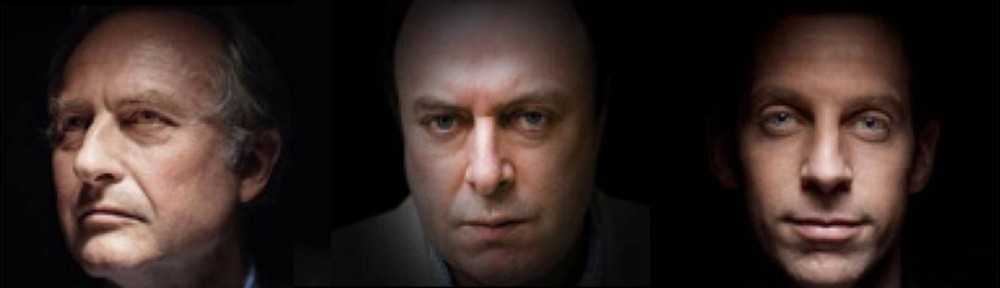
Sam Harris Simply Destroys Catholicism
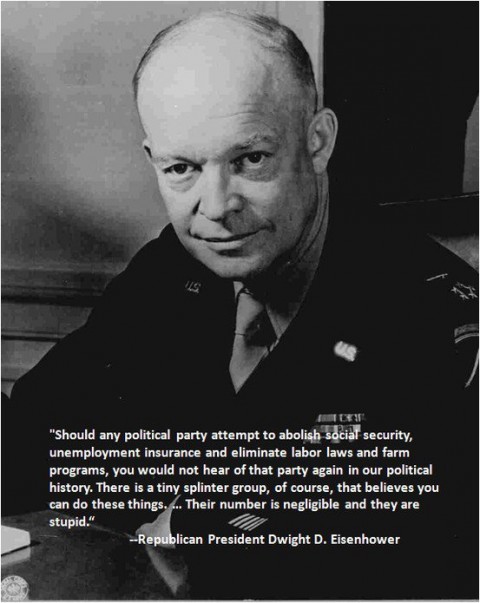
Did Eisenhower Predict The End Of The GOP?
Found at MoveOn.org on 12.21.2011
The decline of labour unions in the US (VIDEO)
Labour unions are under fire across the US, but do they have enough vitality to fight back?
For decades, labour unions in the US have been on the decline. While they are widely credited with boosting safety standards and worker pay, many have received blame for wanting too much in times of a struggling economy.
Unemployment is at nine per cent and people are clamouring for jobs, unionised or not. And their greatest political ally, the Democratic party, has taken its support for granted, weakening its pull on the strings of power in Washington, DC.
A new battle has emerged in 2011 as Republican governors have taken on public sector unions, in some cases stripping them of rights that have been in place for 50 years. It is part of a trend that is happening in key swing states and may weaken democratic voting strength in next year’s presidential election.
But organised labour has fought back hard. In Wisconsin, unions occupied the state capitol as 100,000 protesters took to the streets. In Ohio, voters overturned a law that was intended to greatly reduce the right that unions have in that state to bargain collectively.
Now as Occupy Wall Street galvanises Americans to take action against financial institutions and big corporations, labour unions have a new ally. But can organised labour harness the anger that everyday Americans are emitting or will this opportunity pass it by? Do labour unions still have the strength to organise or has their power waned to the point that they will no longer be a major player in American politics?
Paul Krugman: Politifact, R.I.P.
[T]he people at Politifact are terrified of being considered partisan if they acknowledge the clear fact that there’s a lot more lying on one side of the political divide than on the other. So they’ve bent over backwards to appear “balanced” — and in the process made themselves useless and irrelevant.
Robert Reich: The Defining Issue: Not Government’s Size, But Who It’s For
. . . “Big government” isn’t the problem. The problem is big money is taking over government.
Government is doing less of the things most of us want it to do — providing good public schools and affordable access to college, improving our roads and bridges and water systems, and maintaining safety nets to catch average people who fall — and more of the things big corporations, Wall Street, and the wealthy want it to do.
. . . A smaller government that’s still dominated by money would continue to do the bidding of Wall Street, the pharmaceutical industry, oil companies, big agribusiness, big insurance, military contractors, and rich individuals.
George Carlin: The American Dream
Killing Us Sweetly: Conservatives’ role in the growing burden of American obesity
America’s anti-obesity plan: Just say no
Meanwhile, in the United States, obesity has become like global warming: Actual evidence has little relevance in political debates, because what’s at stake is ideology. The anti-tax and anti-regulation fervor of America’s conservative movement makes taxing and regulating unhealthy food all but impossible here. But the issue goes deeper than that.
It turns out that the obesity problem is a profound challenge to the fundamental tenet of American conservatism. If progressivism’s most basic belief is that we are in this together–that our fates are interconnected–conservatism cherishes “rugged individualism” above all else. This is why evangelical Christianity and political conservatism are so compatible: Both focus on individual human will.
One People Flash Mob — Occupy
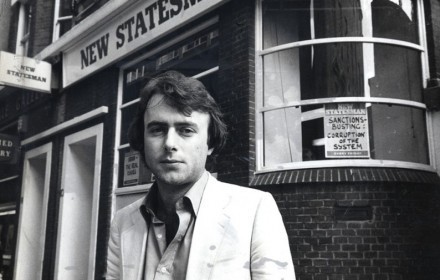
Christopher Hitchens, the enemy of the totalitarian
Hitchens himself was many things: a polemicist, reporter, author, rhetorician, militant atheist, drinker, name-dropper, and raconteur. He was also an absolutist. He liked a clear, defined target against which to take aim and fire; he knew what he wanted to write against and he did so with all the force and power of his formidable erudition and articulacy. Hitchens was an accomplished and prolific writer, but an even better speaker: his perfect sentences cascaded and tumbled, unstoppably. He was one of our greatest contemporary debaters, taking on all-comers on all subjects, except sport, in which he professed to have no interest at all. . .
An absence of doubt defines his work. His weaknesses are overstatement, especially when writing about what he despises (Islamism, God, pious moralizing of all kinds), self-righteous indignation (“shameful” and “shame”, employed accusatorily, are favoured words in his lexicon), narcissism, and failure to acknowledge or accept when he is wrong. His redeeming virtues are his sardonic wit, polymathic range, good literary style and his fearlessness. . .
The culture no longer throws up people like the Hitch. Today, he is very much a man apart. He has no equal in contemporary Anglo-American letters; there are followers and disciples but no heir apparent.