Deckle Edge in the Age of Mechanical Reproduction

The deckle edge dates back to a time when you used to need a knife to read a book. Those rough edges simulate the look of pages that have been sliced open by the reader. The printing happened on large sheets of paper which were then folded into rectangles the size of the finished pages and bound. The reader then sliced open the folds.

Paper knives, variants of letter openers, were used for this purpose. Italo Calvino’s If on a Winter’s Night a Traveler, which speaks directly to the reader and describes the reader’s experience reading the novel, makes extensive reference to these literary knives:

“This volume’s pages are uncut: a first obstacle opposing your impatience. Armed with a good paper knife, you prepare to penetrate its secrets. With a determined slash you cut your way between the title page and the beginning of the first chapter.”

Opening a book can already feel like opening a gift. Armed with a knife and freeing the pages and the story hidden beneath the folds, it becomes something more, “a penetration of its secrets” and an act of discovery, shot through with a suggestion of violence and danger or of the painful gestation of the words themselves.

Read more . . .

Quote: Sam Harris

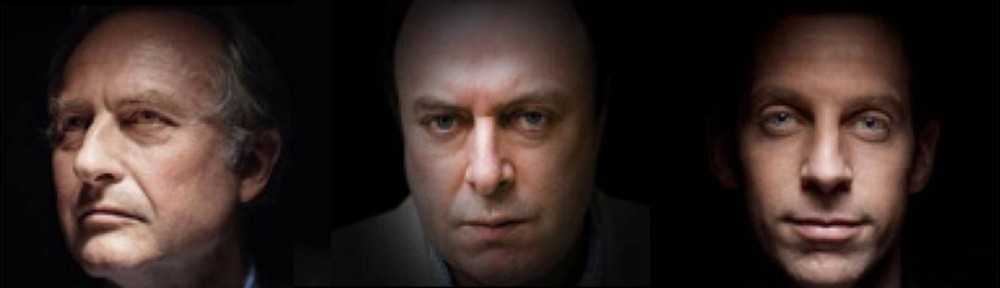
Sam Harris, Ph.D. (born 1967)
American author, philosopher, neuroscientist, co-founder and CEO of
Project Reason, whose main aim is the promotion of scientific knowledge
and secular values within society, and outspoken atheist

Quote: Roger Rosenblatt / Nobody is thinking about you

Roger Rosenblatt, Ph.D. (born 1940)
American Journalist, Author, Playwright, Essayist, Columnist,
Teacher and Fulbright Scholar in Ireland in 1965-66

Yes, I know that you are certain that your friends are becoming your enemies; that your grocer, garbage man, clergyman, sister-in-law, and your dog are all of the opinion that you have put on weight, that you have lost your touch, that you have lost your mind; furthermore you are convinced that everyone spends two-thirds of every day commenting on your disintegration, denigrating your work, plotting your assignation. I promise you: Nobody is thinking about you. They are thinking about themselves—just like you.

Why we need college degrees more than we need faith

In the comments following the short article titled above and linked here,

Carstonio
wrote:

Instead of thinking about religion in terms of faith, it would be far more sound and praactical to think about it in terms of morality. Since we have no evidence to support either the existence or non-existence of gods, and have no way to gauge the likelihood of either, we should simply put the question aside as speculative. This would mean religion could focus on how humans treat one another with the goal of reducing suffering. Just about every religion has some version of the Golden Rule, and even “rule” is misleading since morality isn’t a matter of following rules for its own sake. It’s worth considering what a religion would look like if it made no claims either way about the “metaphysical” or the “supernatural.”

AlwaysQuestionAuthority_wordpress_com
responded: 

Evidence to “support . . . [the] non-existence of gods,” has not been, is not now and will not ever be required! The philosophic burden of proof always lies with the one who makes the positive assertion, e.g., there is a god, to provide sufficient warrant for their position.

It is not incumbent upon the one that denies the positive assertion to provide evidence counter to the claim being asserted. To state that, “we have no evidence to support . . . non-existence of gods,” is an attempt to shift the philosophic burden of proof responsibility from the one making the assertion to the one denying the assertion. This is an argument from ignorance, a common fallacy in informal logic, and should be avoided.

The “metaphysical” and “supernatural” are of the same realm as opposed to the natural, i.e., physical (sensual) realm. The metaphysical realm falls in the analytical domain of logic and reason, as was discussed above, whereas, the physical realm falls in the observable domain of empirical evidence.

Question:
What say you? 

Quote / Christopher Hitchens / On the Independent Mind

Christopher Eric Hitchens (13 April 1949 – 15 December 2011)
English-American, Literary Critic, Journalist, Author,
Essayist, Polemicist, and Outspoken Anti-theist

The essence of the independent mind lies not in what it thinks, but in how it thinks.