Religion Needs To Be Eradicated From Government

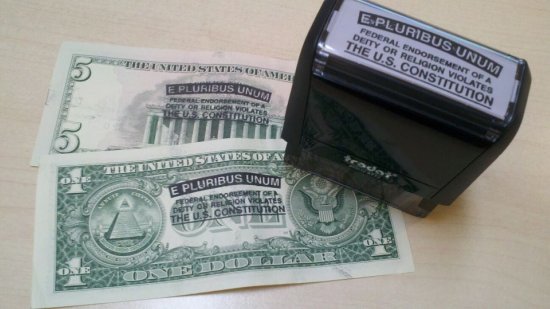
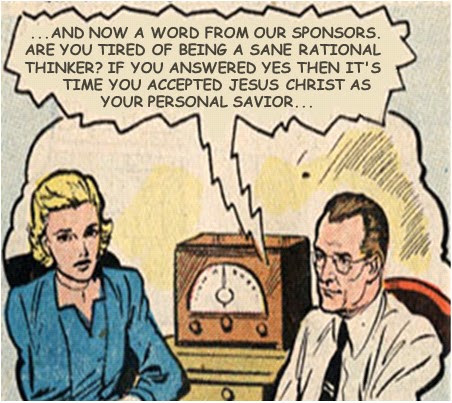
It’s disheartening, really. Pathetic, even, that a vast majority of United States citizens are blinded to how advanced we could be in the sciences, medicine, economic growth and foreign policy if religion were completely eradicated from government in all forms. . . Our children are dumbed-down by stubborn uber-religious teachers and administrators in our public schools who insist on “teaching the controversy” (read: lying to our kids)[. . .] The United States Government has no business invoking any god, gods, goddesses or anything else even remotely connected to religious belief. Our government is not in place to placate anyone’s religious beliefs, period. There should be no references to the religious beliefs of our politicians.

Read more . . .  

Quote: PZ Myers

Paul Zachary “PZ” Myers (born March 9, 1957)
Associate Professor of Biology at the University of Minnesota Morris, Author of the Pharyngula Freethought Blog, Public Critic of Intelligent Design, and Outspoken Atheist

It seems to be an obligatory opinion of people who believe in mockable and ridiculous things that they will oppose mockery and ridicule. I’m afraid there is no magical exemption — there isn’t a set of stupid beliefs that you get to set on a pedestal and declare that no one can call them stupid. 

History too kind to Puritans’ brutal intolerance

Americans who worry about Muslim countries adopting Sharia law forget that our country was first settled by Christian fundamentalists who codified their own version of religious absolutism — and had no qualms about killing anyone who objected. . . The truth is that the Puritans had no problem with religious persecution. They just wanted to be the ones doing the persecuting.

Read more . . .  

Why Are People Still Afraid of Atheism?

A landmark 2006 study, analyzing data from a large survey of Americans, found that atheists “are less likely to be accepted, publicly and privately, than any others from a long list of ethnic, religious and other minority groups.”

There is no actual evidence backing up the assumption that atheism somehow leads to a decline in morality. In a 2009 study, sociologist Phil Zuckerman argued that “a strong case could be made that atheists and secular people actually possess a stronger or more ethical sense of social justice than their religious peers,” adding that they, on average, have “lower levels of prejudice, ethnocentrism, racism and homophobia” than the much larger population of believers. He adds that “with the important exception of suicide, states and nations with a preponderance of nonreligious people actually fare better on most indicators of societal health than those without.”

Read more . . .  

No Thanks to Thanksgiving

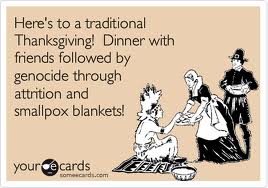
We should atone for the genocide that was incited — and condoned — by the very men we idolize as our ‘heroic’ founding fathers. . . Simply put: Thanksgiving is the day when the dominant white culture (and, sadly, most of the rest of the non-white but non-indigenous population) celebrates the beginning of a genocide that was, in fact, blessed by the men we hold up as our heroic founding fathers. . . Obscuring bitter truths about historical crimes helps perpetuate the fantasy of American benevolence, which makes it easier to sell contemporary imperial adventures — such as the invasion and occupation of Iraq — as another benevolent action.

Read more . . . 

Camp Pendleton Cross Privileges Christianity; Marginalizes non-Christians

In a case where federal officials allow to stand a prominent Christian cross as a representation of military service, atheists, humanists, and all non-Christians who have fought and died for our country are relegated to second-class citizenship.

The comments in response to this article bespeak volumes to the intolerance, ignorance, and bigotry expressed by Christians toward non-Christians in the military. It is absolutely astonishing! [MSH]

Read more here . . . 

Aphorism: On the Unsolicited “Have a Blessed Day” Complimentary Closing

By Madison S. Hughes (11.22.2011)

I take offense to it for three reasons:

1. It implies that I deign the same irrational superstitious belief.

2. The audacity of it being so freely used reminds one of how it has been allowed to become a meme of the Christian White Privilege that so permeates our culture.

3. The passivity of those that recognize such, but somehow feel it is not worthy of a stance for their convictions.

I always respond with:

Don’t assume I share your delusions.

Have a Reasoned Day,
Madison

The rhetorical question is, why, to some, would my response come-off as sounding bombastic, yet somehow it is considered taboo to criticize the sender’s complimentary closing? The answer may be found in number two above.