Richard Dawkins Bids Farewell to Christopher Hitchens

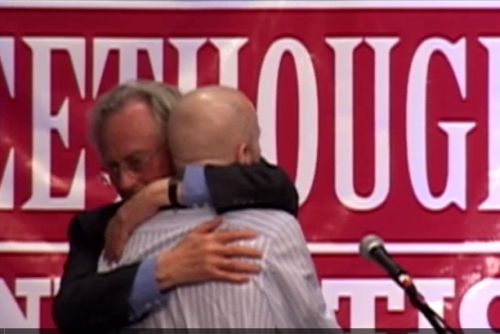
Farewell, great voice. Great voice of reason, of humanity, of humour. Great voice against can’t, against hypocrisy, against obscurantism and pretension, against all tyrants including God. Farewell, great warrior. You were in a foxhole, Hitch, and you did not flinch. Farewell, great example to us all. 
~ Richard Dawkins

Christopher Hitchens, 1949-2011: Polemicist Who Slashed All, Freely, With Wit

Armed with a quick wit and a keen appetite for combat, Mr. Hitchens was in constant demand as a speaker on television, radio and the debating platform, where he held forth in a sonorous, plummily accented voice that seemed at odds with his disheveled appearance. He was a master of the extended peroration, peppered with literary allusions, and of the bright, off-the-cuff remark. . . 

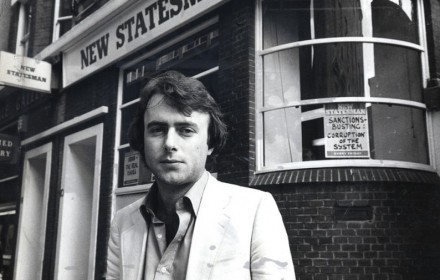
Mr. Hitchens, a British Trotskyite who had lost faith in the Socialist movement, spent much of his life wandering the globe and reporting on the world’s trouble spots for The Nation magazine, the British newsmagazine The New Statesman and other publications. . .

Read more . . .

Christopher Hitchens, the enemy of the totalitarian

Hitchens himself was many things: a polemicist, reporter, author, rhetorician, militant atheist, drinker, name-dropper, and raconteur. He was also an absolutist. He liked a clear, defined target against which to take aim and fire; he knew what he wanted to write against and he did so with all the force and power of his formidable erudition and articulacy. Hitchens was an accomplished and prolific writer, but an even better speaker: his perfect sentences cascaded and tumbled, unstoppably. He was one of our greatest contemporary debaters, taking on all-comers on all subjects, except sport, in which he professed to have no interest at all. . .

An absence of doubt defines his work. His weaknesses are overstatement, especially when writing about what he despises (Islamism, God, pious moralizing of all kinds), self-righteous indignation (“shameful” and “shame”, employed accusatorily, are favoured words in his lexicon), narcissism, and failure to acknowledge or accept when he is wrong. His redeeming virtues are his sardonic wit, polymathic range, good literary style and his fearlessness. . .

The culture no longer throws up people like the Hitch. Today, he is very much a man apart. He has no equal in contemporary Anglo-American letters; there are followers and disciples but no heir apparent.

Read more . . .  
Study: People Receiving Unemployment Insurance Work Harder To Find Jobs

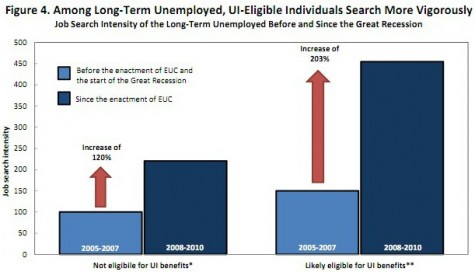
A new study from Congress’ Joint Economic Committee (JEC) debunks the prevailing conservative notion that Unemployment Insurance (UI) dissuades people from looking for a job. “On the contrary,” the report finds, “beneficiaries of federal UI benefits have spent more time searching for work than those who were ineligible for UI benefits.”

Read more . . .

Woman Jailed, Ostracized After Resorting to Self-Administered Abortion: What Is This, Puritan America?

In the United States, abortion is technically a legal right, but as these cases show, it’s not functionally a right. . .

Abortion’s long descent from being a true right to being only a technical right began in 1976, when Congress passed the Hyde Amendment, which bars federal funds from being used to pay for abortion. Once you needed to be able to get the cash together to pay for an abortion, it stopped really being a right and instead became a commodity, out of reach of those who often need it the most. . .

In reality, women’s lack of access to affordable, safe abortion hurts all of us . . . In the short term, that means higher costs for Medicaid and other social welfare programs. But there’s also long-term costs to all of us. Having children they don’t feel ready to have often limits women’s employment and educational opportunities, depriving society of their talents and labor. If women can’t have children until they’re ready, they’re often limited in their abilities to educate and care for those children as well as they’d like to, which increases the burden for everyone.

Read more . . .

The Faux Rage About a False War on Christmas

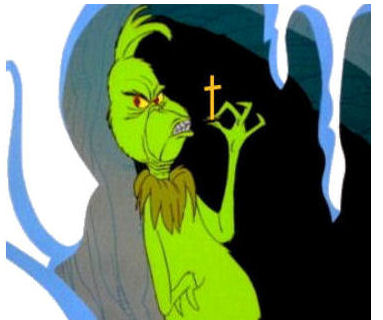
The divide in our society is not between rich and poor, or Catholic and Protestant, or Christian and Muslim, but between those have faith and those who have reason. . . Those who accept the idea of god tend to divide the world into believers and atheists. Yet that is incorrect. Atheist means “without god” and one cannot be without something that does not exist. . . But a more reasonable and neutral description of the two world views would be theists and rationalists (or humanists, take your pick). . . his hubris and conceit of human superiority as the only creature close to god is not benign, leading to catastrophic consequences for humanity. The species-centric arrogance of religion cultivates a dangerous attitude about our relationship with the environment and the resources that sustain us. Humanists tend to view sustainability as a moral imperative while theists often view environmental concerns as liberal interference with god’s will.

Read more . . .  

New Statesman Interview Preview: Richard Dawkins Interviews Christopher Hitchens

Fascism and the Catholic Church

RD The people who did Hitler’s dirty work were almost all religious.
CH I’m afraid the SS’s relationship with the Catholic Church is something the Church still has to deal with and does not deny.
RD Can you talk a bit about that – the relationship of Nazism with the Catholic Church?
CH The way I put it is this: if you’re writing about the history of the 1930s and the rise of totalitarianism, you can take out the word “fascist,” if you want, for Italy, Portugal, Spain, Czechoslovakia and Austria and replace it with “extreme-right Catholic party.”
Almost all of those regimes were in place with the help of the Vatican and with understandings from the Holy See. It’s not denied. These understandings quite often persisted after the Second World War was over and extended to comparable regimes in Argentina and elsewhere.

Read more . . .  

Robert Redford: Keystone XL and Jobs: Just More Pipe Dreams

The project would provide, at most, 6,000 temporary construction jobs, very few of which would be local hires, according to an analysis performed by the U.S. State Department. Cornell University’s Global Labor Institute did its own evaluation, concluding that the project would employ between 2,500 and 4,650 construction workers. “Most jobs created will be temporary and non-local,” the institute concluded in its report, appropriately titled, “Pipe Dreams?” The real jobs in the region come from the ranches and farms, more than a quarter of a million of them in the Great Plains states the pipeline would pass through. Why would we put these fertile croplands, and the wheat, corn, and cattle they produce, at risk for the profits of the oil industry? It had, by the way, more than $100 billion in profits during just the first nine months of the year. Nothing wrong with profits, but let’s not pretend this is about anything else.

Read more . . .

Bill Moyers: Why ‘We The People’ Must Triumph Over Corporate Power

Citizens United is but the latest battle in the class war waged for thirty years from the top down by the corporate and political right. Instead of creating a fair and level playing field for all, government would become the agent of the powerful and privileged. . . We have already amended the Constitution twenty-seven times. Amendment campaigns are how we have always made the promise of equality and liberty more real. Difficult? Of course; as Frederick Douglass taught us, power concedes nothing without a struggle. To contend with power, Clements and his colleague John Bonifaz founded Free Speech for People, a nationwide nonpartisan effort to overturn Citizens United and corporate rights doctrines that unduly leverage corporate economic power into political power.

Read more . . .