Barney Frank announced his retirement today.
Barney Frank Shows How to Deal With Teabaggers
Reply
Barney Frank announced his retirement today.
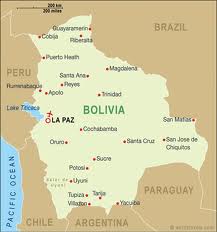
The climate crisis in Bolivia is not a headline or an abstraction – it is playing out in people’s lives in real time.
Melting glaciers are threatening the water supply of the country’s two biggest cities. Increasing droughts and floods are playing havoc with agriculture.
So it is no surprise that in climate negotiations, Bolivia is emerging as a leader in the global south – advancing both radical solutions and analysis that make rich countries distinctly nervous.
On this edition of Fault Lines, Avi Lewis travels to Bolivia to explore the country’s climate crusade from the inside.
It is the story of an emerging movement, based in the global south, raising questions about who owes what to whom in confronting the climate crisis.
And it is playing out in Bolivia’s epic landscape – from the tropical glaciers to the endless salt flats. A landscape that in normal times seems to mock the very idea that human beings can change the course of nature.
The Stream speaks to actor and activist Russell Means about indigenous land rights and preserving Native American culture.
A landmark 2006 study, analyzing data from a large survey of Americans, found that atheists “are less likely to be accepted, publicly and privately, than any others from a long list of ethnic, religious and other minority groups.”
There is no actual evidence backing up the assumption that atheism somehow leads to a decline in morality. In a 2009 study, sociologist Phil Zuckerman argued that “a strong case could be made that atheists and secular people actually possess a stronger or more ethical sense of social justice than their religious peers,” adding that they, on average, have “lower levels of prejudice, ethnocentrism, racism and homophobia” than the much larger population of believers. He adds that “with the important exception of suicide, states and nations with a preponderance of nonreligious people actually fare better on most indicators of societal health than those without.”
Check out this video of an octopus literally crawling out of the water and dragging itself across dry land in pursuit of a meal. A family with a camera was lucky enough to be on the scene and captured the whole thing on video:
. . . [T]oday, in the wake of an inexhaustible economic crisis and the reactionary assault on everything public, the public library is under attack. Local governments across the United States—from New York City to Detroit, and from Denver to Seattle—are slashing library budgets and closing libraries. . . These cuts will disproportionately punish poor and working class people.
Another key aspect of the public library mission is to defend free speech and intellectual freedom. With programs like “Banned Books Week,” libraries are on the front lines of defending the rights of people to examine unpopular points of view so they can make their own informed decisions.
The police officer who casually pepper-sprayed students at University of California, Davis, was involved in a discrimination lawsuit alleging that he used an anti-gay slur against an openly-gay officer, the Daily Mail reports. The racial and sexual discrimination lawsuit specifically singled out Lt. John Pike, a retired Marine sergeant, for “using a profane anti-gay epithet” against a gay police officer. The case ended in a $250,000 settlement.
In a case where federal officials allow to stand a prominent Christian cross as a representation of military service, atheists, humanists, and all non-Christians who have fought and died for our country are relegated to second-class citizenship.
The comments in response to this article bespeak volumes to the intolerance, ignorance, and bigotry expressed by Christians toward non-Christians in the military. It is absolutely astonishing! [MSH]
Capital gains are the key ingredient of income disparity in the US– and the force behind the winner takes all mantra of our economic system. If you want even out earning power in the U.S, you have to raise the 15% capital gains tax. . . Make no mistake; the battle that is to be fought over the coming attempt to reverse this reduction in capital gains will be bloody and intense. The facts are clear according to the Congressional Budget Office more than 80% of the increase in income inequality was the result of an increase in the share of household income from capital gains.




 Always Question Authority