Source: MoveOn.org
Bill Maher: Why The NFL And The Super Bowl Are A Lot Like Socialism
1
Source: MoveOn.org

 Source: OccupyKnowledge
The January 3 Iowa caucus, the first contest for the Republican presidential nomination, marks the official beginning of 2012 US election campaign, an exercise in mass deception whose purpose is to legitimize the individual whom the financial aristocracy chooses as its political champion for the next four years. . .
As for the candidates themselves, it would be hard to come up with a more reactionary collection of corporate flunkeys, religious fanatics and influence peddlers. . .
The election provides the illusion of choice, but there are no fundamental differences between the two corporate-controlled political parties. Both the Democrats and the Republicans defend the wealth of the super-rich and the worldwide interests of American imperialism.
From the standpoint of working people, it does not matter in the slightest whether Barack Obama is reelected to a second term in the White House or replaced by any of his Republican challengers. The next president, whatever his name or party, will function as the representative of the political, military and corporate elite that controls all the levers of power. . .
US elections have increasingly become a media spectacle aimed at distracting the population while the political establishment shifts further and further to the right. . .
Both [big business parties] are committed to the defense of corporate interests and obey their real masters in the financial oligarchy, regardless of what they say to the voters in the course of an election campaign.
 Smedley Darlington Butler (July 30, 1881 – June 21, 1940)
Major General in the U.S. Marine Corps, Outspoken Critic of U.S. Military Adventurism, Most decorated Marine in U.S. history at the time of his death.
I spent 33 years and four months in active military service and during that period I spent most of my time as a high-class muscle man for Big Business, for Wall Street and the bankers. In short, I was a racketeer, a gangster for capitalism. I helped make Mexico and especially Tampico safe for American oil interests in 1914. I helped make Haiti and Cuba a decent place for the National City Bank boys to collect revenues in. I helped in the raping of half a dozen Central American republics for the benefit of Wall Street. I helped purify Nicaragua for the International Banking House of Brown Brothers in 1902-1912. I brought light to the Dominican Republic for the American sugar interests in 1916. I helped make Honduras right for the American fruit companies in 1903. In China in 1927 I helped see to it that Standard Oil went on its way unmolested. Looking back on it, I might have given Al Capone a few hints. The best he could do was to operate his racket in three districts. I operated on three continents.
~ Socialist newspaper Common Sense, 1935
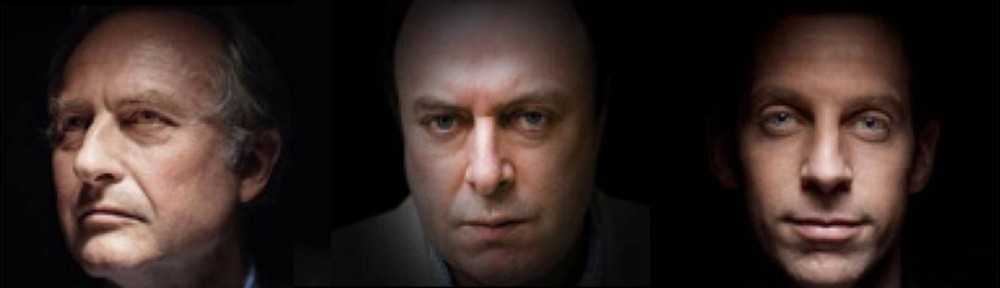
Armed with a quick wit and a keen appetite for combat, Mr. Hitchens was in constant demand as a speaker on television, radio and the debating platform, where he held forth in a sonorous, plummily accented voice that seemed at odds with his disheveled appearance. He was a master of the extended peroration, peppered with literary allusions, and of the bright, off-the-cuff remark. . .
Mr. Hitchens, a British Trotskyite who had lost faith in the Socialist movement, spent much of his life wandering the globe and reporting on the world’s trouble spots for The Nation magazine, the British newsmagazine The New Statesman and other publications. . .
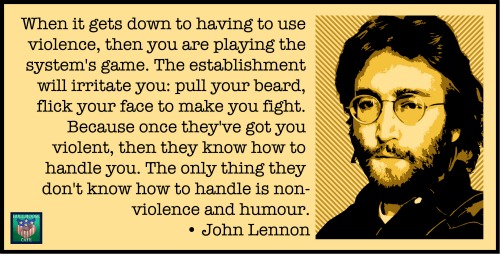
“Labor is prior to, and independent of, capital. Capital is only the fruit of labor, and could never have existed if labor had not first existed. Labor is the superior of capital, and deserves much the higher consideration. . .”
Read more . . .
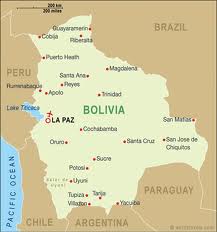
The climate crisis in Bolivia is not a headline or an abstraction – it is playing out in people’s lives in real time.
Melting glaciers are threatening the water supply of the country’s two biggest cities. Increasing droughts and floods are playing havoc with agriculture.
So it is no surprise that in climate negotiations, Bolivia is emerging as a leader in the global south – advancing both radical solutions and analysis that make rich countries distinctly nervous.
On this edition of Fault Lines, Avi Lewis travels to Bolivia to explore the country’s climate crusade from the inside.
It is the story of an emerging movement, based in the global south, raising questions about who owes what to whom in confronting the climate crisis.
And it is playing out in Bolivia’s epic landscape – from the tropical glaciers to the endless salt flats. A landscape that in normal times seems to mock the very idea that human beings can change the course of nature.
. . . [T]oday, in the wake of an inexhaustible economic crisis and the reactionary assault on everything public, the public library is under attack. Local governments across the United States—from New York City to Detroit, and from Denver to Seattle—are slashing library budgets and closing libraries. . . These cuts will disproportionately punish poor and working class people.
Another key aspect of the public library mission is to defend free speech and intellectual freedom. With programs like “Banned Books Week,” libraries are on the front lines of defending the rights of people to examine unpopular points of view so they can make their own informed decisions.


 Always Question Authority