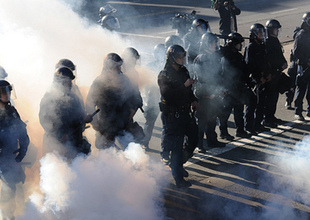
[More Police Brutality] in Oakland: 400 Arrests, Tear Gas, Flash-Bang Grenades

Downtown Oakland turned ugly once again on Saturday, as Occupy activists attempting to squat in a long-abandoned city building were met by lines of heavily-armored riot police. . .

It was, once again, a tale of two protests. Accounts in the corporate media relied primarily on police statements to paint protesters as wild animals running amok in the city, while those following the day’s events via a small group of “citizen-journalists” broadcasting raw, unedited footage from their cell-phones and flip-cams got a wildly divergent view of exactly how things escalated. . .

Police declared the protest an unlawful assembly, and soon afterward, a series of explosions could be heard on the livestream as police deployed either teargas canisters or “flash-bang” grenades to disperse the crowd. This appears to be a violation of the Oakland Police Department’s (OPD) own crowd-control guidelines . . . The guidelines state that less-lethal munitions “may never be used indiscriminately against a crowd or group of persons, even if some members of the crowd or group are violent or disruptive.”

. . . Protesters, including peaceful protesters, weren’t given an opportunity to disperse. OPD’s crowd control manual states that an order to disperse, “shall also specify adequate egress or escape routes. Whenever possible, a minimum of two escape/egress routes shall be identified and announced.”

. . . While the main body of protesters were being “herded” by OPD and eventually kettled at 23rd street, a smaller group broke into City Hall, where “they burned flags, broke an electrical box and damaged several art structures,” according to Oakland Mayor Jean Quan speaking at a press conference. Quan, blaming a small “very radical, violent” splinter group for the mayhem, called on the Occupy movement to “stop using Oakland as its playground.”

. . . But Michael Davis, a visitor from Occupy Cincinnati, told the Associated Press that a day of action which began peacefully escalated when police began using “flash bangs, tear gas, smoke grenades and bean bags,” in apparent violation of OPD policy.

The chronology is important to get right. By definition, protesters feel angry and aggrieved, and when force is applied indiscriminately on a crowd – and not directed at a handful of people seeking confrontation – it ratchets up the tension to a point where more confrontations become almost inevitable.

Read more . . .  

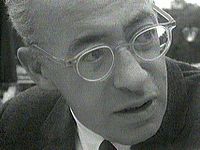
Quote: Saul Alinsky

Saul David Alinsky, Ph.B. (January 30, 1909 – June 12, 1972)
American Community Organizer, and Writer

In this world irrationality clings to man like his shadow . . . a world of religious institutions that have, in the main, come to support and justify the status quo so that today religion is materially solvent and spiritually bankrupt. We live with a Judaeo-Christian ethic that has not only accommodated itself to but justified slavery, war, and every other ugly human exploitation of whichever status quo happened to prevail.

Student Faces Town’s Wrath in Protest Against a Prayer

CRANSTON, R.I. — She is 16, the daughter of a firefighter and a nurse, a self-proclaimed nerd who loves Harry Potter and Facebook. But Jessica Ahlquist is also an outspoken atheist who has incensed this heavily Roman Catholic city with a successful lawsuit to get a prayer removed from the wall of her high school auditorium, where it has hung for 49 years. . .

For Jessica, who was baptized in the Catholic Church but said she stopped believing in God at age 10, the prayer was an affront. “It seemed like it was saying, every time I saw it, ‘You don’t belong here,’ ” she said the other night during an interview at a Starbucks here. . .

New England is not the sort of place where battles over the division of church and state tend to crop up. It is the least religious region of the country, according to the Pew Forum on Religion and Public Life. But Rhode Island is an exception: it is the nation’s most Catholic state, and dust-ups over religion are not infrequent. . .

Does she empathize in any way with members of her community who want the prayer to stay?

“I’ve never been asked this before,” she said. A pause, and then: “It’s almost like making a child get a shot even though they don’t want to. It’s for their own good. I feel like they might see it as a very negative thing right now, but I’m defending their Constitution, too.”

Read more . . . 

‘Fertility gap’ Helps Explain Political Divide

Republican House members overwhelmingly come from districts that have high percentages of married people and lots of children. . .

Many Democrats represent areas that have many single people and relatively few children. Democratic districts that have large numbers of children tend to be predominantly Hispanic or, to a lesser extent, African-American.

This “fertility gap” is crucial to understanding the differences between liberals and conservatives, says Arthur Brooks, a professor of public administration at Syracuse University. These childbearing patterns shape divisions over issues such as welfare, education and child tax credits, he says.

Read more . . .

Do Harsh Pot Laws Create a Dangerous Drinking Culture? Five Reasons to Get Stoned Instead of Drunk

Myths about marijuana convince people that alcohol is safer, but science shows pot is the healthier choice.

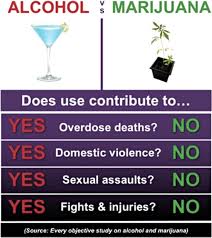
Alcohol kills approximately 70,000 people per year. Prescription pills, which have helped overdose become the leading cause of accidental death in America, result in more than 20,000 deaths per year. Marijuana has never killed anybody. 

1.  Marijuana is not a gateway drug.

[T]he truth is that marijuana is not a gateway drug, and the vast majority of people who smoke pot will never move onto harder drugs.

2. Pot smoke is relatively benign and does not cause lung cancer.

Researchers studied the effects of marijuana smoke on lung function, and found that smoking pot does not cause the same irreversible breathing problems as cigarettes.

3.  Pot does not cause schizophrenia.

These mental health issues are generally as baseless and misleading as past prohibitionist claims . . . the rates of schizophrenia in society have not increased as marijuana use has become widespread.

4. Driving high is not very dangerous. 

A study by the Institute for the Study of Labor, a research center for science, politics, and business in Bonn, Germany, showed that in states where medical marijuana is legal, adults were smoking more marijuana and drinking less alcohol, and the result was a 9 percent decrease in traffic fatalities.

5. Pot does not make you lazy.

The technical name for marijuana-induced laziness is “amotivational syndrome,” and research suggests it has a lot more to do with other factors than with pot. A study on marijuana use and amotivational syndrome shows circumstances unique to a person, or some underlying problem, are more to blame for amotivational syndrome than the drug itself.

6. You get this one for free.

More than 30,000 Americans die every year from the health effects of alcohol. The comparable number for marijuana is zero. 

Read more . . .