Religious People Are Happier Only In Religious Countries

There are many ways to respond to this, one of which is to echo George Bernard Shaw when he said “The fact that a believer is happier than a sceptic is no more to the point than the fact that a drunken man is happier than a sober one. The happiness of credulity is a cheap and dangerous quality.”

Read more . . .

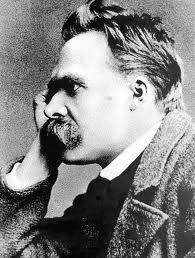
The Big Ideas Podcast: Friedrich Nietzsche’s ‘God is dead’

What did Nietzsche mean by the death of God? Benjamen Walker and guests explore the legacy of the German philosopher’s statement.

One of the most frequently quoted – and hotly debated – passages in modern philosophy appears in Section 125 of Friedrich Nietzsche’s The Gay Science. It’s worth quoting in full:

“God is dead. God remains dead. And we have killed him. How shall we comfort ourselves, the murderers of all murderers? What was holiest and mightiest of all that the world has yet owned has bled to death under our knives: who will wipe this blood off us? What water is there for us to clean ourselves? What festivals of atonement, what sacred games shall we have to invent? Is not the greatness of this deed too great for us? Must we ourselves not become gods simply to appear worthy of it?”

But the core statement is as ambiguous as it is catchy: was God an actual being that had ceased to exist, or had we merely stopped believing in him? In Nietzsche’s book, the words are spoken by a madman: did this mean that God was in fact still alive? Many have quipped: Nietzsche doesn’t look that alive these days either.

Listen to podcast here . . . 

Christopher Hitchens: In Defense of Richard Dawkins

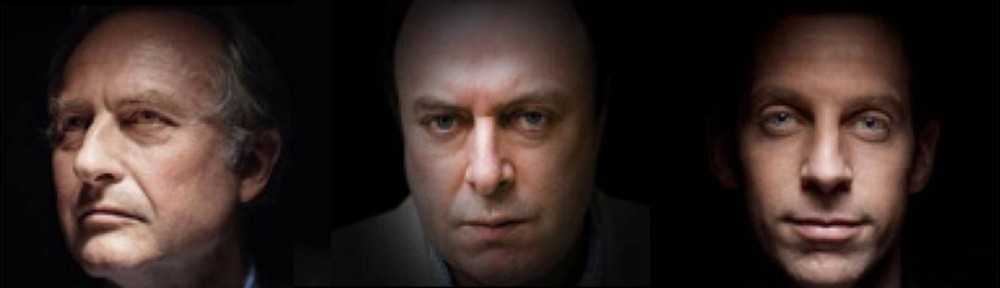
If you haven’t read it, you will almost certainly have seen it: the critique of Professor Richard Dawkins that arraigns him for being too “strident” in his confrontations with his critics. According to this line of attack, Dawkins has no business stepping outside the academy to become a “public intellectual” and even less right to raise his voice when he chooses to do so. Implied in this rather hypocritical attack is the no less hypocritical hint that Dawkins might be better received if he were more polite and attract a better class of audience if he used more of the blessed restraint and reserve that is every Englishman’s birthright and which he obviously possesses in such heaping measure.

Read more . . .

Sam Harris: The Fireplace Delusion

. . . I recently stumbled upon an example of secular intransigence that may give readers a sense of how religious people feel when their beliefs are criticized. It’s not a perfect analogy, as you will see, but the rigorous research I’ve conducted at dinner parties suggests that it is worth thinking about. We can call the phenomenon “the fireplace delusion.”

. . . Of course, if you are anything like my friends, you will refuse to believe this. And that should give you some sense of what we are up against whenever we confront religion.

Read more . . .

Student Faces Town’s Wrath in Protest Against a Prayer

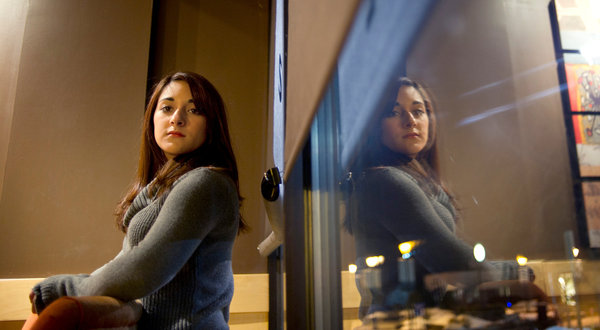
CRANSTON, R.I. — She is 16, the daughter of a firefighter and a nurse, a self-proclaimed nerd who loves Harry Potter and Facebook. But Jessica Ahlquist is also an outspoken atheist who has incensed this heavily Roman Catholic city with a successful lawsuit to get a prayer removed from the wall of her high school auditorium, where it has hung for 49 years. . .

For Jessica, who was baptized in the Catholic Church but said she stopped believing in God at age 10, the prayer was an affront. “It seemed like it was saying, every time I saw it, ‘You don’t belong here,’ ” she said the other night during an interview at a Starbucks here. . .

New England is not the sort of place where battles over the division of church and state tend to crop up. It is the least religious region of the country, according to the Pew Forum on Religion and Public Life. But Rhode Island is an exception: it is the nation’s most Catholic state, and dust-ups over religion are not infrequent. . .

Does she empathize in any way with members of her community who want the prayer to stay?

“I’ve never been asked this before,” she said. A pause, and then: “It’s almost like making a child get a shot even though they don’t want to. It’s for their own good. I feel like they might see it as a very negative thing right now, but I’m defending their Constitution, too.”

Read more . . .