Funny Or Sad ?? – Atheists die first! FACEPALM MOMENT! (TheUKatheist)
6
Considering that Bolivia is a Roman Catholic Country, and each family discussed in this video is burdened with feeding, caring, and rearing six to seven children one wonders where are the Catholic missions? Better yet, upon their arrival, instead of passing down another generation of religious childhood indoctrination, why don’t they instead pass out condoms? While the former leads to a false sense of hope at best, the latter leads to a significant decrease in unwanted pregnancies, and the added bonus of decreased venereal diseases, prevention of the spread of HIV-AIDS. Wait, I forgot; the Catholic Church would rather see increased venereal diseases, unwanted pregnancies, increased poverty, child malnutrition, child starvation, various sanitation diseases, etc. than see a parishioner use a condom. My bad, what the fuck was I thinking! [MSH]
A wandering philosopher helps a young boy land the girl of his dreams. As everyone knows — chicks dig atheists!
Millions of Americans may not be able to vote in the 2012 elections because some states are introducing tough new laws which they say are necessary to curb voter fraud.
These sweeping new laws could disenfranchise millions of voters in 2012 – and it is students, minorities, immigrants and ex-convicts who are disproportionately affected.
A total of 14 states, the majority of which are Republican-controlled, have passed such legislation. The most controversial measure is the new requirement for voters to have a government-issued photo identity document (ID). Others include restrictions to early voting and imposing barriers to registration.
According to the National Association for the Advancement of Colored People (NAACP), 25 per cent of African Americans and 16 per cent of Latinos do not have a photo ID.
Hundreds of thousands of students may also be denied the right to vote. In the state of Wisonsin, student IDs are accepted if they include current address, birth date, a signature and have a two-year expiration date. But no college in the state currently meets those requirements.
Former convicts are denied the right to vote in some states. In Florida alone, nearly a 100,000 of those who have served time are disenfranchised.
So, what is behind the effort to change voting requirements? Are voting restrictions justified, or are they undemocratic?
Inside Story US 2012, discusses with guests: Hilary Shelton, the director of the Washington bureau of the National Association for the Advancement of Colored People (NAACP), the oldest civil rights organisation in the US; Simon Rosenberg, the president of New Democrat Network, a progressive think tank based in Washington DC; and Cherylyn Harley LeBon, a former spokesperson for the Republican National Committee who had also worked in the Bush administration.
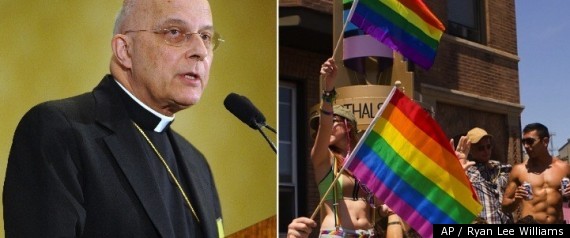
“I go with the pastor,” George told Fox. “He’s telling us that he won’t be able to have services on Sunday if that’s the case. You don’t want the gay liberation movement to morph into something like the Ku Klux Klan, demonstrating in the streets against Catholicism.”
When the Fox host pointed out that George’s comparison was “a little strong,” the cardinal stood by his statement.
“It is, but you take a look at the rhetoric,” he continued. “The rhetoric of the Klu Klux Klan, the rhetoric of some of the gay liberation people. Who is the enemy? Who is the enemy? The Catholic Church.”
Labour unions are under fire across the US, but do they have enough vitality to fight back?
For decades, labour unions in the US have been on the decline. While they are widely credited with boosting safety standards and worker pay, many have received blame for wanting too much in times of a struggling economy.
Unemployment is at nine per cent and people are clamouring for jobs, unionised or not. And their greatest political ally, the Democratic party, has taken its support for granted, weakening its pull on the strings of power in Washington, DC.
A new battle has emerged in 2011 as Republican governors have taken on public sector unions, in some cases stripping them of rights that have been in place for 50 years. It is part of a trend that is happening in key swing states and may weaken democratic voting strength in next year’s presidential election.
But organised labour has fought back hard. In Wisconsin, unions occupied the state capitol as 100,000 protesters took to the streets. In Ohio, voters overturned a law that was intended to greatly reduce the right that unions have in that state to bargain collectively.
Now as Occupy Wall Street galvanises Americans to take action against financial institutions and big corporations, labour unions have a new ally. But can organised labour harness the anger that everyday Americans are emitting or will this opportunity pass it by? Do labour unions still have the strength to organise or has their power waned to the point that they will no longer be a major player in American politics?