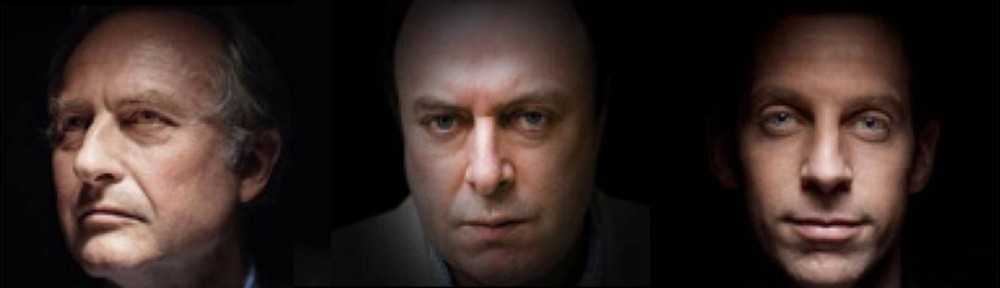
. . . [A large] share of the American public (19 percent) spurns organized religion in favor of a nondefined skepticism about faith. . . .
[…]
Most polls suggest that atheists are among the most disliked groups in the U.S. One study last year asked participants whether a fictional hit-and-run driver was more likely to be an atheist or a rapist. A majority chose atheist. In 2006, another study found that Americans rated atheists as less likely to agree with their vision of America than Muslims, Hispanics, or homosexuals. “Wherever there are religious majorities, atheists are among the least trusted people,” said University of British Columbia sociologist Will M. Gervais.
Category Archives: Activism & Advocacy
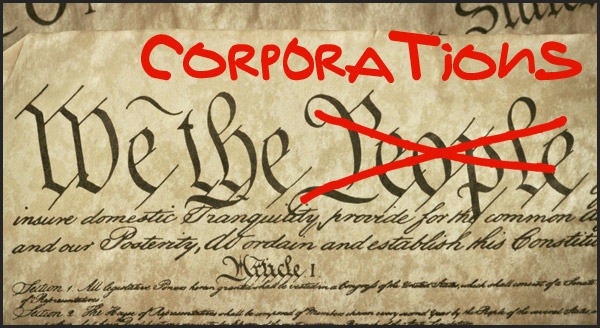
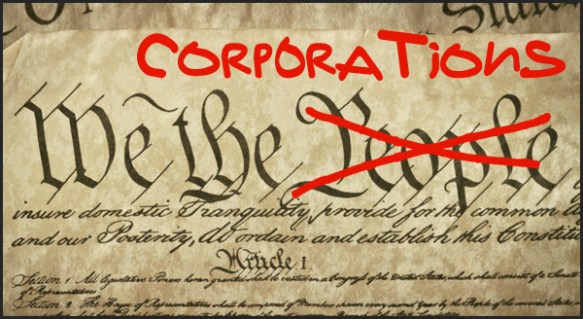
Whose Corporations? Our Corporations!
Historically, corporations were understood to be responsible to a complex web of constituencies, including employees, communities, society at large, suppliers, and shareholders. But in the era of deregulation, the interests of shareholders began to trump all the others. . . .
The Myth of Profit Maximizing
“It is literally – literally – malfeasance for a corporation not to do everything it legally can to maximize its profits. That’s a corporation’s duty to its shareholders.”
Since this sentiment is so familiar, it may come as a surprise that it is factually incorrect: In reality, there is nothing in any U.S. statute, federal or state, that requires corporations to maximize their profits. More surprising still is that, in this instance, the untruth was not uttered as propaganda by a corporate lobbyist but presented as a fact of life [A MUST READ, only seven pages] by one of the leading lights of the Democratic Party’s progressive wing, Sen. Al Franken. Considering its source, Franken’s statement says less about the nature of a U.S. business corporation’s legal obligations – about which it simply misses the boat – than it does about the point to which laissez-faire ideology has wormed its way into the American mind.
[…]
A Shift in Accountability
Even after eight years of Reagan and amid the burgeoning of free-market ideology, the Business Roundtable remained reluctant to place shareholders first, affirming in 1990 that “corporations are chartered to serve both their shareholders and society as a whole” and adding creditors to the 1981 list of constituencies, which it otherwise retained intact. It was only in 1997, in a new statement whose title substituted “Corporate Governance” for “Corporate Responsibility,” that it renounced attempts to balance the interests of corporate constituents and, having reversed its view, argued that taking care of shareholders was the best way to take care of the remaining stakeholders, rather than the other way around:
“In the Business Roundtable’s view, the paramount duty of management and of boards of directors is to the corporation’s stockholders; the interests of other stakeholders are relevant as a derivative of the duty to stockholders. The notion that the board must somehow balance the interests of stockholders against the interests of other stakeholders fundamentally misconstrues the role of directors.”
This doctrine, known as “shareholder primacy,” now reigns in the corporate world today, and it has so increased the power of those whom it has benefited that it will not be easy to dislodge. Those who propagate it believe, or would have us believe, that it is based in law; in fact, it is supported by no more than ideology.
American Fascist
Austin Cline: Third Reich Christianity: Nazi Germany as Implementation of a Christian Agenda
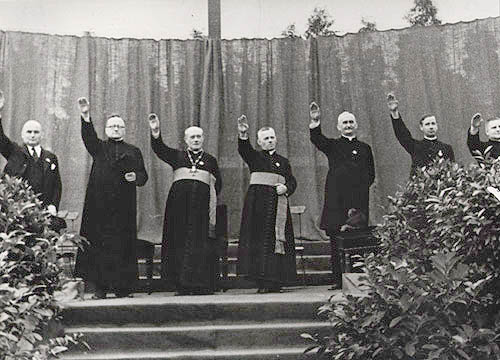
Hitler and the Nazis are often cited as an example of the horrible crimes which atheists have committed in the 20th century. They are only assumed to be atheists, though, because people can’t imagineChristians doing such things; in reality, Hitler explicitly appealed to Christianity on a regular basis and this was part of why he was popular. Not every Christian supported the Nazis, of course, but he was most popular with conservative Christians seeking a restoration of traditional values. . . . .
Christians may not like acknowledging that Nazi actions might have anything to do with Christianity, but Germany saw itself as a fundamentally Christian nation and millions of Christians in Germany enthusiastically endorsed Hitler and the Nazi Party in part because they saw both as embodiments of both German and Christian ideals. Conservative Christians who wanted a return to traditional values either voted for the Nazis or one of the other right-wing nationalist parties which eventually supported and merged with the Nazis.
Left vs. Right
AFGE: Applauds House Effort to Lift Civilian Workforce Cap
. . . Under the Defense Department’s co-called “Efficiency Initiative,” the number of civilian employees has been capped at 2010 levels, yet there has been no comparable cap on the contractor workforce. This has encouraged managers to use contractors instead of civilian employees, even though privatization is more costly and also violates the law.
Howard University Trayvon Martin “Am I Suspicious?” Campaign Video
A video depicting Howard University men standing against racial profiling and the killing of
Trayvon Martin in February 2012. More information on the efforts of the Howard Community to raise awareness can be found at:
https://www.facebook.com/groups/HUJusticeForTrayvonMartin/
Greta Christina: The Top 10 Reasons I Don’t Believe in God
“Does God exist?” is a valid and relevant question. Here are my top reasons why the answer is a resounding, “No.”
1: The consistent replacement of supernatural explanations of the world with natural ones.
2: The inconsistency of world religions.
3: The weakness of religious arguments, explanations, and apologetics.
4: The increasing diminishment of God.
5: The fact that religion runs in families.
6: The physical causes of everything we think of as the soul.
7: The complete failure of any sort of supernatural phenomenon to stand up to rigorous testing.
8: The slipperiness of religious and spiritual beliefs.
9: The failure of religion to improve or clarify over time.
10: The complete lack of solid evidence for God’s existence.
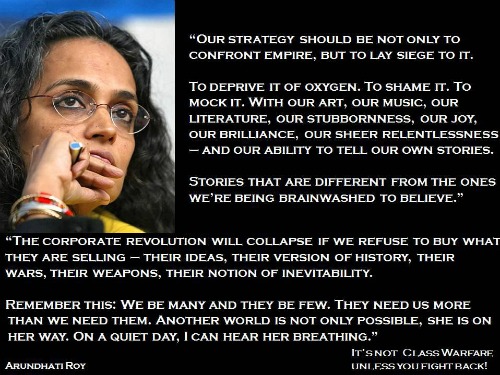
Which Award-Winning Author Thinks The 1% Needs Us More Than We Need Them?
Source: MoveOn.org
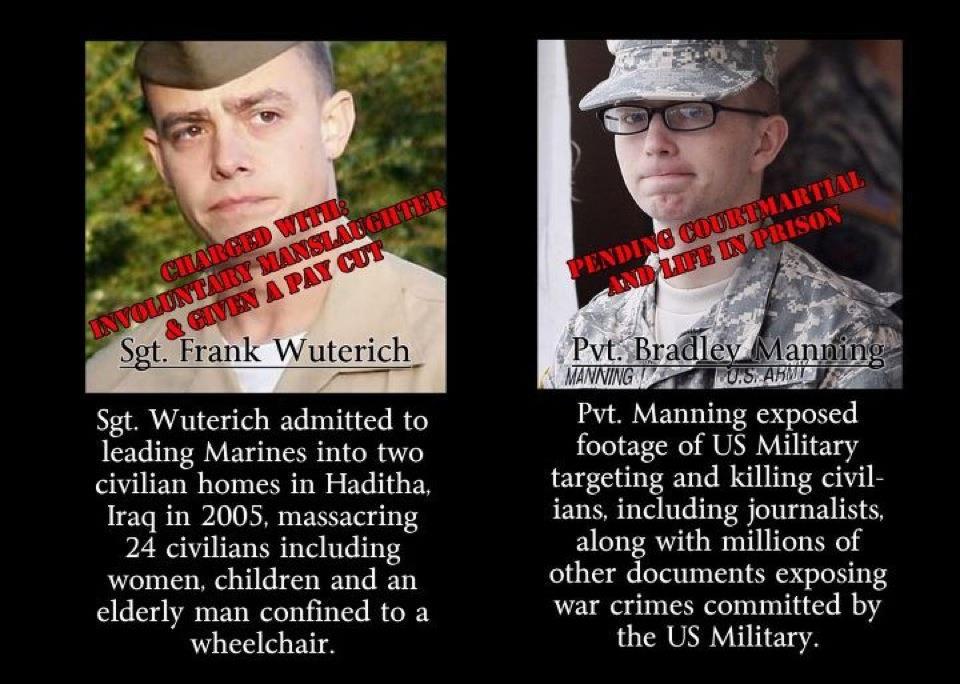
Meet “Cold Blooded Murder” U.S. Marine Sgt. Frank Wuterich, a U.S. War Criminal, and U.S. Army PVT Bradley Manning, a World Hero
Source: Beware of Images