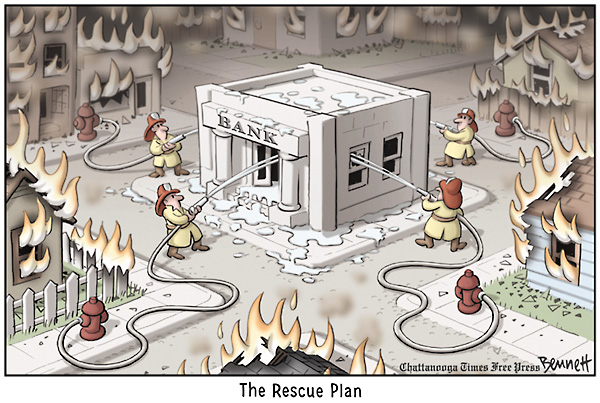
CAPITALISM: Shareholder vs. Stakeholder / Capitalist Class vs. Working Class / Bourgeoisie vs. Proletariat / Profit vs. People / 1% vs. 99%


Reality Check! President Obama has finally spoken truth to the long-standing myth that executive business experience brings added value to the Presidency. Do not for one New York second believe that he, or any other political puppet of the corporate state, is not on the former sides of the conditionals in the post title. He also blew a whole in the myth of military experience being a significant factor in execution of Commander-in-chief duties (puns intended). Do not for one New York second believe that he, or any other political puppet of the corporate state, is not on the sides of the military industrial complex either. Need we discuss the industrial police state . . . neither did I. [MSH]

HEALTH CARE: Socialized Medicine: Why Everyone Should Share the Costs / Al Stefanelli

“A society will be judged by how it cares for it’s weakest members.”

Understand, I do not begrudge anyone from earning a profit, nor do I have anything personally against the entrepreneurial spirit. We should all do what we can to better ourselves. However, I am of the position that health care is not a privilege, but a right. As well, I reason that we are all morally obligated to ensure that each of us has access to it. That the United States does not have a national health care program is a major moral failure, and what we have in place is little more than a venue for unethical profiteers within the pharmaceutical and insurance industries.

[…]

The United States needs a tax-payer funded (single-payer) national health care system. Totally and completely socialized and incurring no costs to anyone beyond what their taxes pay. Those who cannot pay due to disability, unemployment or other circumstances beyond their control should have the same access as those who do.

In my opinion, putting a dollar ahead of the health and welfare of a human being is immoral. National or Socialized medicine should be a no-brainer.

[…]

There should never be any individual who’s life is less important than a number on a profit and loss ledger.

Read more . . .

SOCIAL ACTIVISM: National Nurses United Director, RoseAnn DeMoro Talks Robin Hood Tax with Bill Moyers / (VIDEO)

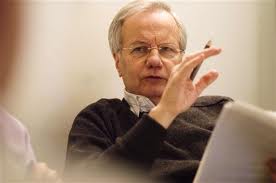
Moyers & Company, a current affairs program featuring Bill Moyers and airing on PBS stations nationwide,  had a segment on Sunday evening with RoseAnn DeMoro, executive director of National Nurses United, the largest union and professional association of registered nurses in the country, with 170,000 members.

The interview focuses on the union’s call for a Robin Hood Tax, a sales tax on Wall Street speculation that could raise up to $350 billion a year in revenue.

Watch interview here . . .

“The money generated,” says Moyers in the program note, “could be used for social programs and job creation – ultimately to people who, without a doubt, need it more than the banks do. Though the power and influence of Big Banking is intimidating, DeMoro and her organization have an inspiring history of defeating some of the toughest opponents in government and politics.”

The nurses see the enduring effects of economic hardship on patients and communities across the nation, says DeMoro. The revenue from the Robin Hood Tax is the first step to healing distressed communities and setting the United States on the road to a real recovery. More than 40 countries, including many of the fastest-growing economies, already have such a tax, and it may well be adopted European Union-wide this year.

Read more . . .

EDUCATION: Op-Ed / Open letter to High School Grads

Dear graduating senior,

I am begging your pardon for a somber reflection amid the joy of accomplishment: not to be a wet rag on the festivities of graduation, but a bright light on the realities of post-secondary education.

[…]

If you haven’t posted a good academic performance in high school, don’t believe a university, its leadership, advertisements or admissions officers who co-sign your promissory note with no responsibility for its payment obligation. They need paying students.

Stoking a deceitful dream on life support — an underappreciated, overfinanced, media-hyped charade — is the real deception, and the weight falls on your back, not theirs.

A shameful, elaborate sham, when one out of two college graduates this year are unemployable in their chosen field.

Look carefully at the costs and benefits of a university education. University officials may not tell you the truth: Enrollments could drop. Bankers will not tell you the truth: Interest income will fall off. Elected officials will not tell you the truth: Elections will be lost. Listen to those really concerned for you carefully.

Read more . . .

CAPITALISM: Interview / Richard Wolff on Challenging Capitalism in His New Book, “Occupy the Economy”

Can we challenge capitalism and prevail, considering that the top one percent control 50% of the available capital and the top five percent some 70% of the nation’s private funds?  Richard Wolff is a closely followed Truthout contributor on economics.  Currently, you can obtain his just-released “Occupy the Economy: Challenging Capitalism” directly from Truthout.  If you want to know about alternatives to the current destructive course of our economy and how we, as a nation, got to this point, get your copy of “Occupy the Economy” by clicking here.

The following is an interview with Richard Wolff by Truthout staff member Matt Renner.

Matt Renner: In your introduction to the book, you discuss New York City Mayor Michael Bloomberg’s “cleanliness” excuse for clearing the original Occupy Wall Street encampment at Liberty Square. Why do you think so many public officials and right-wing pundits describe the occupiers as “unclean”?

Richard D. Wolff: Their problem has been, and continues to be, that they have no response to Occupy’s basic attack on the inequity and antidemocratic social conditions summarized in the confrontation of, “1 percent against 99 percent.” They know that the vast majority of Americans feel the truth of Occupy’s social criticism, experience it in their lives, and sympathize with protest against and efforts to change a system with such unjust outcomes. So, they can refute little and need instead to distract public opinion from what Occupy focuses on.

One way to do that is to assert the existence of and then condemn some other quality or dimension of Occupy. In Bloomberg’s pathetic example, the best he and his advisers could come up with was a reference to Zuccotti Park as being “unclean” so as to then position the mayor and the police as militant janitors. Everyone who knows even a little about New York City knows that the mayor and the police preside over many filthy subway tunnels, highways, streets, empty lots and abandoned buildings without doing anything to clean them. So, suddenly asserting the importance of cleanliness simply exposed them to the ridicule such a position deserved. I suspect something similar is underway when others, perhaps taking their cue from Bloomberg in New York, decided to follow the cleanliness ploy.

Continue reading . . .
SOCIAL ACTIVISM: Chris Hedges / Why OWS Frightens the Corporate Elite


“I don’t waste any emotional or intellectual energy on these elections. All hope is in the street. All hope is through acts of civil disobedience. We may not win, but if we’re going to win that’s the only place we are going to win.”

Bill Moyers: Interview / The Social Consequences of Inequality / Richard Wilkinson (TED Talk VIDEO)

“If Americans want to live the American dream they should go to Denmark.”
~ Richard Wilkinson

Richard Wilkinson is an epidemiologist and a leader in international research of inequality. He is also the co-author of The Spirit Level: Why Greater Equality Makes Societies Stronger with Kate Pickett. Their book has been described by The Sunday Times of London as having “a big idea big enough to change political thinking. In half a page,” the Times says, “it tells you more about the pain of inequality than any play or novel could.”

His TED talk — “How economic inequality harms societies” — has garnered over 1 million views on the TED website since October 2011.

We caught up with him to talk about how inequality can be dangerous to our health.

Read interview, and watch TED talk video here . . .

Book Excerpt: “Occupy the Economy: Challenging Capitalism” / Richard Wolff

For the last half-century, capitalism has been a taboo subject in the United States. . . . Politicians repeated, robot-style, that the “U.S. is the greatest country in the world” and that “capitalism is the greatest economic system in the world.” Those few who have dared to raise questions or criticisms about capitalism have been either ignored or told to go live in North Korea, China or Cuba as if that were the only alternative to pro-capitalism cheerleading.

[…]

Questioning and criticizing capitalism have been taboo, treated by federal authorities, immigration officials, police and most of the public alike as akin to treason. Fear-driven silence has substituted for the necessary, healthy criticism without which all institutions, systems, and traditions harden into dogmas, deteriorate into social rigidities, or worse. Protected from criticism and debate, capitalism in the United States could and has indulged all its darker impulses and tendencies. No public exposure, criticism and movement for change could arise or stand in its way as the system and its effects became ever more unequal, unjust, inefficient and oppressive. Long before the Occupy movement arose to reveal and oppose what U.S. capitalism had become, that capitalism had divided the 1 percent from the 99 percent.

[…]

Across the pages that follow, what emerges is the central importance of how capitalism very particularly organizes production: masses of working people generate corporate profits that others take and use. Tiny boards of directors, selected by and responsible to tiny groups of major shareholders, gather and control corporate profits, thereby shaping and dominating society. That tiny minority (boards and major shareholders) of those associated with and dependent upon corporations make all the basic decisions—how, what, and where to produce and what to do with the profits. The vast majority of workers within and residents surrounding those capitalist corporations must live with the results of corporate decisions. Yet they are systematically excluded from participating in making those decisions. Nothing more glaringly contradicts democracy than how capitalism organizes the corporate enterprises where working people produce the goods and services without which modern life for everyone would be impossible.

From: Occupy the Economy: Challenging Capitalism By Richard Wolff

Read more . . .