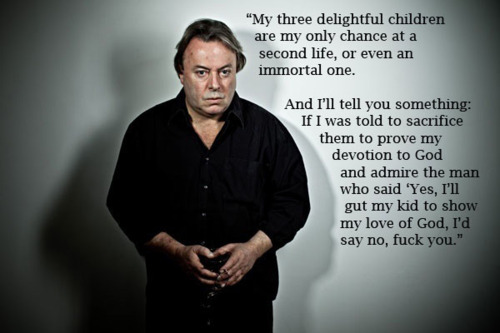
Wallace Shawn reads Howard Zinn

Actor Wallace Shawn reads the speech of historian Howard Zinn given at Johns Hopkins University on Civil Disobedience, November 1970. Part of a reading from Voices of a People’s History of the United States (Howard Zinn and Anthony Arnove) May 2, 2007 in New York, NY. 

Sam Harris: Life Without God, An Interview with Tim Prowse

Can you describe the process by which you lost your belief in the teachings of your Church?

An interesting thing happened while I was studying at East Texas Baptist University: I was told not to read Rudolf Bultmann. I asked myself: Why? What were they protecting me from? I picked up Bultmann’s work, and that decision is the catalyst that ultimately paved the road to today. Throughout my educational journey, which culminated in an Ordination from the United Methodist Church where I’ve served for seventeen years, I’ve continued to ask the question “Why?”

Ironically, it was seminary that inaugurated my leap of unfaith.  It was so much easier to believe when living in an uncritical, unquestioning, naïve state.  Seminary training with its demands for rigorous and intentional study and reflection coupled with its values of reason and critical inquiry began to undermine my naïveté.  I discovered theologians, philosophers and authors I never knew existed.  I found their questions stimulating but their answers often unsatisfying. For example, the Bible is rife with vileness evidenced by stories of sexual exploitation, mass murder and arbitrary mayhem.  How do we harmonize this fact with the conception of an all-loving, all-knowing God? While many have undertaken to answer this question even in erudite fashion, I found their answers lacking. Once I concluded that the Bible was a thoroughly human product and the God it purports does not exist, other church teachings, such as communion and baptism, unraveled rather quickly.  To quote Nietzsche, I was seeing through a different “perspective” – a perspective based on critical thinking, reason and deduction.  By honing these skills over time, reason and critical thinking became my primary tools and faith quickly diminished. Ultimately, these tools led to the undoing of my faith rather than the strengthening of it.

Read more . . . 
Anarchism Is Not What You Think It Is—And There’s a Whole Lot We Can Learn from It

On February 8, 1921 twenty thousand people, braving temperatures so low that musical instruments froze, marched in a funeral procession in the town of Dimitrov, a suburb of Moscow. They came to pay their respects to a man, Petr Kropotkin, and his philosophy, anarchism.

Some 90 years later few know of Kropotkin. And the word anarchism has been so stripped of substance that it has come to be equated with chaos and nihilism.  This is regrettable, for both the man and the philosophy that he did so much to develop have much to teach us in 2012. . . .

The precipitating event that led Kropotkin to embrace anarchism was the publication of Charles Darwin’s Origin of the Species in 1859. . . .

He spent the rest of his life promoting that concept and the theory of social structure known as anarchism. To Americans anarchism is synonymous with a lack of order. But to Kropotkin anarchist societies don’t lack order but the order emerges from rules designed by those who feel their impact, rules that encourage humanly scaled production systems and maximize individual freedom and social cohesion.

Read more . . . 

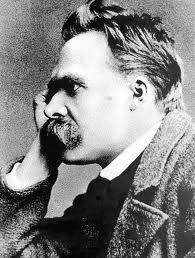
The Big Ideas Podcast: Friedrich Nietzsche’s ‘God is dead’

What did Nietzsche mean by the death of God? Benjamen Walker and guests explore the legacy of the German philosopher’s statement.

One of the most frequently quoted – and hotly debated – passages in modern philosophy appears in Section 125 of Friedrich Nietzsche’s The Gay Science. It’s worth quoting in full:

“God is dead. God remains dead. And we have killed him. How shall we comfort ourselves, the murderers of all murderers? What was holiest and mightiest of all that the world has yet owned has bled to death under our knives: who will wipe this blood off us? What water is there for us to clean ourselves? What festivals of atonement, what sacred games shall we have to invent? Is not the greatness of this deed too great for us? Must we ourselves not become gods simply to appear worthy of it?”

But the core statement is as ambiguous as it is catchy: was God an actual being that had ceased to exist, or had we merely stopped believing in him? In Nietzsche’s book, the words are spoken by a madman: did this mean that God was in fact still alive? Many have quipped: Nietzsche doesn’t look that alive these days either.

Listen to podcast here . . . 

Christopher Hitchens: In Defense of Richard Dawkins

If you haven’t read it, you will almost certainly have seen it: the critique of Professor Richard Dawkins that arraigns him for being too “strident” in his confrontations with his critics. According to this line of attack, Dawkins has no business stepping outside the academy to become a “public intellectual” and even less right to raise his voice when he chooses to do so. Implied in this rather hypocritical attack is the no less hypocritical hint that Dawkins might be better received if he were more polite and attract a better class of audience if he used more of the blessed restraint and reserve that is every Englishman’s birthright and which he obviously possesses in such heaping measure.

Read more . . .