Dave Zirin, sports editor for The Nation magazine, joins us from Muhammad Ali’s hometown, Louisville, Kentucky, where he will attend Ali’s funeral. Zirin recounts Ali’s activism against racism in the city and says, “[T]his funeral is, in so many respects, Muhammad Ali’s last act of resistance, because what he is doing is pushing the country to come together to honor the most famous Muslim in the world at a time when a presidential candidate is running on a program of abject bigotry against the Muslim people, and the other presidential candidate is somebody who has proudly stood with the wars in the Middle East.” Zirin’s recent article in The Nation is called “‘I Just Wanted to Be Free’: The Radical Reverberations of Muhammad Ali.” He’s the author of the Ali-themed book, “What’s My Name, Fool? Sports and Resistance in the United States.”
Category Archives: Social History
IN MEMORIAM: “R.I.P. Muhammed Ali – Why do we ‘Sanitize’ our Heroes?” / Thom Hartmann ☮
IN MEMORIAM: “Muhammad Ali, More Than Just a Boxer, Dead at 74” / Secular Talk / Kyle Kulinski☮
IN MEMORIAM: “Muhammad Ali’s Biggest Fights were Outside the Ring” / Vox ☮
IN MEMORIAM: Muhammad Ali / “I am the Greatest!” / 1942 – 2016 ☮
h/t: BBC News
SOCIAL HISTORY: “The Revolutionary Origins of Memorial Day and its Political Hijacking” / Ben Becker

The way the Civil War became officially remembered — through Memorial Day celebrations— was based on the erasure of the Black veteran and the liberated slave.
A day celebrating Black liberation utilized for white supremacy
What we now know as Memorial Day began as “Decoration Day” in the immediate aftermath of the U.S. Civil War. It was a tradition initiated by former slaves to celebrate emancipation and commemorate those who died for that cause.
These days, Memorial Day is arranged as a day “without politics”—a general patriotic celebration of all soldiers and veterans, regardless of the nature of the wars in which they participated. This is the opposite of how the day emerged, with explicitly partisan motivations, to celebrate those who fought for justice and liberation.
The concept that the population must “remember the sacrifice” of U.S. service members, without a critical reflection on the wars themselves, did not emerge by accident. It came about in the Jim Crow period as the Northern and Southern ruling classes sought to reunite the country around apolitical mourning, which required erasing the “divisive” issues of slavery and Black citizenship. These issues had been at the heart of the struggles of the Civil War and Reconstruction.
To truly honor Memorial Day means putting the politics back in. It means reviving the visions of emancipation and liberation that animated the first Decoration Days. It means celebrating those who have fought for justice, while exposing the cruel manipulation of hundreds of thousands of U.S. service members who have been sent to fight and die in wars for conquest and empire.
ANTINATALISM: “Are All the World’s Problems a Result of #Overpopulation?” / Thom Hartmann☮
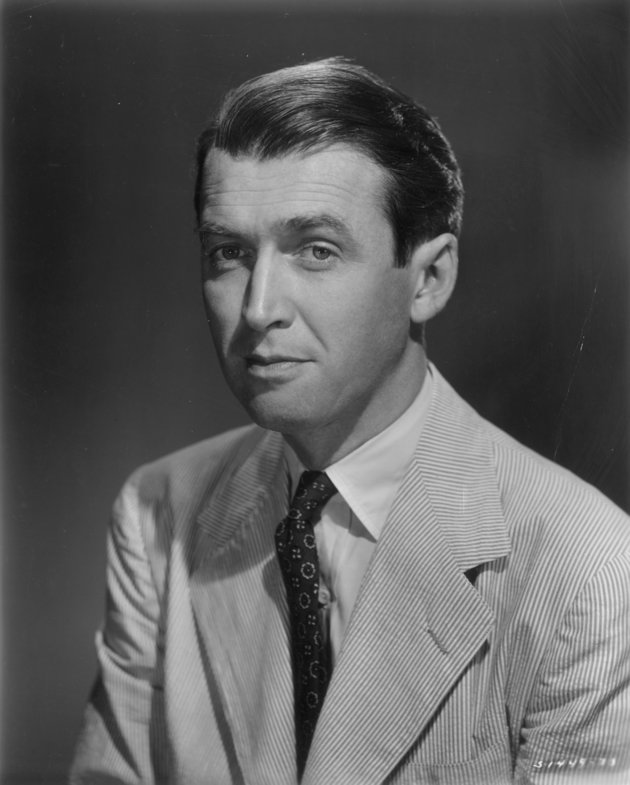
CLOTHING HISTORY: “So THAT’S Why it’s Called ‘Seersucker’” ☮
Seersucker’s a weird word.
If you break it down, what are we seeing and why do we want to suck it?
Well, seersucker’s etymology is a little more complex, and since we are officially in the seersucker season (what with the Kentucky Derby, Seersucker Day in D.C., and every hot day thereafter until Labor Day), we think it’s a great time to look at how this now-standard fabric got its strange name.
BOOK INTERVIEW: “To Have or To Be?” / Erich Fromm ☮
As always, Erich Fromm speaks with wisdom, compassion, learning and insight into the problems of individuals trapped in a social world that is needlessly cruel and hostile.
~ Noam Chomsky