Jonathan T. Pararajasingham: God and Logic – Why Reality Ain’t Big Enough for the Both of Them

In examination of the God hypothesis, we must first look to define realitylogicexistence and truth.

There are two ways to think about reality. The first is the “observable universe”, which is everything we will ever perceive through the senses. The second is “total reality”, which may include other realms, dimensions or the multiverse. We currently only glimpse total reality by the use of pure mathematics. When we examine reality, we find it to have certain properties; everything consists of matter or energy which follow fixed, consistent laws of nature which are mathematically describable.

Logic is derived from reality. In a sense, we made up the concept of “logic,” which follows the fact that the laws of nature are consistent and fixed, where matter is extremely well behaved in following such laws. Matter and energy can be thought of as logically describable. In this way, “logic” describes “reality” with ultimate precision. Various methods of verification (perception, testability, consistency, evidence and logic itself) support the logic of total reality. These methods have been placed in greater frameworks we now call science and mathematics, which are methods used to uncover the logic of reality. Essentially, logical methodology uncovers logical reality. Even total reality follows pure mathematics, which is intrinsically logical. Because of all this, we think of logic as a good thing simply because it describes reality so precisely.

Read more here . . . 

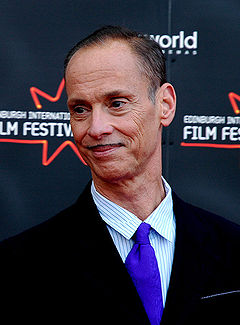
Quote: John Waters, On Books

John Samuel Waters, Jr. (born April 22, 1946)
American Filmmaker, Actor, Stand-up Comedian, Writer, Journalist, Visual Artist,
Art Collector, Openly Gay Man, Avid Supporter of Gay Rights and Gay Pride

We need to make books cool again. If you go home with somebody and they don’t have books, don’t fuck them.

Quote: Heinrich Heine

Christian Johann Heinrich Heine (13 December 1797 – 17 February 1856)
German Poet, Journalist, Essayist, Literary Critic. His verse and prose is distinguished by its satirical wit and irony. His radical political views led to many of his works being banned.

Where they have burned books, they will end in burning human beings.

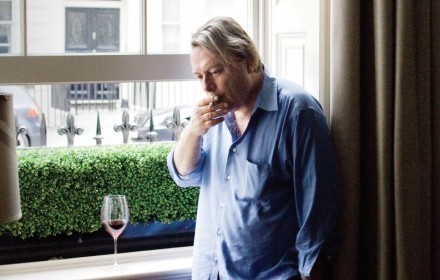
Quote: Christopher Hitchens, On Censorship

Christopher Eric Hitchens (13 April 1949 – 15 December 2011)
English-American, Literary Critic, Journalist, Author,
Essayist, Polemicist, and Outspoken Anti-theist

Don’t take refuge in the false security of consensus and the feeling that whatever you think you’re bound to be okay because you’re in the safely moral majority . . . my own opinion is enough for me and I claim the right to have it, defend it against any consensus, any majority, anywhere, anyplace, anytime; and any anyone who disagrees with this can pick a number, get in line, and kiss my ass.

Christopher Hitchens: Forced Merriment: The True Spirit of Christmas

One of my many reasons for not being a Christian is my objection to compulsory love. How much less appealing is the notion of obligatory generosity. To feel pressed to give a present is also to feel oneself passively exerting the equivalent unwelcome pressure upon other people. . . 

But the Christmas cycle imposes a deadening routine and predictability. This is why the accidental genius of Charles Dickens is to have made, of Ebenezer Scrooge, the only character in the story who has any personality to him—and the one whose stoic attempt at a futile resistance is invoked under the breath more than most people care to admit. . .

It also offends—by being so much in my face, without my having requested it and in spite of polite entreaties to desist—another celebrated precept about the right to be let alone. A manger on your lawn makes me yawn. A reindeer that strays from your lawn to mine is a nuisance at any time of year. Angels and menorahs on the White House lawn are an infraction of the Establishment Clause, which is as much designed to prevent religion from being corrupted by the state as it is to protect the public square from clerical encroachment.

The “wall of separation” has to be patrolled in small things as well as big ones. 

Read more . . .  

What Shall We Tell The Children?

. . . Children, I’ll argue, have a human right not to have their minds crippled by exposure to other people’s bad ideas—no matter who these other people are. Parents, correspondingly, have no god-given licence to enculturate their children in whatever ways they personally choose: no right to limit the horizons of their children’s knowledge, to bring them up in an atmosphere of dogma and superstition, or to insist they follow the straight and narrow paths of their own faith.

In short, children have a right not to have their minds addled by nonsense. And we as a society have a duty to protect them from it. So we should no more allow parents to teach their children to believe, for example, in the literal truth of the Bible, or that the planets rule their lives, than we should allow parents to knock their children’s teeth out or lock them in a dungeon.

That’s the negative side of what I want to say. But there will be a positive side as well. If children have a right to be protected from false ideas, they have too a right to be succoured by the truth. And we as a society have a duty to provide it. Therefore we should feel as much obliged to pass on to our children the best scientific and philosophical understanding of the natural world—to teach, for example, the truths of evolution and cosmology, or the methods of rational analysis—as we already feel obliged to feed and shelter them.

Read more . . .

New Statesman Preview: “The tyranny of the discontinuous mind” by Richard Dawkins

In “The tyranny of the discontinuous mind”, Dawkins wonders why we cling to absolutes of yes and no, black and white, rich and poor; pretending not to see the millions of grey areas in life. These absolutes, he argues, distort reality:

Dawkins goes on to consider a variety of these absolutes — where a blindness to intermediates may constrict or condemn us — beginning with the arguments proposed by anti-abortionists:

There are those who cannot distinguish a 16-cell embryo from a baby. They call abortion murder and feel righteously justified in committing real murder against a doctor – a thinking, feeling, sentient adult, with a loving family to mourn him . . .

It is amusing to tease such absolutists by confronting them with a pair of identical twins (they split after fertilisation, of course) and asking which twin got the soul, which twin is the non-person, the zombie. A puerile taunt? Maybe. But it hits home because the belief that it destroys is puerile, and ignorant.

Read more . . .

Posted by New Statesman – 19 December 2011 17:47

The Nation Magazine: Reading Christopher

His was truly a transatlantic voice, serviceable for skewering an international rogue’s gallery of politicians. His shots were fiercely partisan, precisely angled like a billiard shot, but the anger was controlled, even detached. When his anger overflowed on people or ideas he loathed (he was a good hater), he distilled it until it came out as gelid disdain. He took pride in always having the facts to back up his opinions, which never gave the impression of being shallow or glibly arrived at. . .

I take it as res ipsa loqitur (look at him—channeling Hitchensesque erudition) that he was soundly educated. But he wore his erudition lightly and used it practically, a storehouse to draw upon. He seemed to have read everything and remembered most of it.

Sarcasm and invective were prominent weapons in his armamentarium, of course, kept well oiled, ready to fire off against fools on both left and right. He was not particularly humorous, though some found him funny; irony was his most congenial mode.

We are proud to have been present at the creation of “our” Christopher Hitchens, one of the longest-running columnists in the magazine’s history. As a demonstration of his achievements in our pages, here is a degustation of his articles and columns from 1978 through 2006.

Read more . . .  

Beyond the Limits of Neoliberal Higher Education: Global Youth Resistance and the American/British Divide

                                 ***THIS IS A MUST READ***

Clearly, any institution that makes a claim to literacy, critical dialogue, informed debate, and reason is now a threat to a political culture in which ignorance; stupidity, lies, misinformation, and appeals to the common sense have become the only currency of exchange. And this seems to apply as well to the dominant media.
 How else to explain the widespread public support for politicians in the United States such as Herman Cain, who is as much of a buffoon as he is an exemplary symbol of illiteracy and ignorance in the service of the political spectacle. If fact, one can argue reasonably that the entire slate of presidential Republican Party candidates extending from Rick Santorum to Rick Perry and Michele Bachmann embody not simply a rejection of science, evidence, informed argument, and other elements associated with the Enlightenment, but a deep seated disdain and hatred for any vestige of a critical mind. Ignorance now replaces knowledge and impotence with power. Almost every position they take harks back to a pre-Enlightenment period when faith and cruelty ruled the day and ignorance became the modus operandi for legitimating political and ethical impotence. . . the value of higher education is now tied exclusively to the need for credentials. critical thinking has been devalued as a result of the growing corporatization of higher education. . . critical thinking has been devalued as a result of the growing corporatization of higher education. . . The current right-wing politics of illiteracy, exploitation, and cruelty can no longer hide in the cave of ignorance, legitimated by their shameful accomplices in the dominant media.

Read more . . .

Christopher Hitchens Night: A Review

“I’m not as I was,” Christopher Hitchens poignantly remarked recently. Afflicted by oesophageal cancer and, now, pneumonia, Hitchens, who I interviewed for the New Statesman last year, was too ill to appear in conversation with Stephen Fry at the Royal Festival Hall in London last night. But rather than cancelling the event, the organisers assembled an extraordinary selection of Hitchens’s comrades and friends to pay tribute to the great essayist and polemicist.
Read more . . .