The Radical History of Mother’s Day

There’s a good number of us who question holidays like Mother’s Day in which you spend more time feeding money into a system that exploits our love for our mothers than actually celebrating them.  It’s not unlike any other holiday in America in that its complete commercialization has stripped away so much of its genuine meaning, as well its history.  Mother’s Day is unique in its completely radical and totally feminist history, as much as it has been forgotten.

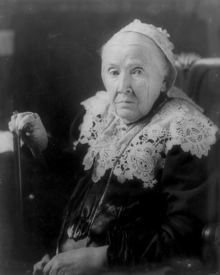
Mother’s Day began in America in 1870 when Julia Ward Howe wrote the Mother’s Day Proclamation. Written in response to the American Civil War and the Franco-Prussian War, her proclamation called on women to use their position as mothers to influence society in fighting for an end to all wars. She called for women to stand up against the unjust violence of war through their roles as wife and mother, to protest the futility of their sons killing other mothers’ sons.

Howe wrote:

Arise, then, women of this day!

Arise, all women who have hearts, Whether our baptism be of water or of tears!

Say firmly: “We will not have great questions decided by irrelevant agencies, Our husbands will not come to us, reeking with carnage, for caresses and applause. Our sons shall not be taken from us to unlearn All that we have been able to teach them of charity, mercy and patience. We, the women of one country, will be too tender of those of another country To allow our sons to be trained to injure theirs.”

[Read the remainder of Howe’s quote here]

The holiday caught on years later when a West Virginia women’s group led by Anna Reeves Jarvis began promoting it as a way to reunite families after the Civil War.  After Jarvis’ death, her daughter began a campaign for the creation of an official Mother’s Day in honor of peace. Devoting much of her life to the cause, it wasn’t until 1914 when Woodrow Wilson signed it into national observance in 1914.

The holiday flourished, along with the flower industry.  The business journal, the Florists Review, actually admitted to its desire to exploit the holiday. Jarvis was strongly opposed to every aspect of the holiday’s commercialization, arrested for protesting the sale of flowers, and petitioning to stop the creation of a Mother’s Day postage stamp.

Today we are in multiple wars that continue to claim the lives of thousands of sons and daughters.  We are also experiencing a still-rising commercialization of nearly every aspect of life; the exploitation of every possible human event and emotion at the benefit of corporations.

Let’s take this Mother’s Day to excuse ourselves from the pressure to consume and remember its radical roots – that mothers, or rather all women, in fact, all people, have a stake in war and a responsibility as American citizens to protest the incredible violence that so many fellow citizens, here and abroad, must suffer through.

Read more . . .

Greta Christina: Why Atheists Have Become a Kick-Ass Movement You Want on Your Side

Atheists are becoming a force to be reckoned with. They are a powerful ally when inspired to take action — and a powerful opponent when they’re treated like dirt.

Why would any organization or social change movement want to ally itself with a community that’s energetic, excited about activism, highly motivated, increasingly visible, good at fundraising, good at getting into the news, increasingly populated by young people, and with a proven track record of mobilizing online in massive numbers on a moment’s notice?

If you need to ask that — maybe you shouldn’t be in political activism.

And if you don’t need to ask that — if reading that paragraph is making you clutch your chest and drool like a baby — maybe you should be paying attention to the atheist movement.

Continue reading . . .

Highly Religious People Are Less Motivated by Compassion Than Are Non-Believers

“Love thy neighbor” is preached from many a pulpit. But new research from the University of California, Berkeley, suggests that the highly religious are less motivated by compassion when helping a stranger than are atheists, agnostics and less religious people.

[…]

In the study, the link between compassion and generosity was found to be stronger for those who identified as being non-religious or less religious.

“Overall, we find that for less religious people, the strength of their emotional connection to another person is critical to whether they will help that person or not,” said UC Berkeley social psychologist Robb Willer, a co-author of the study. “The more religious, on the other hand, may ground their generosity less in emotion, and more in other factors such as doctrine, a communal identity, or reputational concerns.”

[…]

“Overall, this research suggests that although less religious people tend to be less trusted in the U.S., when feeling compassionate, they may actually be more inclined to help their fellow citizens than more religious people,” Willer said.

Read more . . .

Losing Your Religion: Analytic Thinking Can Undermine Belief

People who are intuitive thinkers are more likely to be religious, but getting them to think analytically even in subtle ways decreases the strength of their belief, according to a new study in Science.

[…]

Analytic thinking undermines belief because, as cognitive psychologists have shown, it can override intuition. And we know from past research that religious beliefs—such as the idea that objects and events don’t simply exist but have a purpose—are rooted in intuition. “Analytic processing inhibits these intuitions, which in turn discourages religious belief,” [British Columbia psychologist, Ara] Norenzayan explains.

Read more . . . 

Instinctive Thinkers More Likely to Believe in a Personal God – and Less Likely to be Atheists

Late last year some fascinating research revealed that people who take a more deliberative approach to problem solving – rather than just going with their instincts – are also less religious. Now some independent research not only confirms those findings, but also extends them to show how there is a progressive link thinking style and decreasing religious beliefs.

[…]

The key results are shown in the figure. People who believe in a personal god are disproportionately likely to have got every question wrong.

Pantheists, who believe in god as an impersonal force, did better. Deists, who believe in an impersonal god who does not intervene in the universe, did better still, and agnostics even better. Atheists were the most likely to give correct answers.

Read more . . .

via: The Atheism News Magazine

How to Enjoy Reading Shakespeare

[…]

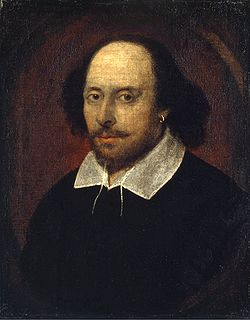
The first thing you have to do when confronting Shakespeare is break down the wall of resistance that has been constructed between you and him by a cultural atmosphere fraught with willful misunderstanding. For instance, how many times have you heard someone say that Shakespeare wrote in Old English or Middle English? That right there might be enough to put you off. But both of those claims are patently false.

[…]

Shakespeare wrote in Modern English, the same language that we speak today. [. . .] Your problem with understanding Shakespeare is due to his language being poetic. Most of your everyday discourse has become so pedestrian that your ears have become unable to tune in to language that aspires to greater heights. This may or may not be your fault. We all are aware that the state of education in this country is woefully bleak. But why submit to the prevailing philistine attitude without a fight?

Read more . . .

Conservative Politics, ‘Low-Effort’ Thinking Linked In New Study [I’m shocked, shocked I tell you!]

Conservatives and liberals don’t seem to agree about much, and they might not agree about recent studies linking conservatism to low intelligence and “low-effort” thinking.

As The Huffington Post reported in February, a study published in the journal “Psychological Science” showed that children who score low on intelligence tests gravitate toward socially conservative political views in adulthood–perhaps because conservative ideologies stress “structure and order” that make it easier to understand a complicated world.

Ouch.

And now there’s the new study linking conservative ideologies to “low-effort” thinking.

Read more . . .

Intelligence Study Links Low I.Q. To Prejudice, Racism, Conservatism

Are racists dumb? Do conservatives tend to be less intelligent than liberals? A provocative new study from Brock University in Ontario suggests the answer to both questions may be a qualified yes.

The study, published in Psychological Science, showed that people who score low on I.Q. tests in childhood are more likely to develop prejudiced beliefs and socially conservative politics in adulthood.

[…]

. . . People of low intelligence gravitate toward socially conservative ideologies, which stress resistance to change and, in turn, prejudice[.]

Read more . . .

Whose Corporations? Our Corporations!

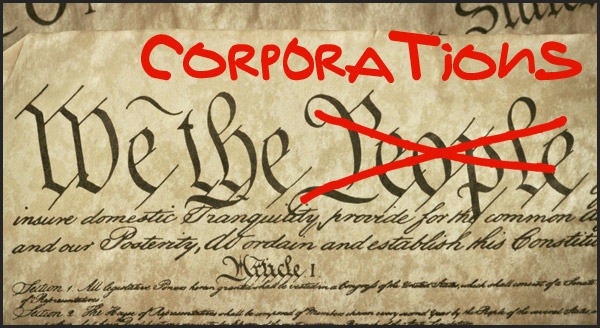
Historically, corporations were understood to be responsible to a complex web of constituencies, including employees, communities, society at large, suppliers, and shareholders. But in the era of deregulation, the interests of shareholders began to trump all the others. . . .

The Myth of Profit Maximizing

“It is literally – literally – malfeasance for a corporation not to do everything it legally can to maximize its profits. That’s a corporation’s duty to its shareholders.”

Since this sentiment is so familiar, it may come as a surprise that it is factually incorrect: In reality, there is nothing in any U.S. statute, federal or state, that requires corporations to maximize their profits. More surprising still is that, in this instance, the untruth was not uttered as propaganda by a corporate lobbyist but presented as a fact of life [A MUST READ, only seven pages] by one of the leading lights of the Democratic Party’s progressive wing, Sen. Al Franken. Considering its source, Franken’s statement says less about the nature of a U.S. business corporation’s legal obligations – about which it simply misses the boat – than it does about the point to which laissez-faire ideology has wormed its way into the American mind.

[…]

A Shift in Accountability

Even after eight years of Reagan and amid the burgeoning of free-market ideology, the Business Roundtable remained reluctant to place shareholders first, affirming in 1990 that “corporations are chartered to serve both their shareholders and society as a whole” and adding creditors to the 1981 list of constituencies, which it otherwise retained intact. It was only in 1997, in a new statement whose title substituted “Corporate Governance” for “Corporate Responsibility,” that it renounced attempts to balance the interests of corporate constituents and, having reversed its view, argued that taking care of shareholders was the best way to take care of the remaining stakeholders, rather than the other way around:

“In the Business Roundtable’s view, the paramount duty of management and of boards of directors is to the corporation’s stockholders; the interests of other stakeholders are relevant as a derivative of the duty to stockholders. The notion that the board must somehow balance the interests of stockholders against the interests of other stakeholders fundamentally misconstrues the role of directors.”

This doctrine, known as “shareholder primacy,” now reigns in the corporate world today, and it has so increased the power of those whom it has benefited that it will not be easy to dislodge. Those who propagate it believe, or would have us believe, that it is based in law; in fact, it is supported by no more than ideology.

Read more . . .