Sam Harris: Voice of Reason / The Morality of God
1
. . . [W]hile the secular arguments for dictatorship have been greatly weakened, the religious arguments for it have scarcely changed at all. Religion is very much a holdover from the dark ages of the past, and the world’s holy books still enshrine the ancient demands for us to bow down and obey the (conveniently unseen and absent) gods, and more importantly, the human beings who claim the right to act as their representatives. It’s no surprise, then, that the most fervent advocates of religion in the modern world are also the most deeply inculcated with this mindset of command and obedience. . . .
In sharp contrast to the religious and conservative worldview of obedience and submission, the worldview of freethinkers and progressives at its best is one that exalts freedom and liberty — freedom to make our own choices, freedom of the mind to travel and explore wherever it will. These are our commandments: Think for yourself and don’t blindly bow down to the claims of another. Exercise your own best judgment. Ask questions and investigate whether what you’ve been taught is true.
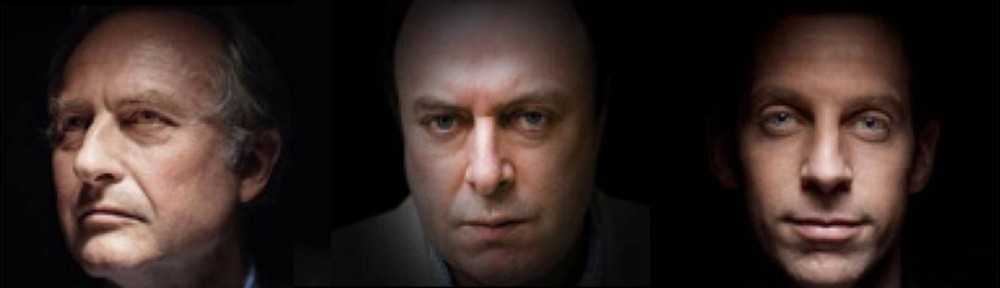
 Sam Harris, Ph.D. (born 1967)
American author, philosopher, neuroscientist, co-founder and CEO of
Project Reason, whose main aim is the promotion of scientific knowledge
and secular values within society, and outspoken atheist
Can you describe the process by which you lost your belief in the teachings of your Church?
An interesting thing happened while I was studying at East Texas Baptist University: I was told not to read Rudolf Bultmann. I asked myself: Why? What were they protecting me from? I picked up Bultmann’s work, and that decision is the catalyst that ultimately paved the road to today. Throughout my educational journey, which culminated in an Ordination from the United Methodist Church where I’ve served for seventeen years, I’ve continued to ask the question “Why?”
Ironically, it was seminary that inaugurated my leap of unfaith. It was so much easier to believe when living in an uncritical, unquestioning, naïve state. Seminary training with its demands for rigorous and intentional study and reflection coupled with its values of reason and critical inquiry began to undermine my naïveté. I discovered theologians, philosophers and authors I never knew existed. I found their questions stimulating but their answers often unsatisfying. For example, the Bible is rife with vileness evidenced by stories of sexual exploitation, mass murder and arbitrary mayhem. How do we harmonize this fact with the conception of an all-loving, all-knowing God? While many have undertaken to answer this question even in erudite fashion, I found their answers lacking. Once I concluded that the Bible was a thoroughly human product and the God it purports does not exist, other church teachings, such as communion and baptism, unraveled rather quickly. To quote Nietzsche, I was seeing through a different “perspective” – a perspective based on critical thinking, reason and deduction. By honing these skills over time, reason and critical thinking became my primary tools and faith quickly diminished. Ultimately, these tools led to the undoing of my faith rather than the strengthening of it.
. . . Of course, if you are anything like my friends, you will refuse to believe this. And that should give you some sense of what we are up against whenever we confront religion.
 Sam Harris, Ph.D. (born 1967)
Neuroscientist, Author, and Outspoken Atheist
The Catholic Church has spent two millennia demonizing human sexuality to a degree unmatched by any other institution, declaring the most basic, healthy, mature, and consensual behaviors taboo. Indeed, this organization still opposes the use of contraception, preferring, instead, that the poorest people on earth be blessed with the largest families and the shortest lives. As a consequence of this hallowed and incorrigible stupidity, the Church has condemned generations of decent people to shame and hypocrisy — or to Neolithic fecundity, poverty, and death by AIDS. Add to this inhumanity the artifice of cloistered celibacy, and you now have an institution — one of the wealthiest on earth — that preferentially attracts pederasts, pedophiles, and sexual sadists into its ranks, promotes them to positions of authority, and grants them privileged access to children. Finally, consider that vast numbers of children will be born out of wedlock, and their unwed mothers vilified, wherever Church teaching holds sway — leading boys and girls by the thousands to be abandoned to Church-run orphanages only to be raped and terrorized by the clergy. Here, in this ghoulish machinery set to whirling through the ages by the opposing winds of shame and sadism, we mortals can finally glimpse how strangely perfect are the ways of the Lord.
Sam Harris and Richard Dawkins discuss
Who Says Science has Nothing to Say About Morality?
Taped at
The Sheldonian Theatre
University of Oxford
04.12.2011
Earlier this year, Andrew Zak Williams asked public figures why they believe in God. Now it’s the turn of the atheists – from A C Grayling to P Z Myers – to explain why they don’t.

 Always Question Authority