***MUST WATCH***MUST WATCH ***MUST WATCH***MUST WATCH***
Thom Hartmann: Norwegians Heckle Fear with Singing not Bombs
1
***MUST WATCH***MUST WATCH ***MUST WATCH***MUST WATCH***
With the nation’s unemployment rate still above eight percent, millions of Americans are looking for work, and the country’s biggest corporations are hiring. According to a new report from the Wall Street Journal, however, many of those corporations are adding jobs overseas at a faster pace than they are at home. Even worse, others are cutting their domestic workforces while adding jobs in other countries at a rapid pace.
 Click on image to enlarge
An exhaustive new study by media watchdog Fairness & Accuracy in Reporting shows that the Sunday morning talk shows have been dominated over the last eight months by white, Republican men.
[…]
The average American would be hard-pressed to see evidence of this “war.” Millions of people meet regularly in houses of worship. What’s more, those institutions are tax exempt. Many denominations participate in taxpayer-funded social service programs. Their clergy regularly speak out on the issues of the day. In the political arena, religious leaders are treated with great respect.
Furthermore, religious organizations often get special breaks that aren’t accorded to their secular counterparts. Houses of worship aren’t required to report their income to the Internal Revenue Service. They don’t have to apply for tax-exempt status; they receive it automatically as soon as they form. Religious entities are routinely exempted from employment laws, anti-discrimination measures and even routine health and safety inspections.
Unlike secular lobbies, religious groups that work with legislators on Capitol Hill don’t have to register with the federal government and are free from the stringent reporting requirements imposed on any group that seeks to influence legislation.
Religion in America would seem to be thriving in this “hands-off” atmosphere, as evidenced by church attendance rates, which in the United States tend to be higher than any other Western nation. So where springs this “war on religion” talk?
[…]
. . . [A large] share of the American public (19 percent) spurns organized religion in favor of a nondefined skepticism about faith. . . .
[…]
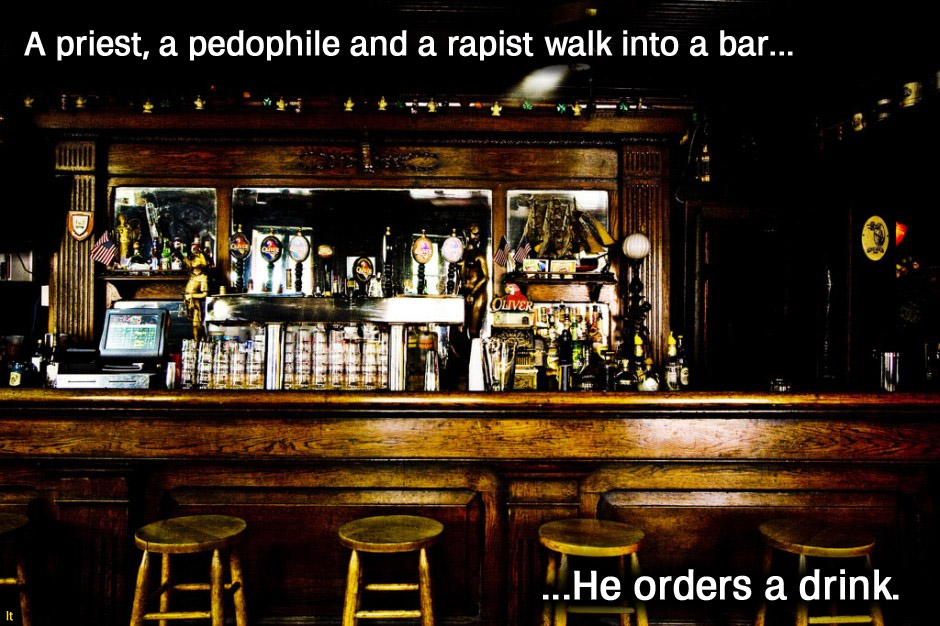
Most polls suggest that atheists are among the most disliked groups in the U.S. One study last year asked participants whether a fictional hit-and-run driver was more likely to be an atheist or a rapist. A majority chose atheist. In 2006, another study found that Americans rated atheists as less likely to agree with their vision of America than Muslims, Hispanics, or homosexuals. “Wherever there are religious majorities, atheists are among the least trusted people,” said University of British Columbia sociologist Will M. Gervais.
Conservatives and liberals don’t seem to agree about much, and they might not agree about recent studies linking conservatism to low intelligence and “low-effort” thinking.
As The Huffington Post reported in February, a study published in the journal “Psychological Science” showed that children who score low on intelligence tests gravitate toward socially conservative political views in adulthood–perhaps because conservative ideologies stress “structure and order” that make it easier to understand a complicated world.
Ouch.
And now there’s the new study linking conservative ideologies to “low-effort” thinking.
Are racists dumb? Do conservatives tend to be less intelligent than liberals? A provocative new study from Brock University in Ontario suggests the answer to both questions may be a qualified yes.
The study, published in Psychological Science, showed that people who score low on I.Q. tests in childhood are more likely to develop prejudiced beliefs and socially conservative politics in adulthood.
[…]
. . . People of low intelligence gravitate toward socially conservative ideologies, which stress resistance to change and, in turn, prejudice[.]




 Always Question Authority