Earlier this year, Andrew Zak Williams asked public figures why they believe in God. Now it’s the turn of the atheists – from A C Grayling to P Z Myers – to explain why they don’t.
Faith no more
Reply
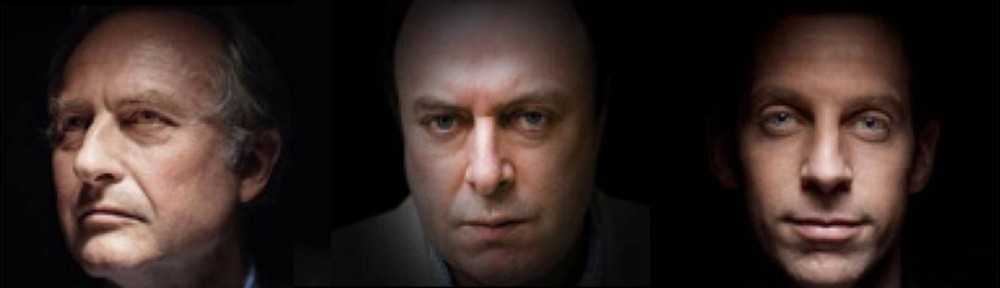
 Image found here on 12.22.2011
In A Nutshell…
The mind virus of religious belief preys on fear, warps instinctive attributes and skews morality. It contradicts responsible behavior, reason and compassion. It retards free will and causes a lack of ability to differentiate between rational and irrational choices. It allows the religionist to exist in a perfectly rational way in many other aspects of their existence in society while the infected area of the mind is stuck in a cyclical delusion. . .
Conversion Immersion…
Just as a physical virus does, Fundamental Christianity protects itself by sequestering the infected host against outside attack. Thus, the “world” is discredited. Any evidence that is contrary to doctrine is willfully ignored and taught as persecution. In the real world, this stunting of intelligence causes a decline in mental health due to the allowance of instruction only through approved church doctrine. . .
Reason Is The Enemy…
The viral use of fear is particularly effective on believers who were already ignorant and superstitious prior to their conversion, but the virus of fundamental religion has propagated and adapted well only until very recently. . . The virus of fundamental Christianity is getting most of the press and although it is often marketed as the true religion of love and tolerance, inwardly it is a destructive force that causes division, promotes willful ignorance and retards intellectual growth. . .
An Atheist’s “Great Hope”
The rise of atheism on planet Earth has already caused fundamental religious belief problems maintaining itself in our post-modern world. Religious apologetics have stagnated. Like a virus that is running toward the end of its course, the meme of fundamentalism is losing its ability to replicate.
 Posted on December 21, 2011 by Bengie
In “The tyranny of the discontinuous mind”, Dawkins wonders why we cling to absolutes of yes and no, black and white, rich and poor; pretending not to see the millions of grey areas in life. These absolutes, he argues, distort reality:
Dawkins goes on to consider a variety of these absolutes — where a blindness to intermediates may constrict or condemn us — beginning with the arguments proposed by anti-abortionists:
There are those who cannot distinguish a 16-cell embryo from a baby. They call abortion murder and feel righteously justified in committing real murder against a doctor – a thinking, feeling, sentient adult, with a loving family to mourn him . . .
It is amusing to tease such absolutists by confronting them with a pair of identical twins (they split after fertilisation, of course) and asking which twin got the soul, which twin is the non-person, the zombie. A puerile taunt? Maybe. But it hits home because the belief that it destroys is puerile, and ignorant.
Posted by New Statesman – 19 December 2011 17:47
Hitch
The moment it was announced that Christopher Hitchens was sick with cancer, eulogies began spilling into print and from the podium. No one wanted to deny the possibility that he would recover, of course, but neither could we let the admiration we felt for him go unexpressed. It is a cliché to say that he was one of a kind and none can fill his shoes—but Hitch was and none can. In his case not even the most effusive tributes ring hollow. There was simply no one like him.
One of the joys of living in a world filled with stupidity and hypocrisy was to see Hitch respond. That pleasure is now denied us. The problems that drew his attention remain—and so does the record of his brilliance, courage, erudition, and good humor in the face of outrage. But his absence will leave an enormous void in the years to come. Hitch lived an extraordinarily large life. (Read his memoir, Hitch-22, and marvel.) It was too short, to be sure—and one can only imagine what another two decades might have brought out of him—but Hitch produced more fine work, read more books, met more interesting people, and won more arguments than most of us could in several centuries.
I first met Hitch at a dinner at the end of April 2007, just before the release of his remarkable book god is not Great. After a long evening, my wife and I left him standing on the sidewalk in front of his hotel. His book tour was just beginning, and he was scheduled to debate on a panel the next morning. It was well after midnight, but it was evident from his demeanor that his clock had a few hours left to run. I had heard the stories about his ability to burn the candle at both ends, but staggering there alongside him in the glare of a street lamp, I made a mental note of what struck me as a fact of nature—tomorrow’s panel would be a disaster.
I rolled out of bed the following morning, feeling quite wrecked, to see Hitch holding forth on C-SPAN’s Book TV, dressed in the same suit he had been wearing the night before. Needless to say, he was effortlessly lucid and witty—and taking no prisoners. There should be a name for the peculiar cocktail of emotion I then enjoyed: one part astonishment, one part relief, two parts envy; stir. It would not be the last time I drank it in his honor.
Since that first dinner, I have felt immensely lucky to count Hitch as a friend and colleague—and very unlucky indeed not to have met him sooner. Before he became ill, I had expected to have many more years in which to take his company for granted. But our last meeting was in February of this year, in Los Angeles, where we shared the stage with two rabbis. His illness was grave enough at that point to make the subject of our debate—Is there an afterlife?—seem a touch morbid. It also made traveling difficult for him. I was amazed that he had made the trip at all.
The evening before the event, we met for dinner, and I was aware that it might be our last meal together. I was also startled to realize that it was our first meal alone. I remember thinking what a shame it was—for me—that our lives had not better coincided. I had much to learn from him.I have been privileged to witness the gratitude that so many people feel for Hitch’s life and work—for, wherever I speak, I meet his fans. On my last book tour, those who attended my lectures could not contain their delight at the mere mention of his name—and many of them came up to get their books signed primarily to request that I pass along their best wishes to him. It was wonderful to see how much Hitch was loved and admired—and to be able to share this with him before the end.
I will miss you, brother.
His was truly a transatlantic voice, serviceable for skewering an international rogue’s gallery of politicians. His shots were fiercely partisan, precisely angled like a billiard shot, but the anger was controlled, even detached. When his anger overflowed on people or ideas he loathed (he was a good hater), he distilled it until it came out as gelid disdain. He took pride in always having the facts to back up his opinions, which never gave the impression of being shallow or glibly arrived at. . .
I take it as res ipsa loqitur (look at him—channeling Hitchensesque erudition) that he was soundly educated. But he wore his erudition lightly and used it practically, a storehouse to draw upon. He seemed to have read everything and remembered most of it.
Sarcasm and invective were prominent weapons in his armamentarium, of course, kept well oiled, ready to fire off against fools on both left and right. He was not particularly humorous, though some found him funny; irony was his most congenial mode.
We are proud to have been present at the creation of “our” Christopher Hitchens, one of the longest-running columnists in the magazine’s history. As a demonstration of his achievements in our pages, here is a degustation of his articles and columns from 1978 through 2006.
Chomsky argues that the US government has done exactly what Osama bin Laden wanted it to do: Dig into a series of expensive and bloody wars in Muslim countries, draining the American economy and causing many civilian casualties. . . 9-11 is a crash course in America’s terrorism against inconvenient regimes, and a primer in the ways that those in power have misled the American public by suggesting that September 11 happened in a vacuum. . . He explains the hypocrisy of the US government’s definition of terrorism – the use of violence for political or psychological goals rather than monetary gain – in light of the fact that US government agencies have been using exactly those methods for decades, directly and indirectly.
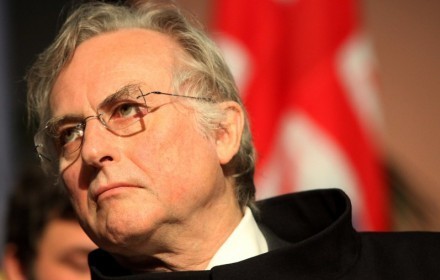


 Always Question Authority