PSYCHOLOGY – COGNITIVE PSYCHOLOGY: “Thinking, Fast and Slow” / Daniel Kahneman / Animated Book Review ☮
Reply

The US is facing uncertain times. While it remains the only global superpower, it is no longer able to influence events and outcomes to its liking, at least not for the most part. Frustration and worry about the risk of upcoming disasters seem to far outweigh US voters’ hopes for a more rational and just world order. Meanwhile, Noam Chomsky argues, the rise and popularity of Donald Trump is occurring due to the fact that US society is breaking down.
In this exclusive interview with Truthout, Noam Chomsky addresses contemporary developments in both the United States and around the world and challenges prevailing views about class warfare, neoliberalism as the outcome of economic laws, the role of the US as a global power, the status of emerging economies and the power of the Israel Lobby.
CJ Polychroniou: Noam, you have said that the rise of Donald Trump is largely due to the breakdown of American society. What exactly do you mean by this?
Noam Chomsky: The state-corporate programs of the past 35 or so years have had devastating effects on the majority of the population, with stagnation, decline and sharply enhanced inequality being the most direct outcomes. This has created fear and has left people feeling isolated, helpless, victims of powerful forces they can neither understand or influence. The breakdown is not caused by economic laws. They are policies, a kind of class war initiated by the rich and powerful against the working population and the poor. This is what defines the neoliberalism period, not only in the US but in Europe and elsewhere. Trump is appealing to those who sense and experience the breakdown of American society — to deep feelings of anger, fear, frustration, hopelessness, probably among sectors of the population that are seeing an increase in mortality, something unheard of apart from war.
LONDON
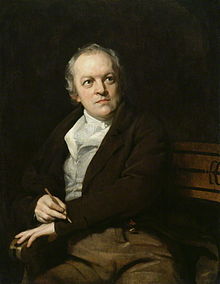
1794I wander thro’ each charter’d street,
Near where the charter’d Thames does flow.
And mark in every face I meet
Marks of weakness, marks of woe.In every cry of every Man,
In every Infants cry of fear,
In every voice: in every ban,
The mind-forg’d manacles I hearHow the Chimney-sweepers cry
Every black’ning Church appalls,
And the hapless Soldiers sigh
Runs in blood down Palace wallsBut most thro’ midnight streets I hear
How the youthful Harlots curse
Blasts the new-born Infants tear
And blights with plagues the Marriage hearseReference: SparkNotes
 I think I could turn and live with animals, they’re so placid and self contain’d,. . . .
They do not sweat and whine about their condition,
They do not lie awake in the dark and weep for their sins,
They do not make me sick discussing their duty to God,
Not one is dissatisfied, not one is demented with the mania of owning things,
Not one kneels to another, nor to his kind that lived thousands of years ago,
Not one is respectable or unhappy over the earth.
~ Walt Whitman, Leaves of Grass, 1891 edition
On this date in 1819, Walt Whitman [May 31, 1819 – March 26, 1892] was born on Long Island. After working as clerk, teacher, journalist and laborer, Whitman wrote his masterpiece, Leaves of Grass, pioneering free verse poetry in a humanistic celebration of humanity, in 1855. Emerson, whom Whitman revered, said of Leaves of Grass that it held “incomparable things incomparably said.” During the Civil War, Whitman worked as an army nurse, later writing Drum Taps (1865) and Memoranda During the War (1867). His health compromised by the experience, he was given work at the Treasury Department in Washington, D.C. After a stroke in 1873, which left him partially paralyzed, Whitman lived his next 20 years with his brother, writing mainly prose, such as Democratic Vistas (1870). Leaves of Grass was published in nine editions, with Whitman elaborating on it in each successive edition. In the preface of the 1855 edition of Leaves of Grass, Whitman wrote, “This is what you shall do: Love the earth and sun and animals, despise riches, give alms to everyone that asks, stand up for the stupid and crazy, devote your income and labor to others, hate tyrants, argue not concerning God.” In 1881, the book had the compliment of being banned by the commonwealth of Massachusetts on charges of immorality.
Whitman was at most a Deist who scorned religion (see several samples of his views below). D. 1892.
 Times are hard for democracy. Trump wants a wall. Senators refuse to question judicial nominees. And anti-Hillary liberals seriously contend that she is “as bad as” the opposing party’s presumptive nominee, vowing not to vote if she wins the nomination.
But when were they ever other than hard? Democracy has always been vulnerable to extreme opinions and dogmatic certainties. Sometimes the price of free speech is listening to things you don’t want to hear.
Theater holds a possible remedy, though, to some of our worst tendencies. It’s pretty simple. We need more tragedy.
Of course, tragedy might seem remote and irrelevant. To many it is dimly remembered as something to do with hubris, catharsis and tragic flaws. We hear the word tragedy in the news mainly when it’s misapplied to some disaster — natural or otherwise. But it needn’t be either irrelevant or misappropriated. Tragedy is not just the stuff of English tests. It has a long and illustrious history as a salve for self-government. It’s no coincidence that democracy and tragedy arose around the same time in ancient Athens.
While scholars disagree about exactly how tragedy arose, we are certain that it evolved alongside Athenian democracy. Athenians understood that what they saw onstage taught them truths and ways of thinking vital for their roles as citizens. Like the law courts, tragedy was a civic institution. Funded by the state, it was perhaps the greatest citizenship class ever.
A lot of people have talked about how much the millennial generation has been mobilized during this election. Do you think this political activism is going to be permanent – especially into the next mid-term election?
Truthdig went live with Editor in Chief Robert Scheer as he examined the potential impact of a Hillary Clinton presidency versus a Donald Trump one and how each would affect progressives.
Question: Do you believe “mainstream” media will continue to be allowed to pretend there are only two candidates, or will the Green Party and Libertarian Party candidates be included in polling, debates and the vast amount of free publicity provided by news outlets?
Truthdig went live with Editor in Chief Robert Scheer as he examined the potential impact of a Hillary Clinton presidency versus a Donald Trump one and how each would affect progressives.
Voltaire was one of the wisest, funniest and cleverest people of the 18th century. He continues to have lots to teach us about toleration, modesty and kindness.
 Always Question Authority