 Source: Religion Poisons
Organized Religion’s Secret Formula
1
Source: Religion Poisons

In examination of the God hypothesis, we must first look to define reality, logic, existence and truth.
There are two ways to think about reality. The first is the “observable universe”, which is everything we will ever perceive through the senses. The second is “total reality”, which may include other realms, dimensions or the multiverse. We currently only glimpse total reality by the use of pure mathematics. When we examine reality, we find it to have certain properties; everything consists of matter or energy which follow fixed, consistent laws of nature which are mathematically describable.
Logic is derived from reality. In a sense, we made up the concept of “logic,” which follows the fact that the laws of nature are consistent and fixed, where matter is extremely well behaved in following such laws. Matter and energy can be thought of as logically describable. In this way, “logic” describes “reality” with ultimate precision. Various methods of verification (perception, testability, consistency, evidence and logic itself) support the logic of total reality. These methods have been placed in greater frameworks we now call science and mathematics, which are methods used to uncover the logic of reality. Essentially, logical methodology uncovers logical reality. Even total reality follows pure mathematics, which is intrinsically logical. Because of all this, we think of logic as a good thing simply because it describes reality so precisely.
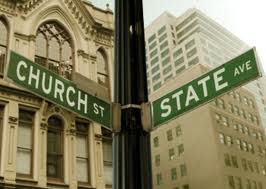
A Baylor University study just published in the International Journal for the Psychology of Religion found that having a church in clear sight can influence people’s answers to questions. Co-author Wade Rowatt pointed out that the “important finding here is that people near a religious building reported slightly but significantly more conservative social and political attitudes than similar people near a government building.” The Baylor study confirms an earlier Stanford University study that shows the same effect when looking specifically at how people’s voting place influences their vote. Stanford researcher Jonah Berger said, “Voting in a church could activate norms of following church doctrine. Such effects may even occur outside an individual’s awareness.”
Since polling place influences the vote, governments and election boards should do all they can to find neutral voting locations. And it would seem very unlikely that churches would be chosen if neutrality were the aim. Why not use schools, courthouses, firehouses and the like instead?

To point: white conservative populists have disdain for non-whites, see them as lazy, outside of the polity, and as rightful targets for appeals based on symbolic racism. In the eyes of the Right, “those people” are not “real Americans.” They never can be. . .
. . . To defeat President Obama, the Republican Party is wallowing in white racism in order to win over racially and economically insecure white voters. However, Gingrich and company are doing this overtly. There is little subtlety. . .
Sadly, matters may be so dire that the white identity politics of years past are now “new school” rather than “old school.” To marshal that fear, insecurity, and anger one does not need nuance, sophistication, or dog whistles. White conservatives can put such feelings on blast and gin up the psychological wages of white fear, white anxiety, and white rage to try to defeat Barack Obama.

So no, Mitt Romney, when we say that Americans are waking up to the reality that inequality matters, we’re not guilty of “envy” or “class warfare,” as you claimed to Matt Lauer on NBC’s Today. Nor are we talking about everybody earning the same amount of money – that’s the straw man apologists for inequality raise whenever anyone tries to get serious.
We’re talking what it takes to live a decent life. If you get sick without health coverage, inequality matters. If you’re the only breadwinner and out of work, inequality matters. If your local public library closes down and you can’t afford books on your own, inequality matters. If budget cuts mean your child has to pay to play on the school basketball team, sing in the chorus or march in the band, inequality matters. If you lose your job as you’re about to retire, inequality matters. If the financial system collapses and knocks the props from beneath your pension, inequality matters.
Neither one of us grew up wealthy, but we went to good public schools, played sandlot ball at a good public park, lived near a good public library, and drove down good public highways – all made possible by people we never met and would never know. There was an unwritten bargain among generations: we didn’t all get the same deal, but we did get civilization.
 Always Question Authority