We Are All One Humanity: Native American Elders Speaking About The Web That Binds Us All
1

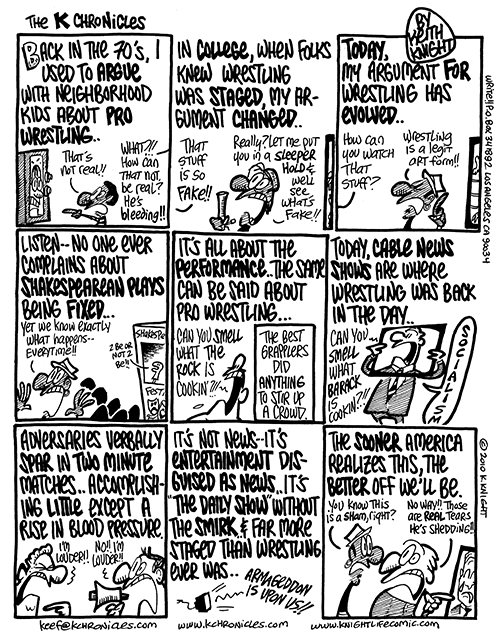 Source: Daily Kos
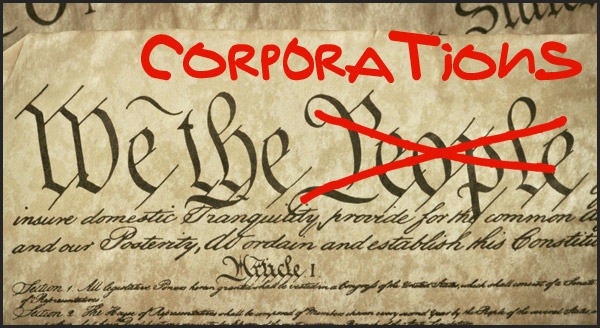
Historically, corporations were understood to be responsible to a complex web of constituencies, including employees, communities, society at large, suppliers, and shareholders. But in the era of deregulation, the interests of shareholders began to trump all the others. . . .
The Myth of Profit Maximizing
“It is literally – literally – malfeasance for a corporation not to do everything it legally can to maximize its profits. That’s a corporation’s duty to its shareholders.”
Since this sentiment is so familiar, it may come as a surprise that it is factually incorrect: In reality, there is nothing in any U.S. statute, federal or state, that requires corporations to maximize their profits. More surprising still is that, in this instance, the untruth was not uttered as propaganda by a corporate lobbyist but presented as a fact of life [A MUST READ, only seven pages] by one of the leading lights of the Democratic Party’s progressive wing, Sen. Al Franken. Considering its source, Franken’s statement says less about the nature of a U.S. business corporation’s legal obligations – about which it simply misses the boat – than it does about the point to which laissez-faire ideology has wormed its way into the American mind.
[…]
A Shift in Accountability
Even after eight years of Reagan and amid the burgeoning of free-market ideology, the Business Roundtable remained reluctant to place shareholders first, affirming in 1990 that “corporations are chartered to serve both their shareholders and society as a whole” and adding creditors to the 1981 list of constituencies, which it otherwise retained intact. It was only in 1997, in a new statement whose title substituted “Corporate Governance” for “Corporate Responsibility,” that it renounced attempts to balance the interests of corporate constituents and, having reversed its view, argued that taking care of shareholders was the best way to take care of the remaining stakeholders, rather than the other way around:
“In the Business Roundtable’s view, the paramount duty of management and of boards of directors is to the corporation’s stockholders; the interests of other stakeholders are relevant as a derivative of the duty to stockholders. The notion that the board must somehow balance the interests of stockholders against the interests of other stakeholders fundamentally misconstrues the role of directors.”
This doctrine, known as “shareholder primacy,” now reigns in the corporate world today, and it has so increased the power of those whom it has benefited that it will not be easy to dislodge. Those who propagate it believe, or would have us believe, that it is based in law; in fact, it is supported by no more than ideology.
Ralph Waldo Emerson observed that political leaders call for popular education because they fear that “This country is filling up with thousands and millions of voters, and you must educate them to keep them from our throats.” But educated the right way: Limit their perspectives and understanding, discourage free and independent thought, and train them for obedience.
. . . many measures have been taken to restore discipline. One is the crusade for privatization – placing control in reliable hands. . .
Justifications are offered on economic grounds, but are singularly unconvincing . . . [which has led] to imposition of a business culture of “efficiency” – an ideological notion, not just an economic one.
. . . Zimmerman’s defenders marshal “data” and “statistics” proving that black men commit a “disproportionate” amount of crime in American society. . . .
In reality, matters are much more complicated. A surrender to a basic and fallacy laden argument that black people, and black young people in particular are uniquely and especially prone to violence, oversimplifies the nature of crime in America. As the old saying goes, “numbers lie and liars figure.” Or alternatively, the lazy recitation of statistics is a dumb person’s idea of how a smart person sounds. . . .
As compared to white neighborhoods, black and brown communities are also subject to more severe surveillance and aggressive police tactics. Moreover, the disproportionate number of minorities in the criminal justice system can be largely explained by the War on Drugs. In total, if white communities were subject to the same type of aggressive police tactics as black and brown communities, the number of white people in prison would skyrocket.
The data is very telling here. While people of color are the prime targets of such policies as “stop and frisk” and racial profiling, it is in fact white people who are far more likely to be both drug users and to be in possession of narcotics at a given moment. This reality signals to a larger social phenomenon: black individuals who commit crimes are representative of their whole communities, crime is racialized, and there is no qualifier of individual intent. All black people are deemed suspicious and guilty because of the deeds of the very few.In contrast, white people who commit crimes are unique individuals: the criminals who destroyed the global economy, a group of white men, were not taken as representative of the entire white community. There is a long list of crimes such as domestic terrorism, serial murder, child rape, sedition, treason, and financial fraud that are almost exclusively the province of white people. But again, whites as a group are excluded from suspicion or indictment as a “criminal class.”
 Click on image to enlarge.
. . . Under the Defense Department’s co-called “Efficiency Initiative,” the number of civilian employees has been capped at 2010 levels, yet there has been no comparable cap on the contractor workforce. This has encouraged managers to use contractors instead of civilian employees, even though privatization is more costly and also violates the law.

 Source: MoveOn.org



 Always Question Authority