American Fascist
Reply
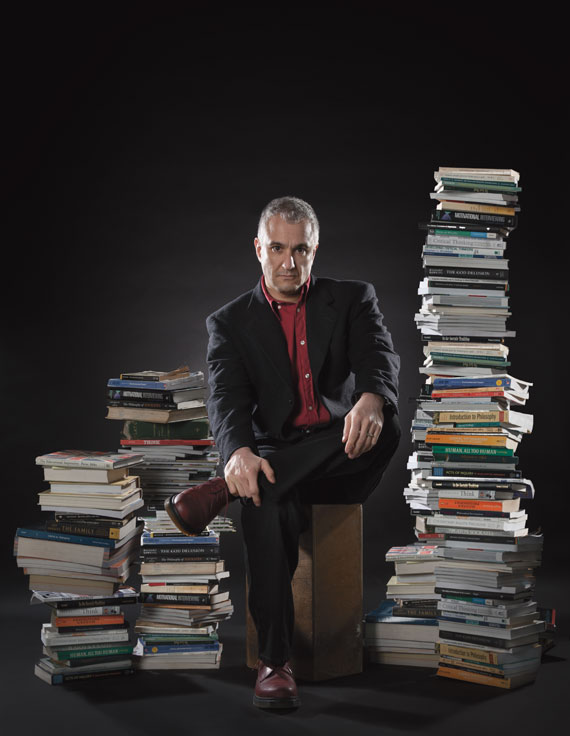
DR. PETER BOGHOSSIAN is a full-time faculty member in Portland State University’s philosophy department who is well known around campus for directly challenging his student’s faith-based beliefs. He’s also had his fair share of criticism for such recent public lectures as “Jesus, the Easter Bunny, and Other Delusions: Just Say No!” and “Faith as a Cognitive Sickness,” which drew hundreds of attendees.
MERCURY: You often speak out against faith, calling it a delusion and a cognitive sickness. How come?
PETER BOGHOSSIAN: Because enough is enough. A lot of people are sick and tired of being held hostage to the delusions of others, and I’m one of those people. I think that people are hungry for a frank, honest discussion about things—particularly about faith. To profess things you don’t know for certain, and then claim the reason for your justification is faith? That doesn’t contribute to the conversation. That’s the end of the conversation. . . .
. . . That is outside the bounds of reason. The only thing you can say is “go to the children’s table.” Those are the sorts of things that come up when we as a society don’t value critical rationality. . . .
. . . A colleague told me one of my talks offended him. I said, “Your offense means nothing to me.” Nor should it. If you want to provide reasons and evidence then you can sit at the adult table and we can talk about that. But just “I’m offended” carries no legitimacy. . . I think maybe part of the solution to making these cultural changes is to treat faith-based claims like racist claims. To stigmatize those claims. “That’s not cool, we don’t let that into the discussion.” It’s not about a right to believe—believe whatever you want. It’s about the truth or falsity of a belief and about a process that will lead you to the truth or not. Clutch your Bible? Sit at the children’s table.
. . . Not pretending to know things that you don’t know is a virtue.
 Click on image to enlarge.
 Source: MoveOn.org
 Source: MoveOn.org
. . . [W]hile the secular arguments for dictatorship have been greatly weakened, the religious arguments for it have scarcely changed at all. Religion is very much a holdover from the dark ages of the past, and the world’s holy books still enshrine the ancient demands for us to bow down and obey the (conveniently unseen and absent) gods, and more importantly, the human beings who claim the right to act as their representatives. It’s no surprise, then, that the most fervent advocates of religion in the modern world are also the most deeply inculcated with this mindset of command and obedience. . . .
In sharp contrast to the religious and conservative worldview of obedience and submission, the worldview of freethinkers and progressives at its best is one that exalts freedom and liberty — freedom to make our own choices, freedom of the mind to travel and explore wherever it will. These are our commandments: Think for yourself and don’t blindly bow down to the claims of another. Exercise your own best judgment. Ask questions and investigate whether what you’ve been taught is true.
In a new paper published in the American Journal of Political Science, Michael Tesler presents survey and experimental data that suggest that the racial attitudes of ordinary Americans have shaped both how they feel about the health care overhaul, and how intense those feelings are. . . .
The study is part of a broad range of research projects that shows that issues such as race and religion play a powerful role in shaping how people feel about policies related to war, welfare and crime.

 Always Question Authority