Beautiful Minds: Professor Richard Dawkins
1
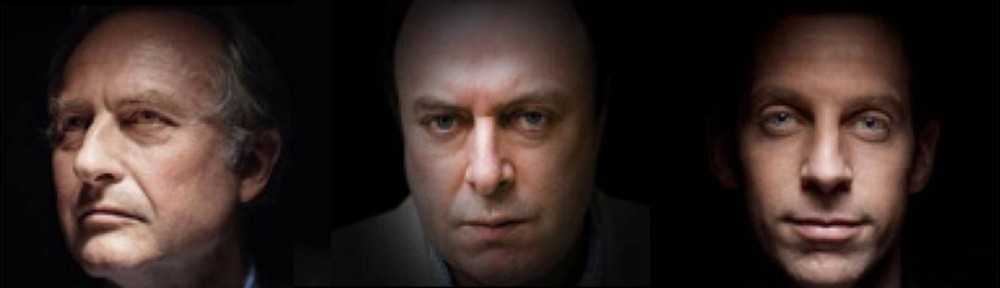

In Part One of the April 20th memorial service for Vanity Fair contributing editor Christopher Hitchens, Graydon Carter welcomed attendees and speakers James Fenton, Lawrence Krauss, Edwin Blue, Patrick Cockburn, Max McGuinness, Aimée Bell, Michael Zilkha, Victor Navasky, and Tom Stoppard.
In Part Two of the April 20th memorial service for Vanity Fair contributing editor Christopher Hitchens, Christopher Buckley read from Hitch-22, followed by speeches from Peter Schneider, Thomas Mallon, James Wood, Leslie Cockburn, and Patrick Cockburn.
In Part Three of the April 20th memorial service for Vanity Fair contributing editor Christopher Hitchens, Sean Penn, Salman Rushdie, Olivia Wilde, Douglas Brinkley, Cary Goldstein spoke.
In Part Four of the April 20th memorial service for Vanity Fair contributing editor Christopher Hitchens, John Auchard, Steve Wasserman, Stephen Fry, Ian McEwen, and Francis Collins spoke.
In Part Five of the April 20th memorial service for Vanity Fair contributing editor Christopher Hitchens, members of his family spoke including Edwin Blue, Alexander Meleagrou-Hitchens, Peter Hitchens, and Carol Blue.
In a short film presented to attendees of the April 20, 2012, memorial for Christopher Hitchens, documentarian Alex Gibney showcased the wit and spectacular accomplishments of the late Vanity Fair contributing editor.
Charles Dickens — one of the most beloved storytellers in the English language — was born 200 years ago Tuesday [02.07.2012]. He was a comic genius and a social reformer whose novels made him famous in his own time, and continue as classics in ours.
[…]
Dickens began his literary career with almost no formal education. He was born in Landport, on Feb. 7, 1812, the second of eight children. When he was 12, his father was sent to debtor’s prison. Dickens was forced to quit school and work in a London blacking factory, sealing pots of shoe polish and pasting labels on them. He would rework that hellish experience into his fiction for the rest of his life.
“He was a social reformer who knew whereof he spoke,” says actor Simon Callow, author of a new biography called Charles Dickens and the Great Theatre of the World. “He knew what poverty was. He knew what it was to be rejected, to be cast aside, to live in squalor.”

 “Does God exist?” is a valid and relevant question. Here are my top reasons why the answer is a resounding, “No.”
1: The consistent replacement of supernatural explanations of the world with natural ones.
2: The inconsistency of world religions.
3: The weakness of religious arguments, explanations, and apologetics.
4: The increasing diminishment of God.
5: The fact that religion runs in families.
6: The physical causes of everything we think of as the soul.
7: The complete failure of any sort of supernatural phenomenon to stand up to rigorous testing.
8: The slipperiness of religious and spiritual beliefs.
9: The failure of religion to improve or clarify over time.
10: The complete lack of solid evidence for God’s existence.
. . . [W]hile the secular arguments for dictatorship have been greatly weakened, the religious arguments for it have scarcely changed at all. Religion is very much a holdover from the dark ages of the past, and the world’s holy books still enshrine the ancient demands for us to bow down and obey the (conveniently unseen and absent) gods, and more importantly, the human beings who claim the right to act as their representatives. It’s no surprise, then, that the most fervent advocates of religion in the modern world are also the most deeply inculcated with this mindset of command and obedience. . . .
In sharp contrast to the religious and conservative worldview of obedience and submission, the worldview of freethinkers and progressives at its best is one that exalts freedom and liberty — freedom to make our own choices, freedom of the mind to travel and explore wherever it will. These are our commandments: Think for yourself and don’t blindly bow down to the claims of another. Exercise your own best judgment. Ask questions and investigate whether what you’ve been taught is true.
 Source: Reid All About It

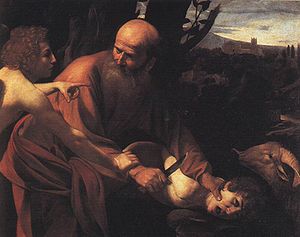
 Always Question Authority