Who’s left? The top 20 US progressives

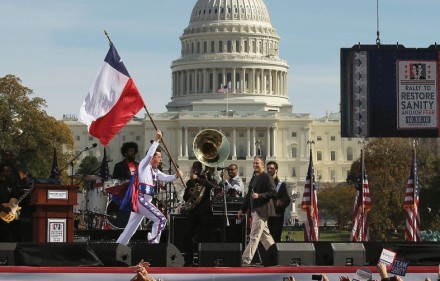
We’ve profile 20 leading American progressives (see list [below]), from a range of backgrounds, who have been at the forefront of efforts to defend not just liberal, but left-wing, social-democratic ideals. Some of them are well-known names; most of them have little to do directly with the Democratic Party; all of them are defiantly and unashamedly partisan.

As Markos Moulitsas, founder of the Daily Kos blog, once said: “I am a progressive. I make no apologies.”

The list

Jon Stewart and Stephen Colbert

Van Jones

Paul Krugman

David Graeber

Elizabeth Warren

Rachel Maddow

Matt Damon

Congressman Keith Ellison

Sonia Sotomayor

Noam Chomsky

Katrina vanden Heuvel

Markos Moulitsas

Cornel West and Tavis Smiley

Cecile Richards

Danny Glover

Angela Davis

Glenn Greenwald

Tim Robbins

Michael Moore

Bernie Sanders

Should People and Governments Shun the Totalitarian Catholic Church? [Seriously, is it not blatantly obvious to any intelligent . . . ah, disregard, my bad?]

When a totalitarian regime aids and abets the rape of tens of thousands of children one would expect it to be shunned by governments and citizens alike. And any statements it might issue on matters of morality accorded no respect. Why should we make an exception when the regime is the Catholic Church? . . .

That the Catholic Church is guilty of widespread rape is also undeniable. A few years ago there was a spate of news items when sexual abuse cases first surfaced in Boston and a few other cities. Media coverage since then has withered but the issue has not. Just the opposite. In 2011 allegations of sexual abuse of minors have spread to 26 countries. . .

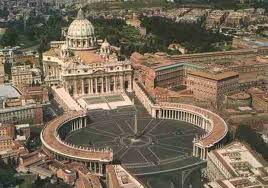
The Vatican has been a state since 1929, when it was granted that status by Benito Mussolini in return for its support for his dictatorship. Comprising 110 acres, an area smaller than Washington’s National Mall, and 800 people Vatican City is by far the smallest nation in the world.

Some might say that an institution, even a totalitarian institution, cannot be blamed for the actions of a small fraction of its members. But when stories of sexual abuse were first raised the Catholic Church ignored them. Later it often reassigned the rapacious priest to another parish where he might prey on other minors. . .

Instructively, virtually all of the Church’s most aggressive policy interventions relate to sex. (e.g. contraception, abortion, gay rights).

Indeed, the Catholic Church acts of if it believes that sex matters above anything else. It will not go to the mat to fight against poverty or injustice but it will pull out all the stops to prevent people of the same sex from marrying.

Read more . . . 
Quote: Heinrich Heine

Christian Johann Heinrich Heine (13 December 1797 – 17 February 1856)
German Poet, Journalist, Essayist, Literary Critic. His verse and prose is distinguished by its satirical wit and irony. His radical political views led to many of his works being banned.

Where they have burned books, they will end in burning human beings.

Salman Rushdie: Christopher Hitchens (Vanity Fair, Feb 2012)

Laughter and Hitchens were inseparable companions, and comedy was one of the most powerful weapons in his arsenal. . .

Behind the laughter was what his friend Ian McEwan called “his Rolls-Royce mind,” that organ of improbable erudition and frequently brilliant, though occasionally flawed, perception. The Hitch mind was indeed a sleek and purring machine trimmed with elegant fittings, but his was not a rarefied sensibility. He was an intellectual with the instincts of a street brawler, never happier than when engaged in moral or political fisticuffs. . .

On his sixty-second birthday – his last birthday, a painful phrase to write – I had been with him and Carol and other comrades at the Houston home of his friend Michael Zilkha, and we had been photographed standing on either side of a bust of Voltaire. That photograph is now one of my most treasured possessions; me and the two Voltaires, one of stone and one still very much alive. Now they are both gone, and one can only try to believe, as the philosopher Pangloss insisted to Candide in the elder Voltaire’s masterpiece, that “everything is for the best in this best of all possible worlds.”

It doesn’t feel like that today.

Read more . . . 

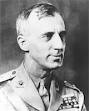
Quote: Smedley Butler, On U.S. Military Adventurism

Smedley Darlington Butler (July 30, 1881 – June 21, 1940)
Major General in the U.S. Marine Corps, Outspoken Critic of U.S. Military Adventurism, Most decorated Marine in U.S. history at the time of his death.

I spent 33 years and four months in active military service and during that period I spent most of my time as a high-class muscle man for Big Business, for Wall Street and the bankers. In short, I was a racketeer, a gangster for capitalism. I helped make Mexico and especially Tampico safe for American oil interests in 1914. I helped make Haiti and Cuba a decent place for the National City Bank boys to collect revenues in. I helped in the raping of half a dozen Central American republics for the benefit of Wall Street. I helped purify Nicaragua for the International Banking House of Brown Brothers in 1902-1912. I brought light to the Dominican Republic for the American sugar interests in 1916. I helped make Honduras right for the American fruit companies in 1903. In China in 1927 I helped see to it that Standard Oil went on its way unmolested. Looking back on it, I might have given Al Capone a few hints. The best he could do was to operate his racket in three districts. I operated on three continents.
~ Socialist newspaper Common Sense, 1935

Quote: Charles Darwin

Charles Robert Darwin (12 February 1809 – 19 March 1882)
English Naturalist, Author, proposed the Scientific Theory that
Evolution resulted from a process that he called Natural Selection.

Ignorance more frequently begets confidence than does knowledge.

Quote: Christopher Hitchens, On Censorship

Christopher Eric Hitchens (13 April 1949 – 15 December 2011)
English-American, Literary Critic, Journalist, Author,
Essayist, Polemicist, and Outspoken Anti-theist

Don’t take refuge in the false security of consensus and the feeling that whatever you think you’re bound to be okay because you’re in the safely moral majority . . . my own opinion is enough for me and I claim the right to have it, defend it against any consensus, any majority, anywhere, anyplace, anytime; and any anyone who disagrees with this can pick a number, get in line, and kiss my ass.

Book Review: Democratic Enlightenment: Philosophy, Revolution, and Human Rights, 1750-1790

The great names one learns at school — Voltaire and Rousseau, Newton and Locke, Leibniz and Kant — turn out never to have been willing or able to think themselves through to the new. Israel’s real heroes were hard-nosed atheists, materialists and revolutionaries who brooked no compromise with the status quo.

Israel traces the lineage of this Radical Enlightenment to Baruch Spinoza, the 17th-century philosopher who serves here as the father of all atheists and “one substance” materialists who rejected the suspiciously spiritualist dualism of mind and body. Spinoza was certainly a radical critic of Scripture, who denied miracles and seemed to equate “God” with nature.

Read more . . . 

Young Goethe in Love: In fact, just another love story

Johann Wolfgang von Goethe (1749 – 1832), poet, novelist, dramatist, philosopher, naturalist and physicist, was a towering figure in German and world culture. . . 

In the film’s production notes, [German filmmaker Philipp] Stölzl writes: “Goethe is Germany’s most famous and important poet and philosopher, yet there has never been a relevant feature film about this extraordinary personality. There’s a reason for this, too: Goethe could do everything and was everything! He was handsome, came from a wealthy family, wrote successful novels, theater plays and poems, was an accomplished horseback rider and fencer, invented roller skates and discovered the pharyngeal bone, and he was a natural scientist, privy councilor, traveler, artist, minister, lawyer, and much, much more—all in all, a universal genius and thus a completely non-dramatic character for a feature film.”

Read more . . . 

Christopher Hitchens: Forced Merriment: The True Spirit of Christmas

One of my many reasons for not being a Christian is my objection to compulsory love. How much less appealing is the notion of obligatory generosity. To feel pressed to give a present is also to feel oneself passively exerting the equivalent unwelcome pressure upon other people. . . 

But the Christmas cycle imposes a deadening routine and predictability. This is why the accidental genius of Charles Dickens is to have made, of Ebenezer Scrooge, the only character in the story who has any personality to him—and the one whose stoic attempt at a futile resistance is invoked under the breath more than most people care to admit. . .

It also offends—by being so much in my face, without my having requested it and in spite of polite entreaties to desist—another celebrated precept about the right to be let alone. A manger on your lawn makes me yawn. A reindeer that strays from your lawn to mine is a nuisance at any time of year. Angels and menorahs on the White House lawn are an infraction of the Establishment Clause, which is as much designed to prevent religion from being corrupted by the state as it is to protect the public square from clerical encroachment.

The “wall of separation” has to be patrolled in small things as well as big ones. 

Read more . . .