Quote: Betty White
1
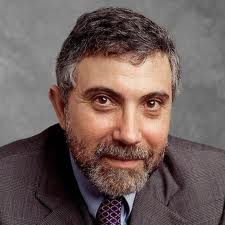
Stop, hey, what’s that sound? Actually, it’s the noise a great political party makes when it loses what’s left of its mind. And it happened — where else? — on Fox News on Sunday, when Mitt Romney bought fully into the claim that gas prices are high thanks to an Obama administration plot. . . .
. . . [T]he president of the United States doesn’t control gasoline prices, or even have much influence over those prices. Oil prices are set in a world market, and America, which accounts for only about a tenth of world production, can’t move those prices much. Indeed, the recent rise in gas prices has taken place despite rising U.S. oil production and falling imports. . . .
As Richard Hofstadter pointed out in his classic 1964 essay “The Paranoid Style in American Politics,” crazy conspiracy theories have been an American tradition ever since clergymen began warning that Thomas Jefferson was an agent of the Bavarian Illuminati. But it’s one thing to have a paranoid fringe playing a marginal role in a nation’s political life; it’s something quite different when that fringe takes over a whole party, to the point where candidates must share, or pretend to share, that fringe’s paranoia to receive the party’s presidential nod. . . .
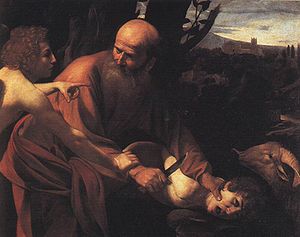
. . . [W]hile the secular arguments for dictatorship have been greatly weakened, the religious arguments for it have scarcely changed at all. Religion is very much a holdover from the dark ages of the past, and the world’s holy books still enshrine the ancient demands for us to bow down and obey the (conveniently unseen and absent) gods, and more importantly, the human beings who claim the right to act as their representatives. It’s no surprise, then, that the most fervent advocates of religion in the modern world are also the most deeply inculcated with this mindset of command and obedience. . . .
In sharp contrast to the religious and conservative worldview of obedience and submission, the worldview of freethinkers and progressives at its best is one that exalts freedom and liberty — freedom to make our own choices, freedom of the mind to travel and explore wherever it will. These are our commandments: Think for yourself and don’t blindly bow down to the claims of another. Exercise your own best judgment. Ask questions and investigate whether what you’ve been taught is true.
 Source: Reid All About It

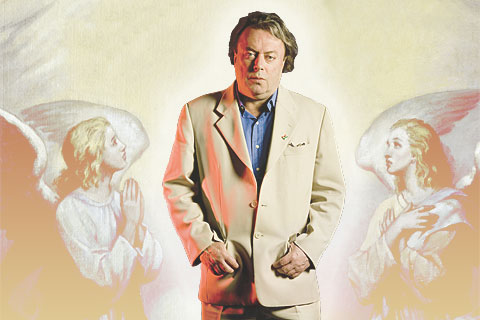
At the end, the manner of my “passing,” as the pious so delicately refer to death, was as much a disappointment to the dewy-eyed acolytes of god-worship as it was to me, although for rather different reasons. For more than a year after I publicly announced in June 2010 that I would begin chemotherapy for esophageal cancer, the stupidest of the faithful either gloated on their subliterate Web sites that my illness was a sign of “God’s revenge” for having blasphemed their Lord and Master, or prayed that I would abandon my contempt for their nonsensical beliefs by undergoing a deathbed conversion. The vulgarity of the idea that a vengeful deity would somehow stoop to inflicting a cancer on me still boggles the mind, especially in the face of the ready explanation supplied for my illness by my long, happy, and prodigious career as a smoker of cigarettes and drinker of spirits. . . .
 However, the same may not be said for the Associated Press.


By Madison S. Hughes (03.12.2012)
One of the peculiar properties of truth is that it has a bit of a sting. It strikes me as queer that when one speaks harsh truth to ignorance, especially willful ignorance, predictably they are reprimanded with comment concerning the tone, rather than the substance, of their argument.
It is socially acceptable for flat-earther’s to publicly express their willful ignorance. Most are quite proud of their willful ignorance, and publicly display it as a badge of honor. Paradoxically, it is not socially acceptable to publicly point out their willful ignorance. For my part, I cannot, and will not give willful ignorance a free pass.