 Source: Daily Kos
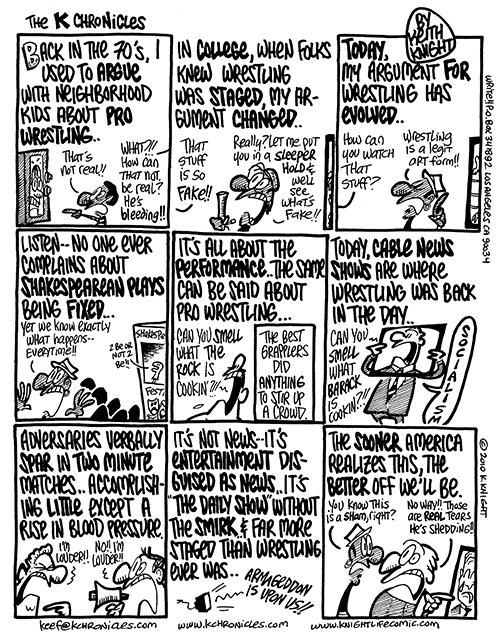
The New Wrestling
Reply

Source: Daily Kos
I am sure some of you have heard the hilarious story of the head of the Russian Orthodox Church patriarch Kirilli I that has been all over the blog world. But just in case you missed it, here it is.
What happened was that the church’s website published what seemed like a routine public relations photo of the patriarch with some person.

Alert Russian bloggers noted that the patriarch, who had just delivered a sermon on the virtues of an ascetic lifestyle, was wearing a Breguet wristwatch that costs around $30,000. That story resulted in a subtle change in the website with the original photo being replaced by another in which the offending watch no longer appeared.

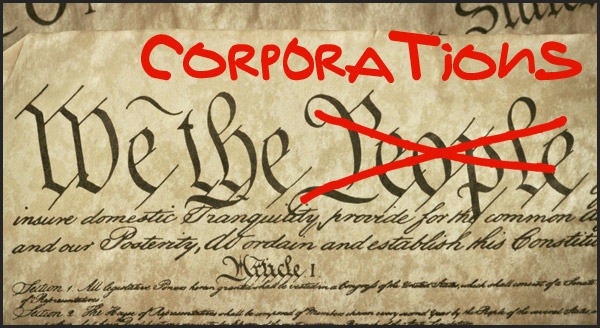
Historically, corporations were understood to be responsible to a complex web of constituencies, including employees, communities, society at large, suppliers, and shareholders. But in the era of deregulation, the interests of shareholders began to trump all the others. . . .
The Myth of Profit Maximizing
“It is literally – literally – malfeasance for a corporation not to do everything it legally can to maximize its profits. That’s a corporation’s duty to its shareholders.”
Since this sentiment is so familiar, it may come as a surprise that it is factually incorrect: In reality, there is nothing in any U.S. statute, federal or state, that requires corporations to maximize their profits. More surprising still is that, in this instance, the untruth was not uttered as propaganda by a corporate lobbyist but presented as a fact of life [A MUST READ, only seven pages] by one of the leading lights of the Democratic Party’s progressive wing, Sen. Al Franken. Considering its source, Franken’s statement says less about the nature of a U.S. business corporation’s legal obligations – about which it simply misses the boat – than it does about the point to which laissez-faire ideology has wormed its way into the American mind.
[…]
A Shift in Accountability
Even after eight years of Reagan and amid the burgeoning of free-market ideology, the Business Roundtable remained reluctant to place shareholders first, affirming in 1990 that “corporations are chartered to serve both their shareholders and society as a whole” and adding creditors to the 1981 list of constituencies, which it otherwise retained intact. It was only in 1997, in a new statement whose title substituted “Corporate Governance” for “Corporate Responsibility,” that it renounced attempts to balance the interests of corporate constituents and, having reversed its view, argued that taking care of shareholders was the best way to take care of the remaining stakeholders, rather than the other way around:
“In the Business Roundtable’s view, the paramount duty of management and of boards of directors is to the corporation’s stockholders; the interests of other stakeholders are relevant as a derivative of the duty to stockholders. The notion that the board must somehow balance the interests of stockholders against the interests of other stakeholders fundamentally misconstrues the role of directors.”
This doctrine, known as “shareholder primacy,” now reigns in the corporate world today, and it has so increased the power of those whom it has benefited that it will not be easy to dislodge. Those who propagate it believe, or would have us believe, that it is based in law; in fact, it is supported by no more than ideology.
“Why extremists always focus on women remains a mystery to me, but they all seem to. It doesn’t matter what country they’re in, or what religion they claim, they all want to control women. They want to control how we dress. They want to control how we act. They even want to control the decisions we make about our own health and our own bodies.”
~ Hillary Clinton
 Source: MoveOn.org
Ralph Waldo Emerson observed that political leaders call for popular education because they fear that “This country is filling up with thousands and millions of voters, and you must educate them to keep them from our throats.” But educated the right way: Limit their perspectives and understanding, discourage free and independent thought, and train them for obedience.
. . . many measures have been taken to restore discipline. One is the crusade for privatization – placing control in reliable hands. . .
Justifications are offered on economic grounds, but are singularly unconvincing . . . [which has led] to imposition of a business culture of “efficiency” – an ideological notion, not just an economic one.
DR. PETER BOGHOSSIAN is a full-time faculty member in Portland State University’s philosophy department who is well known around campus for directly challenging his student’s faith-based beliefs. He’s also had his fair share of criticism for such recent public lectures as “Jesus, the Easter Bunny, and Other Delusions: Just Say No!” and “Faith as a Cognitive Sickness,” which drew hundreds of attendees.
MERCURY: You often speak out against faith, calling it a delusion and a cognitive sickness. How come?
PETER BOGHOSSIAN: Because enough is enough. A lot of people are sick and tired of being held hostage to the delusions of others, and I’m one of those people. I think that people are hungry for a frank, honest discussion about things—particularly about faith. To profess things you don’t know for certain, and then claim the reason for your justification is faith? That doesn’t contribute to the conversation. That’s the end of the conversation. . . .
. . . That is outside the bounds of reason. The only thing you can say is “go to the children’s table.” Those are the sorts of things that come up when we as a society don’t value critical rationality. . . .
. . . A colleague told me one of my talks offended him. I said, “Your offense means nothing to me.” Nor should it. If you want to provide reasons and evidence then you can sit at the adult table and we can talk about that. But just “I’m offended” carries no legitimacy. . . I think maybe part of the solution to making these cultural changes is to treat faith-based claims like racist claims. To stigmatize those claims. “That’s not cool, we don’t let that into the discussion.” It’s not about a right to believe—believe whatever you want. It’s about the truth or falsity of a belief and about a process that will lead you to the truth or not. Clutch your Bible? Sit at the children’s table.
. . . Not pretending to know things that you don’t know is a virtue.



 Always Question Authority