MARIJUANA LEGALIZATION: “Dr Sanjay Gupta Apologizes For ‘Systematically Misleading Americans’ About Marijuana Cannabis'”
Reply

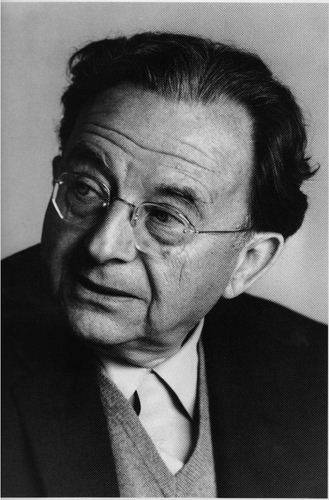
Erich Seligmann Fromm
(March 23, 1900 – March 18, 1980)
German social psychologist, psychoanalyst, sociologist, humanistic philosopher, and democratic socialist
“Perhaps the greatest enjoyment is not so much in owning material things but in owning living beings. In a patriarchal society even the most miserable of men in the poorest of classes can be an owner of property—in his relationship to his wife, his children, his animals, over whom he can feel he is absolute master. At least for the man in a patriarchal society, having many children is the only way to own persons without needing to work to attain ownership, and without capital investment. Considering that the whole burden of childbearing is the woman’s, it can hardly be denied that the production of children in a patriarchal society is a matter of crude exploitation of women. In turn, however, the mothers have their own form of ownership, that of children when they are small. The circle is endless and vicious: the husband exploits the wife, she exploits the small children, and the adolescent males soon join the elder men in exploiting the women, and so on” (Fromm 70).
Fromm, Erich. To Have Or To Be?. New York: Harper & Row, 1976 Print.
By Madison S. Hughes (06.21.2012)
Atheism, Agnosticism and Antitheism
It is by our beliefs, knowledge and values that we define ourselves, and are judged by others. Many are willing to kill, or be killed for such abstract concepts without even a rudimentary understanding of the abstraction for which they are all too willing to meet their maker. Atheism, agnosticism and antitheism are three commonly misunderstood terms that describe beliefs, knowledge and values respectively. Analytically defining each word will show a direct correlation between each term, and their respective abstract concept for which they describe. It will prove beneficial to any reader’s future conversations, correspondence, or consternations concerning atheism, agnosticism, and antitheism.
Atheism is a term that describes one’s rejection of supernatural belief. Simply put, a theist is one with a belief in a supernatural deity, or deities; while an atheist is one without a belief in a supernatural deity, or deities. The American Atheist organization founded in 1963 by “Madalyn Murray O’Hair, the noted atheist activist, [who] as the result of her successful battle against mandatory school prayer, and Bible recitation” [was responsible for their removal from public schools] defines atheism as follows (About):
Atheism is the lack of belief in a deity, which implies that nothing exists, but natural phenomena (matter), that thought is a property or function of matter, and that death irreversibly and totally terminates individual organic units. This definition means that there are no forces, phenomena, or entities which exist outside of, or apart from physical nature, or which transcend nature, or are “super” natural, nor can there be. Humankind is on its own. (Atheism)
When it comes to a belief in the supernatural one must either be a theist, or an atheist, for no other alternatives are available. This is not a false dilemma. One cannot kind of, sort of believe, but not really. It would be analogous to kind of, sort of being dead; it is not possible. One is either dead or alive. Likewise, one is either a theist or an atheist. In both cases there are no other alternatives available. Atheism is concerned with belief.
Often, because of the negative emotive connotations associated with the word atheist, people will incorrectly use the term agnostic to describe their lack of belief in an intellectually vain attempt to avoid being labeled the pejoratively and socially stigmatic term atheist. It is intellectually dishonest to do so, for “agnosticism is the position of believing that knowledge of the existence or non-existence of god is impossible. . . . The agnostic holds that human knowledge is limited to the natural world, that the mind is incapable of knowledge of the supernatural” (Agnosticism). Agnosticism is not an undecided position concerning belief between a theist, and an atheist. As previously shown theism, and atheism describe belief. One cannot use the term agnostic as a surrogate to describe one’s belief. Agnosticism is concerned with knowledge.
“Antitheism is active opposition to theism. . . . it typically refers to direct opposition to organized religion, or to the belief in any deity” (Antitheism). An antitheist values truth over unity, while it is observable that theists value unity over truth. For example, an antitheist will overtly, and without reservation, claim that anyone who believes in the story of a talking snake is irrational. Conversely, the theists would not concern themselves with the antitheist’s claimed irrationality of a talking snake so long as the unity of their cult, church, or community is maintained.
Most antitheists are so because they “take the view that theism is dangerous or destructive” (Antitheism). Many antitheists are strident in their opposition to theism. The late Christopher Hitchens who in his 2001 book Letters to a Young Contrarian, wrote, “I hold that the influence of churches, and the effect of religious belief, is positively harmful” (Antitheism). Antitheists look at the negative effect of religious belief on society. They believe that the influence of the churches is unnecessary for positive effects to be made in society. Secular institutions such as the Red Cross, Doctors without Borders, Planned Parenthood, Amnesty International, PlanUSA, etc. do so demonstratively with neither a need for the promise of salvation, nor the fear of damnation. Antitheism is concerned with values.
The metaphysical misunderstanding of abstract concepts such as belief, knowledge and values need not continue to thrive in a culture of intolerance. A simple analytical understanding of the definitions of atheism, agnosticism, and antitheism clearly shows their respective correlation to belief, knowledge and values respectively.
Atheism is concerned with belief.
Agnosticism is concerned with knowledge.
Antitheism is concerned with values.
Works Cited
“About.” American Atheists. Ed. Admin. American Atheists, 15 Feb. 2012. Web. 18 June 2012.
“Agnosticism.” The Skeptic’s Dictionary. Ed. Robert T. Carroll. The Skeptic’s Dictionary, 19 May 2012. Web. 19 June 2012.
“Antitheism.” Wikipedia. Wikimedia Foundation, 07 June 2012. Web. 19 June 2012.
“Atheism.” American Atheists. Ed. Admin. American Atheists, 15 Feb. 2012. Web. 18 June 2012.
Related articles