INTELLECTUALISM: “Books & Happiness” / Richard Dawkins Foundation
5
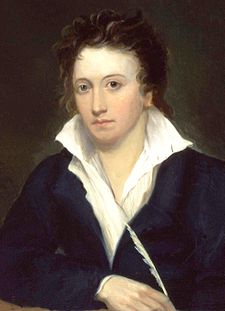
Song to the Men of England
I.
Men of England, wherefore plough
For the lords who lay ye low?
Wherefore weave with toil and care
The rich robes your tyrants wear?II.
Wherefore feed and clothe and save
From the cradle to the grave
Those ungrateful drones who would
Drain your sweat—nay, drink your blood?III.
Wherefore, Bees of England, forge
Many a weapon, chain, and scourge,
That these stingless drones may spoil
The forced produce of your toil?VI.
Have ye leisure, comfort, calm,
Shelter, food, love’s gentle balm?
Or what is it ye buy so dear
With your pain and with your fear?V.
The seed ye sow, another reaps;
The wealth ye find, another keeps;
The robes ye weave, another wears;
The arms ye forge, another bears.VI.
Sow seed—but let no tyrant reap:
Find wealth—let no imposter heap:
Weave robes—let not the idle wear:
Forge arms—in your defence to bear.VII.
Shrink to your cellars, holes, and cells—
In hall ye deck another dwells.
Why shake the chains ye wrought? Ye see
The steel ye tempered glance on ye.VIII.
With plough and spade and hoe and loom
Trace your grave and build your tomb
And weave your winding-sheet—till fair
England be your Sepulchre.Reference: Poetry Foundation
Written and read by W. S. Merwin
Source: Moyers & company
By Madison S. Hughes (04.11.2009)
Chomsky, Vidal, Vonnegut and Zinn
Sages of generations past.
How will their prodigious wits last?With Philistines of today
As far as the eye can see.
Oh sad, how sad, can this truly be?
DAFFODILS
1804I wandered lonely as a cloudThat floats on high o’er vales and hills,When all at once I saw a crowd,A host, of golden daffodils;Beside the lake, beneath the trees,Fluttering and dancing in the breeze.Continuous as the stars that shineAnd twinkle on the milky way,They stretched in never-ending lineAlong the margin of a bay:Ten thousand saw I at a glance,Tossing their heads in sprightly dance.The waves beside them danced; but theyOut-did the sparkling waves in glee:A poet could not but be gay,In such a jocund company:I gazed—and gazed—but little thoughtWhat wealth the show to me had brought:For oft, when on my couch I lieIn vacant or in pensive mood,They flash upon that inward eyeWhich is the bliss of solitude;And then my heart with pleasure fills,And dances with the daffodils.Reference: Poetry Foundation
1804I wandered lonely as a cloudThat floats on high o’er vales and hills,When all at once I saw a crowd,A host, of golden daffodils;Beside the lake, beneath the trees,Fluttering and dancing in the breeze.Continuous as the stars that shineAnd twinkle on the milky way,They stretched in never-ending lineAlong the margin of a bay:Ten thousand saw I at a glance,Tossing their heads in sprightly dance.The waves beside them danced; but theyOut-did the sparkling waves in glee:A poet could not but be gay,In such a jocund company:I gazed—and gazed—but little thoughtWhat wealth the show to me had brought:For oft, when on my couch I lieIn vacant or in pensive mood,They flash upon that inward eyeWhich is the bliss of solitude;And then my heart with pleasure fills,And dances with the daffodils.Reference: Poetry Foundation
Bill talks with and invites readings by renowned poet, novelist, and editor Philip Appleman, whose creativity spans a long life filled with verse, fiction, philosophy, and religion. The author of nine books of poetry, three novels, and six volumes of non-fiction, Appleman’s most acclaimed work includes explorations of the life and theories of Charles Darwin. A scholar of Darwin, Appleman edited the critical anthology Darwin, and wrote the poetry books Darwin’s Ark and Darwin’s Bestiary, earning him praise for illuminating the “overwhelming sanity” of Darwin’s thought with clarity and wit. Appleman’s latest poetry collection is Perfidious Proverbs.
[…]
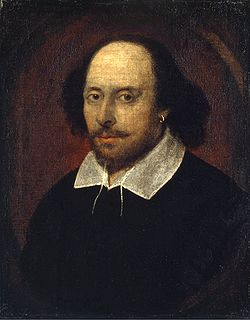
The first thing you have to do when confronting Shakespeare is break down the wall of resistance that has been constructed between you and him by a cultural atmosphere fraught with willful misunderstanding. For instance, how many times have you heard someone say that Shakespeare wrote in Old English or Middle English? That right there might be enough to put you off. But both of those claims are patently false.
[…]
Shakespeare wrote in Modern English, the same language that we speak today. [. . .] Your problem with understanding Shakespeare is due to his language being poetic. Most of your everyday discourse has become so pedestrian that your ears have become unable to tune in to language that aspires to greater heights. This may or may not be your fault. We all are aware that the state of education in this country is woefully bleak. But why submit to the prevailing philistine attitude without a fight?



 Always Question Authority