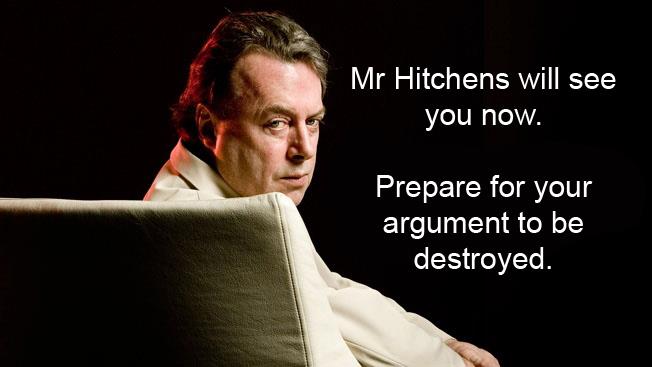
Happy Christopher Hitchens Day
1
 Source: whyevolutionistrue.wordpress.com
At the end, the manner of my “passing,” as the pious so delicately refer to death, was as much a disappointment to the dewy-eyed acolytes of god-worship as it was to me, although for rather different reasons. For more than a year after I publicly announced in June 2010 that I would begin chemotherapy for esophageal cancer, the stupidest of the faithful either gloated on their subliterate Web sites that my illness was a sign of “God’s revenge” for having blasphemed their Lord and Master, or prayed that I would abandon my contempt for their nonsensical beliefs by undergoing a deathbed conversion. The vulgarity of the idea that a vengeful deity would somehow stoop to inflicting a cancer on me still boggles the mind, especially in the face of the ready explanation supplied for my illness by my long, happy, and prodigious career as a smoker of cigarettes and drinker of spirits. . . .
 Isaac Asimov born Eyzik Yudovitš Asimov (c. January 2, 1920 – April 6, 1992)
American author, professor of biochemistry at Boston University, one of the most prolific writers of all time, having written or edited more than 500 books and an estimated 90,000 letters and postcards, a humanist, a rationalist and an atheist
There is a cult of ignorance in the United States, and there has always been. The strain of anti-intellectualism has been a constant thread winding its way through our political and cultural life, nurtured by the false notion that democracy means that “my ignorance is just as good as your knowledge.”
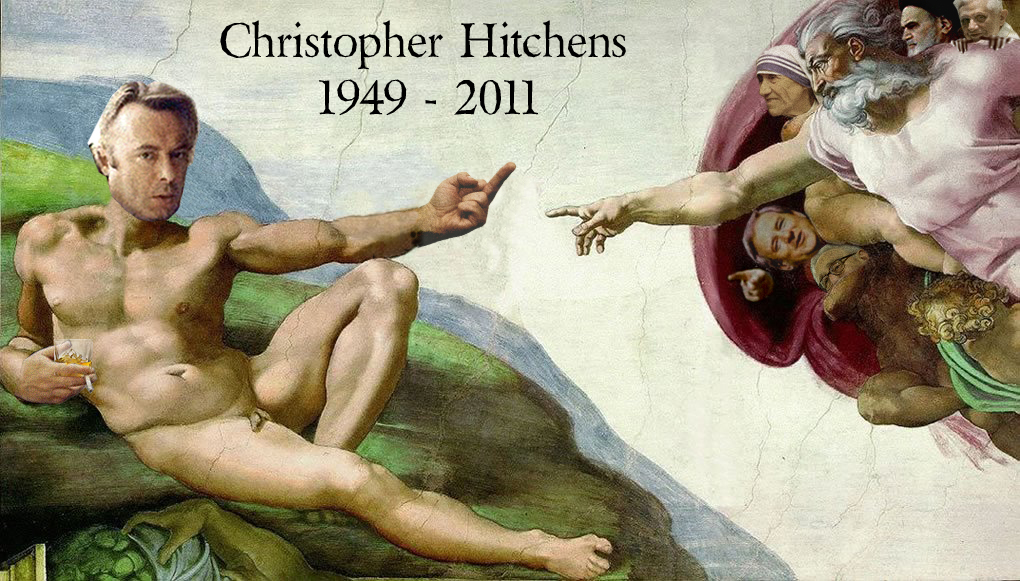
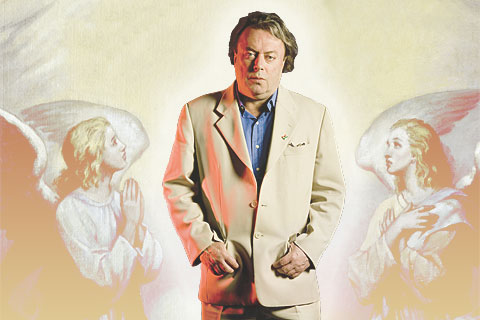
 Christopher Eric Hitchens (13 April 1949 – 15 December 2011)
English-American, Literary Critic, Journalist, Author,
Essayist, Polemicist, and Outspoken Anti-theist
The essence of the independent mind lies not in what it thinks, but in how it thinks.
If you haven’t read it, you will almost certainly have seen it: the critique of Professor Richard Dawkins that arraigns him for being too “strident” in his confrontations with his critics. According to this line of attack, Dawkins has no business stepping outside the academy to become a “public intellectual” and even less right to raise his voice when he chooses to do so. Implied in this rather hypocritical attack is the no less hypocritical hint that Dawkins might be better received if he were more polite and attract a better class of audience if he used more of the blessed restraint and reserve that is every Englishman’s birthright and which he obviously possesses in such heaping measure.
 Always Question Authority