 h/t: Being Liberal
PRISON-INDUSTRIAL COMPLEX: “No One Should be Jailed for Possessing Marijuana” / Susan Sarandon
Reply
h/t: Being Liberal
The war on Christmas. The war on marriage. Wars on schools, on prayer, on the sanctity of life – we’ve heard countless times that a culture war rages in America. If you believe the fundamentalists, they’re merely defending themselves against an overwhelming tide of secularist persecution.
But a recent report by the Council for Secular Humanism and the University of Tampa confirms that this persecution is really a myth. In fact, the report estimates that the federal government subsidizes churches to the tune of at least $71 billion per year.
The Washington Post called these numbers a “lowball,” and estimates the real number is probably much higher thanks to local tax subsidies, sales tax subsidies and fund-raising subsidies, among other benefits. When these benefits are considered the number is closer to $82.5 billion per year.
I have long held the opinion that the amount of noise that anyone can bear undisturbed stands in inverse proportion to his mental capacity and may therefore be regarded as a pretty fair measure of it.
~ Arthur Schopenhauer, The World as Will and Representation, 1819SLAMMING doors, banging walls, bellowing strangers and whistling neighbors were the bane of the philosopher Arthur Schopenhauer’s existence. But it was only in later middle age, after he had moved with his beloved poodle to the commercial hub of Frankfurt, that his sense of being tortured by loud, often superfluous blasts of sound ripened into a philosophical diatribe. Then, around 1850, Schopenhauer pronounced noise to be the supreme archenemy of any serious thinker.
His argument against noise was simple: A great mind can have great thoughts only if all its powers of concentration are brought to bear on one subject, in the same way that a concave mirror focuses light on one point. Just as a mighty army becomes useless if its soldiers are scattered helter-skelter, a great mind becomes ordinary the moment its energies are dispersed.
And nothing disrupts thought the way noise does, Schopenhauer declared, adding that even people who are not philosophers lose whatever ideas their brains can carry in consequence of brutish jolts of sound.
 h/t: American Atheists
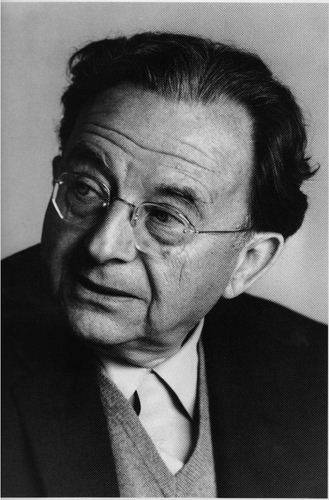
Erich Seligmann Fromm
(March 23, 1900 – March 18, 1980)
German social psychologist, psychoanalyst, sociologist, humanistic philosopher, and democratic socialist
“Perhaps the greatest enjoyment is not so much in owning material things but in owning living beings. In a patriarchal society even the most miserable of men in the poorest of classes can be an owner of property—in his relationship to his wife, his children, his animals, over whom he can feel he is absolute master. At least for the man in a patriarchal society, having many children is the only way to own persons without needing to work to attain ownership, and without capital investment. Considering that the whole burden of childbearing is the woman’s, it can hardly be denied that the production of children in a patriarchal society is a matter of crude exploitation of women. In turn, however, the mothers have their own form of ownership, that of children when they are small. The circle is endless and vicious: the husband exploits the wife, she exploits the small children, and the adolescent males soon join the elder men in exploiting the women, and so on” (Fromm 70).
Fromm, Erich. To Have Or To Be?. New York: Harper & Row, 1976 Print.
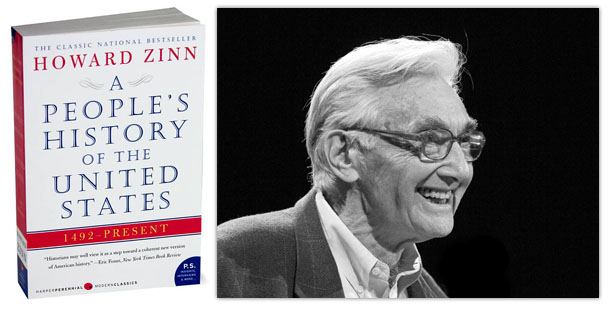 According to a series of documents obtained by an Associated Press Freedom of Information Act request, Daniels tried to use his position as governor to punish his enemies, including a professor at a local university. At the center of the story, however, is Daniels’ special hatred for historian Howard Zinn.
Zinn, in case you’re not familiar, was the author of A People’s History of the United States, a book he described to the New YorkTimes as a “history from the perspective of the slaughtered and mutilated.” It was, and still is, a controversial book, both as a work of history and as a work embodying a particular kind of radical approach to confronting injustice. But it’s a bestseller, hugely influential, and still used often in the classroom. Zinn died in 2010, while Daniels was in office. According to the Associated Press, here’s how Daniels marked his passing in an email:
“This terrible anti-American academic has finally passed away…The obits and commentaries mentioned his book, ‘A People’s History of the United States,’ is the ‘textbook of choice in high schools and colleges around the country.’ It is a truly execrable, anti-factual piece of disinformation that misstates American history on every page. Can someone assure me that it is not in use anywhere in Indiana? If it is, how do we get rid of it before more young people are force-fed a totally false version of our history?”
As it turns out, the reason most Christians are so difficult to budge from their religious views is because they know so little about their religion. This may seem counter-intuitive, but this is the essence of the Dunning-Kruger Effect, discovered and described by psychologists David Dunning and Justin Kruger, both then of Cornell University, in a 1999 paper titled: “Unskilled and Unaware of It: How Difficulties in Recognizing One’s Own Incompetence Lead to Inflated Self-Assessments.”
The D-K Effect was frequently suggested historically, notably by Charles Darwin –
“Ignorance more frequently begets confidence than does knowledge”
– and Bertrand Russell –
“One of the painful things about our time is that those who feel certainty are stupid, and those with any imagination and understanding are filled with doubt and indecision.”
In a series of studies, Dunning and Kruger found this pattern across many skills, including reading comprehension, operating a motor vehicle, and playing chess or tennis. Apparently, those displaying the D-K Effect are so lacking in competence that they are even unaware of their incompetence, thus they tend to overestimate their level of skill and fail to recognize skill in others. Conversely, people with high levels of skill or knowledge tend to underestimate their standing relative to others. It seems that the more one knows, the more he realizes how little he knows.
Interestingly, but not surprisingly, Dunning and Kruger also found the Effect operative in broad tests of logical reasoning skills.
The D-K Effect goes a long way toward explaining why those with the least competence in their religion are the most sure they are right about it. Similarly, those who know the least about science are the most certain that it has nothing important to say about how the world works. And, in general, those who are the least adept at critical thinking are the most confident they have the answers.



 Always Question Authority