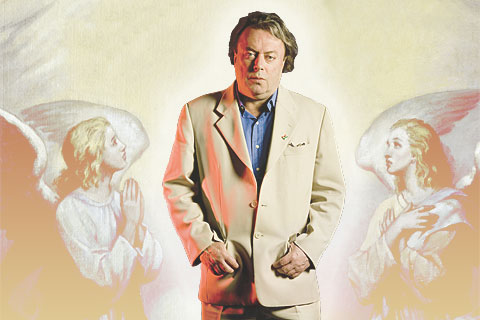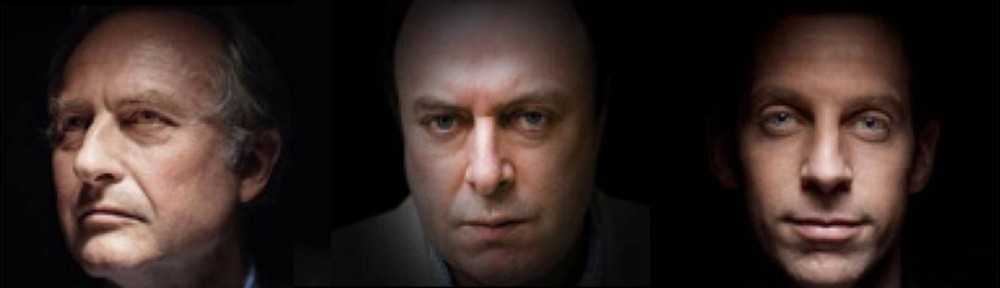
Heaven Can Wait: Was I wrong about the afterlife? No. / By Christopher Hitchens, as told to Art Levine

At the end, the manner of my “passing,” as the pious so delicately refer to death, was as much a disappointment to the dewy-eyed acolytes of god-worship as it was to me, although for rather different reasons. For more than a year after I publicly announced in June 2010 that I would begin chemotherapy for esophageal cancer, the stupidest of the faithful either gloated on their subliterate Web sites that my illness was a sign of “God’s revenge” for having blasphemed their Lord and Master, or prayed that I would abandon my contempt for their nonsensical beliefs by undergoing a deathbed conversion. The vulgarity of the idea that a vengeful deity would somehow stoop to inflicting a cancer on me still boggles the mind, especially in the face of the ready explanation supplied for my illness by my long, happy, and prodigious career as a smoker of cigarettes and drinker of spirits. . . .

Read more . . . 

Quote: Isaac Asimov

Isaac Asimov born Eyzik Yudovitš Asimov (c. January 2, 1920 – April 6, 1992)
American author, professor of biochemistry at Boston University, one of the most prolific writers of all time, having written or edited more than 500 books and an estimated 90,000 letters and postcards, a humanist, a rationalist and an atheist

There is a cult of ignorance in the United States, and there has always been. The strain of anti-intellectualism has been a constant thread winding its way through our political and cultural life, nurtured by the false notion that democracy means that “my ignorance is just as good as your knowledge.”

Deckle Edge in the Age of Mechanical Reproduction

The deckle edge dates back to a time when you used to need a knife to read a book. Those rough edges simulate the look of pages that have been sliced open by the reader. The printing happened on large sheets of paper which were then folded into rectangles the size of the finished pages and bound. The reader then sliced open the folds.

Paper knives, variants of letter openers, were used for this purpose. Italo Calvino’s If on a Winter’s Night a Traveler, which speaks directly to the reader and describes the reader’s experience reading the novel, makes extensive reference to these literary knives:

“This volume’s pages are uncut: a first obstacle opposing your impatience. Armed with a good paper knife, you prepare to penetrate its secrets. With a determined slash you cut your way between the title page and the beginning of the first chapter.”

Opening a book can already feel like opening a gift. Armed with a knife and freeing the pages and the story hidden beneath the folds, it becomes something more, “a penetration of its secrets” and an act of discovery, shot through with a suggestion of violence and danger or of the painful gestation of the words themselves.

Read more . . .

Wallace Shawn reads Howard Zinn

Actor Wallace Shawn reads the speech of historian Howard Zinn given at Johns Hopkins University on Civil Disobedience, November 1970. Part of a reading from Voices of a People’s History of the United States (Howard Zinn and Anthony Arnove) May 2, 2007 in New York, NY. 

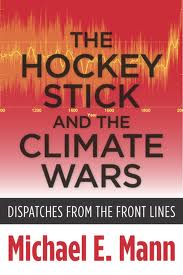
Book Review: The Hockey Stick and the Climate Wars: Dispatches From The Front Lines, by Dr. Michael Mann, Ph.D

Book review By DarkSyde for Daily Kos

The Hockey Stick and the Climate Wars: Dispatches From The Front Lines
By Dr. Michael Mann, Ph.D
Columbia University Press; Cost $10 to $30 (Available in paperback )

Imagine a place where you and your family are threatened, your employer pressured by the most powerful people on earth to fire you, your email hacked and posted by the usual suspects in accusatory snippets, and where a mysterious letter containing white powder mixed in with tons of traditional hate mail land in your inbox. A suspected communist sympathizer during the McCarthy era, or a Muslim in the wake of 9-11? Nope. All because you helped make one of the most important scientific discoveries in a generation. That’s life in the land of the free and the home of the brave for prominent climate scientists these days, which is why I’m personally thrilled to feature one today who not only didn’t shrink an inch, he is fighting back, hard. . . .

Read more . . .

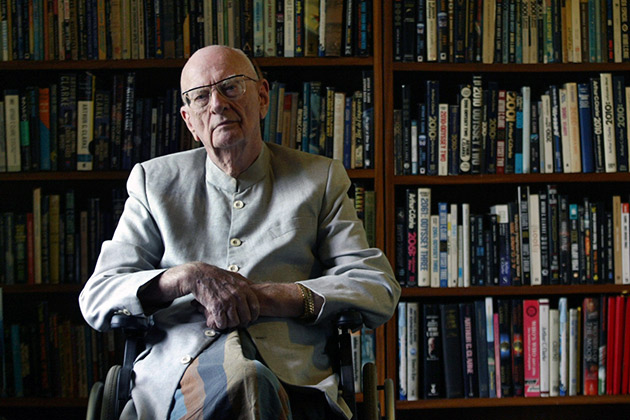
QUOTATION: “On Religion as a By-product of Fear” / Arthur C. Clarke

Sir Arthur Charles Clarke (16 December 1917 – 19 March 2008)
British Science Fiction Author, Inventor, Futurist, and Atheist
Author of 2001: A Space Odyssey, (1968)

Religion is a by-product of fear. For much of human history, it may have been a necessary evil, but why was it more evil than necessary? Isn’t killing people in the name of god a pretty good definition of insanity?

QUOTATION: “Science Can Destroy Religion” / Arthur C. Clarke

Sir Arthur Charles Clarke (16 December 1917 – 19 March 2008)
British Science Fiction Author, Inventor, Futurist, and Atheist
Author of 2001: A Space Odyssey, (1968)

Science can destroy religion by ignoring it as well as by disproving its tenets. No one ever demonstrated, so far as I am aware, the nonexistence of Zeus or Thor – but they have few followers now.

Quote: John Waters, On Books

John Samuel Waters, Jr. (born April 22, 1946)
American Filmmaker, Actor, Stand-up Comedian, Writer, Journalist, Visual Artist,
Art Collector, Openly Gay Man, Avid Supporter of Gay Rights and Gay Pride

We need to make books cool again. If you go home with somebody and they don’t have books, don’t fuck them.