Sometimes, the meaningless term “agnostic” can be a sign of bigotry.
Sometimes, the meaningless term “agnostic” can be a sign of bigotry.
 There are many attempts to improve student performance which result in a host of measures, ranging from misguided to inspired. Such efforts include not assigning students homework, recalibrating standardized tests to account for unfair background advantages, or subjecting students to the hard-to-fathom Common Core standards. But a recent endeavor in the UK found another solution which actually appeared to have worked – the students were taught philosophy!
A study published last year demonstrated that 9 to 10 year olds, who took part in a year-long series of philosophy-oriented lessons, showed significant improvement in scores over their peers in a control group. The study involved over 3000 children in 48 primary schools all around England. The kids who were taking philosophy classes improved their math and reading skills by about two months of additional progress compared to the students who didn’t take the classes.
The actual aim of the classes was to improve student confidence in asking questions and constructing arguments, but the additional academic gains were undeniable.
By Madison S. Hughes (06.05.2013)

God is dead!
“Being ‘a Nietzschean’ is no more possible than following someone else’s orders
to be free! After all, it was Nietzsche himself who insisted that ‘Those who
understand me, understand that I can have no disciples’” (Soccio, 477).
This essay will embrace Nietzsche’s philosophy because he proposed that God is dead, life is meaningless, and fate trumps faith. Ultimately, he provided an alternative philosophy of life that is life affirming. The philosophy of Friedrich Nietzsche (1844-1900) has many distracters, for a myriad of reasons. Undoubtedly, most of those in opposition to Nietzsche’s philosophy base their objections on a misperceived threat to their firmly indoctrinated religious beliefs. While this essay may not dissuade those distracters from their religious beliefs, for that is not its purpose, it may help clarify a few of their misperceptions. To illustrate, we begin with one of philosophy’s most contentious, yet misunderstood quotes.
Nietzsche first proposed that God is dead in his 1882 book The Gay Science when he declared,
‘God is dead. God remains dead. And we have killed him.’ By this Nietzsche means that society no longer has a use for God; the belief does not in any way help the survival of the species, rather it hinders. (Jackson 56)
Clearly we cannot hold Nietzsche solely responsible for God’s death, nay; Nietzsche was more like a messenger. “Nietzsche claimed he was the first to have “discovered” the death of God. In part, he meant that the idea of God has lost its full creative force, its full power” (Soccio, 468). Recall that Nietzsche witnessed the world through the great transformation of a rural agrarian society rapidly morphing into vast urban sprawls caused by the industrial revolution. He was born less than fifty years after great minds of the scientific revolution nearly liberated humanity from the clench of the Church in the 17th and 18th centuries. While Nietzsche and other great minds of his day could see the dethronement of God before their eyes,
[t]he full extent of the dethronement of God is not yet felt by the great masses, who still believe that they believe in God. Yet if we dig deep into our own psyches, Nietzsche prophesied, we will discover that we no longer have ultimate faith in God: Our true faith is in scientific and technological progress. (468)
“And even though some of us may sense that the old religions are dead and dying, [many] remain unable to face the consequences of life without God” (469).
While the conviction of Supernatural belief provides many with inner comfort, the external Cosmos is not privy to such conviction, and, like it or not, the universe lacks objective meaning and purpose. “Copernicus and Galileo had forever changed our sense of scale: The earth is a tiny, virtually invisible speck in a massive, purposeless universe. ‘What are we doing when we unchained the earth from the sun’” (469)? What’s more, “Darwin had forever altered our sense of ourselves as God’s special creation. The new image of merely human beings is ignoble: We are but one species among millions struggling to survive, descendants of some primordial ooze” (469). These astronomic, and evolutionary biological discoveries led many to a great sense of emptiness.
According to Nietzsche, the death of God leads to nihilism. From the Latin word for ‘nothing,’ nihilism refers to the belief that the universe lacks objective meaning and purpose. . . . Nietzsche predicted that nihilism would be the wave of the future (our present). He predicted that as more and more people perceive religious values to be empty and science as having no meaning or purpose to offer us, a sense of emptiness would initially prevail: It all amounts to nothing. Life is a cosmic accident. There is no Supernatural order; no divinely or rationally ordained goal. (470)
One must be careful not to mistake Nietzsche as a nihilist. He is saying that both Supernatural belief, and superficial values imposed by the Church have proven only to shackle humanity’s mind, and as time goes on will be shown to be fatuous. Nietzsche, like his pessimistic predecessor, Arthur Schopenhauer, had a great appreciation for the aesthetics. Many of us agree, and are quite comfortable with the fact, that the universe lacks objective meaning and purpose; however, the masses are not so content with these facts, and most require faith and external authority to get them through the human condition. Nietzsche offers a viable alternative approach to life for those seeking meaning in a postmodern world.
In the infancy of humanity, the benighted masses relied on faith to provide solace for the unexplainable and uncomfortable realities of the human condition. Humankind has evolved from its insipid infancy to the adolescent age of postmodernism. However, this maturity is not without its price, for it requires that we, as individuals, now take individual responsibility for our own existence. Nietzsche expressed this transition from faith to fate when he stated:
In the absence of God . . . we must redeem ourselves with the sacred Yes to life expressed through amor fati, the love of our specific fate expressed as joyous affirmation and delight that everything is exactly as and what it is. (476)
In his 1882 comment titled “For the New Year,” Nietzsche expressed amor fati quite eloquently when he penned,
Amor fati: may that be my love from now on! I want to wage war against the ugly. I do not want to accuse, I do not want even to accuse the accusers. May looking away be my only form of negation! And, in all: I want to be at all times hereafter only an affirmer. (478)
“Nietzsche saw nihilism as a positive affirmation of life, to be freed of the burden of hope in an afterlife, in salvation. You should love your fate without the need of fictions and false securities to comfort you” (Jackson 103).
Since God is dead, life is meaningless, and fate trumps faith, it is clear that an alternative philosophy of life is necessary, and Nietzsche provided an alternative philosophy of life that is life affirming. Surely Nietzsche distracters have not been dissuaded from their religious beliefs; however, maybe, just maybe, a few of their misperceptions have been clarified.
“Inasmuch as at all times, as long as there have been human beings, there have
been herds of men (clans, communities, tribes, people, states, churches) and
always a great many people who obeyed, compared with the small number
of those commanding . . . it may fairly be assumed that the need for
[herding together] is now innate in the average man. . . .”
~ Friedrich Nietzsche
Works Cited
Jackson, Roy. Teach Yourself Nietzsche. First ed. United States: McGraw-Hill, 2008. Print.
Soccio, Douglas J. Archetypes of Wisdom: An Introduction to Philosophy. Seventh ed. United States: Wadsworth, 2010. Print.

It’s been 134 years since Friedrich Nietzsche declared: “God is Dead”, giving philosophy students a collective headache that’s lasted from the 19th century until today. It is, perhaps, one of the best known statements in all of philosophy, well known even to those who have never picked up a copy of The Gay Science, the book from which it originates. But do we know exactly what he meant? Or perhaps more importantly, what it means for us?
Nietzsche was an atheist for his adult life and didn’t mean that there was a God who had actually died, rather that our idea of one had. After the Enlightenment, the idea of a universe that was governed by physical laws and not by divine providence was now reality. Philosophy had shown that governments no longer needed to be organized around the idea of divine right to be legitimate, but rather by the consent or rationality of the governed — that large and consistent moral theories could exist without reference to God. Europe no longer needed God as the source for all morality, value, or order in the universe; philosophy and science were capable of doing that for us. This increasing secularization of thought led the philosopher to realize that not only was God dead but that we had killed him with our own desire to better understand our world.
In this Wireless Philosophy video, Paul Henne (Duke University) describes the distinction between formal and informal fallacies. This distinction is useful for understanding the fallacies in Wi-Phi’s Critical Thinking section.
The Gospel of Judas caused a huge stir when National Geographic published it back in 2006. But to this day, misconceptions about this text abound. Who wrote this text? And what does it really say?
PBS Podcast: Ancient Text Discovery Depicts Judas as a Loyal Disciple
As NASA continues to discover thousands of new exoplanets, humans have increasingly asked: “Are we alone?” If other intelligent species exist in our universe, do they practice religion too? If so, how would human world religions react to the possibility of first contact with extraterrestrial life?
 h/t:
h/t: 
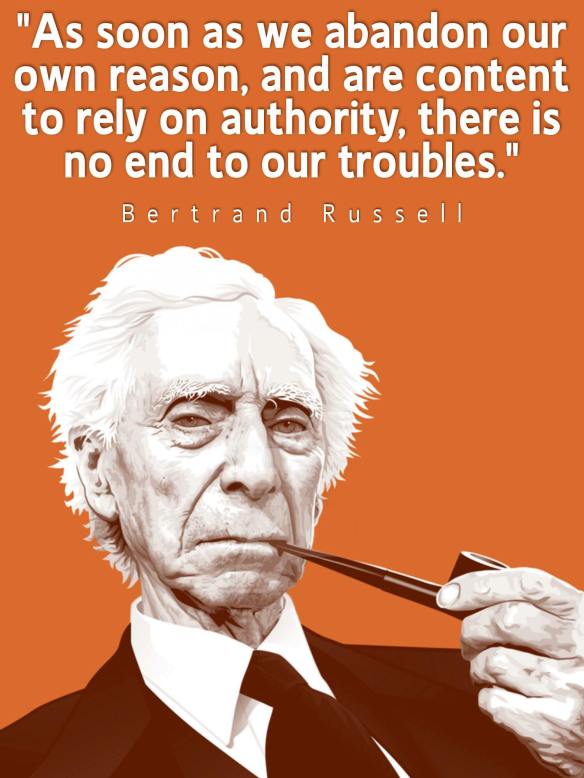
 Always Question Authority