SOCIAL PSYCHOLOGY (POLL): “Owning Living Beings in a Patriarchal Society” / Erich Fromm

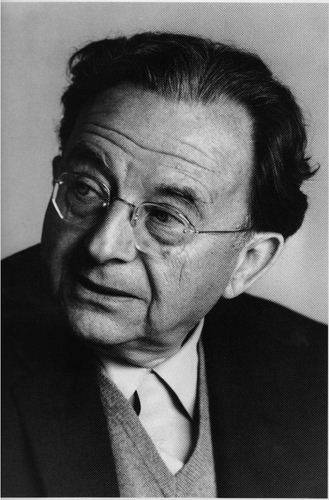
Erich FrommErich Seligmann Fromm
(March 23, 1900 – March 18, 1980)
German social psychologist, psychoanalyst, sociologist, humanistic philosopher, and democratic socialist

“Perhaps the greatest enjoyment is not so much in owning material things but in owning living beings. In a patriarchal society even the most miserable of men in the poorest of classes can be an owner of property—in his relationship to his wife, his children, his animals, over whom he can feel he is absolute master. At least for the man in a patriarchal society, having many children is the only way to own persons without needing to work to attain ownership, and without capital investment. Considering that the whole burden of childbearing is the woman’s, it can hardly be denied that the production of children in a patriarchal society is a matter of crude exploitation of women. In turn, however, the mothers have their own form of ownership, that of children when they are small. The circle is endless and vicious: the husband exploits the wife, she exploits the small children, and the adolescent males soon join the elder men in exploiting the women, and so on” (Fromm 70).
Fromm, Erich. To Have Or To Be?. New York: Harper & Row, 1976 Print.

POETRY: “Aubade” / Philip Larkin


AUBADE
1977

I work all day, and get half-drunk at night.
Waking at four to soundless dark, I stare.
In time the curtain-edges will grow light.
Till then I see what’s really always there:
Unresting death, a whole day nearer now,
Making all thought impossible but how
And where and when I shall myself die.
Arid interrogation: yet the dread
Of dying, and being dead,
Flashes afresh to hold and horrify.
The mind blanks at the glare. Not in remorse
– The good not done, the love not given, time
Torn off unused – nor wretchedly because
An only life can take so long to climb
Clear of its wrong beginnings, and may never;
But at the total emptiness for ever,
The sure extinction that we travel to
And shall be lost in always. Not to be here,
Not to be anywhere,
And soon; nothing more terrible, nothing more true.

This is a special way of being afraid
No trick dispels. Religion used to try,
That vast, moth-eaten musical brocade
Created to pretend we never die,
And specious stuff that says No rational being
Can fear a thing it will not feel, not seeing
That this is what we fear – no sight, no sound,
No touch or taste or smell, nothing to think with,
Nothing to love or link with,
The anasthetic from which none come round.

And so it stays just on the edge of vision,
A small, unfocused blur, a standing chill
That slows each impulse down to indecision.
Most things may never happen: this one will,
And realisation of it rages out
In furnace-fear when we are caught without
People or drink. Courage is no good:
It means not scaring others. Being brave
Lets no one off the grave.
Death is no different whined at than withstood.

Slowly light strengthens, and the room takes shape.
It stands plain as a wardrobe, what we know,
Have always known, know that we can’t escape,
Yet can’t accept. One side will have to go.
Meanwhile telephones crouch, getting ready to ring
In locked-up offices, and all the uncaring
Intricate rented world begins to rouse.
The sky is white as clay, with no sun.
Work has to be done.
Postmen like doctors go from house to house.

BBC DOCUMENTARY: “The Summer of 1967 – The Summer of Love”