h/t: MoveOn.org
ECONOMIC INEQUALITY: Helen Keller / “Keen Sense About Society, One Hundred Years Later”
3

h/t: MoveOn.org
Gaza is a window on our coming dystopia. The growing divide between the world’s elite and its miserable masses of humanity is maintained through spiraling violence. Many impoverished regions of the world, which have fallen off the economic cliff, are beginning to resemble Gaza, where 1.6 million Palestinians live in the planet’s largest internment camp. These sacrifice zones, filled with seas of pitifully poor people trapped in squalid slums or mud-walled villages, are increasingly hemmed in by electronic fences, monitored by surveillance cameras and drones and surrounded by border guards or military units that shoot to kill. These nightmarish dystopias extend from sub-Saharan Africa to Pakistan to China. They are places where targeted assassinations are carried out, where brutal military assaults are pressed against peoples left defenseless, without an army, navy or air force. All attempts at resistance, however ineffective, are met with the indiscriminate slaughter that characterizes modern industrial warfare.
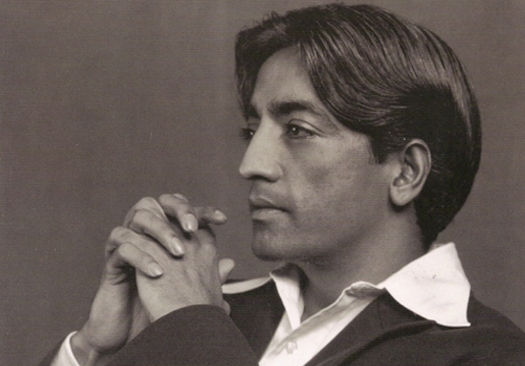 Jiddu Krishnamurti (May 11, 1895 – February 17, 1986)
Indian born speaker and writer on philosophical and spiritual subjects
We have all, I am sure, tried to subdue anger but somehow that does not seem to dissolve it. Is there a different approach to dissipate anger? Anger may spring from physical or psychological causes. One is angry, perhaps, because one is thwarted, one’s defensive reactions are being broken down, or one’s security which has been carefully built up is being threatened, and so on. We are all familiar with anger. How is one to understand and dissolve anger? If you consider that your beliefs, concepts, opinions, are of the greatest importance, then you are bound to react violently when questioned. Instead of clinging to beliefs, opinions, if you begin to question whether they are essential to one’s comprehension of life, then through the understanding of its causes there is the cessation of anger. Thus one begins to dissolve one’s own resistances which cause conflict and pain. This again requires earnestness. We are used to controlling ourselves for sociological or religious reasons or for convenience, but to uproot anger requires deep awareness. You say you are angry when you hear of injustice. Is it because you love humanity, because you are compassionate? Do compassion and anger dwell together? Can there be justice when there is anger, hatred? You are perhaps angry at the thought of general injustice, cruelty, but your anger does not alter injustice or cruelty; it can only do harm. To bring about order, you yourself have to be thoughtful, compassionate. Action born of hatred can only create further hatred. There can be no righteousness where there is anger. Righteousness and anger cannot dwell together.
~ J. Krishnamurti Online
The November election is not a battle between Republicans and Democrats. It is not a battle between Barack Obama and Mitt Romney. It is a battle between the corporate state and us. . . .
[…]
All the major correctives to American democracy have come through movements and third parties that have operated outside the mainstream. Few achieved formal positions of power. These movements built enough momentum and popular support, always in the face of fierce opposition, to force the power elite to respond to their concerns. Such developments, along with the courage to defy the political charade in the voting booth, offer the only hope of saving us from Wall Street predators, the assault on the ecosystem by the fossil fuel industry, the rise of the security and surveillance state and the dramatic erosion of our civil liberties.
“The most common way people give up their power is by thinking they don’t have any,” Alice Walker writes.
It was the Liberty Party that first fought slavery. It was the Prohibition and Socialist parties, along with the Suffragists, that began the fight for the vote for women and made possible the 19th Amendment. It was the Socialist Party, along with radical labor unions, that first battled against child labor and made possible the 40-hour workweek. It was the organizing of the Populist Party that gave us the Immigration Act of 1924 along with a “progressive” tax system. And it was the Socialists who battled for unemployment benefits, leading the way to the Social Security Act of 1935. No one in the ruling elite, including Franklin Roosevelt, would have passed this legislation without pressure from the outside.
Related articles
- What’s wrong with lesser evilism (dandelionsalad.wordpress.com)
Also of interest:
KPFA Ralph Nader interview
http://www.kpfa.org/archive/id/83373
Lawrence O’Donnell’s The Last Word:
“Candidates talk drugs, climate, indefinite detention at third-party debate”
http://www.msnbc.msn.com/id/45755883/ns/msnbc-the_last_word/#49545259
“I’d rather vote for what I want and not get it,
than for what I don’t want and get it.”
~ Eugene V. Debs
That is exactly what I did today!

In an innovative interdisciplinary study, neurobiological experts, radiologists and humanities scholars are working together to explore the relationship between reading, attention and distraction – by reading Jane Austen.
Surprising preliminary results reveal a dramatic and unexpected increase in blood flow to regions of the brain beyond those responsible for “executive function,” areas which would normally be associated with paying close attention to a task, such as reading, said Natalie Phillips, the literary scholar leading the project.
[…]
Pioneering in a number of respects, her research is “one of the first fMRI experiments to study how our brains respond to literature,” Phillips said, as well as the first to consider “how cognition is shaped not just by what we read, but how we read it.”
Critical reading of humanities-oriented texts is recognized for fostering analytical thought, but if such results hold across subjects, Phillips said it would suggest “it’s not only what we read – but thinking rigorously about it that’s of value, and that literary study provides a truly valuable exercise of people’s brains.”
“I’m not even an atheist so much as I am an anti-theist; I not only maintain that all religions are versions of the same untruth, but I hold that the influence of churches, and the effect of religious belief, is positively harmful. Reviewing the false claims of religion I do not wish, as some sentimental agnostics affect to wish, that they were true. I do not envy believers their faith. I am relieved to think that the whole story is a sinister fairy tale; life would be miserable if what the faithful affirmed was actually the case.”
~ Christopher Hitchens
 h/t:
h/t: