QUOTATION: “The Depths of Violence” / Krishnamurti

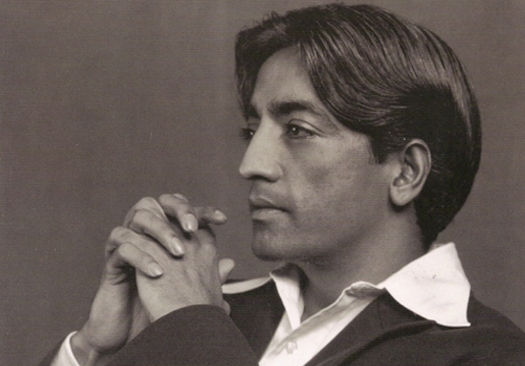
Jiddu Krishnamurti (May 11, 1895 – February 17, 1986)
Indian born speaker and writer on philosophical and spiritual subjects

Violence is not merely killing another. It is violence when we use a sharp word, when we make a gesture to brush away a person, when we obey because there is fear. So violence isn’t merely organized butchery in the name of God, in the name of society or country. Violence is much more subtle, much deeper, and we are inquiring into the very depths of violence. When you call yourself an Indian or a Muslim or a Christian or a European, or anything else, you are being violent. Do you know why it is violent? Because you are separating yourself from the rest of mankind. When you separate yourself by belief, by nationality, by tradition, it breeds violence. So a man who is seeking to understand violence does not belong to any country, to any religion, to any political party or system; he is concerned with the total understanding of mankind.
– Krishnamurti, Freedom from the Known, pp 51-52

h/t: J. Krishnamurti Online

QUOTATION: “Division Between Man and Man” / Krishnamurti

Jiddu Krishnamurti (May 11, 1895 – February 17, 1986)
Indian born speaker and writer on philosophical and spiritual subjects

Why is there, one must ask, this division—the Russian, the American, the British, the French, the German, and so on—why is there this division between man and man, between race and race, culture against culture, one series of ideologies against another? Why? Where is there this separation? Man has divided the earth as yours and mine—why? Is it that we try to find security, self-protection, in a particular group, or in a particular belief, faith? For religions also have divided man, put man against man—the Hindus, the Muslims, the Christians, the Jews and so on. Nationalism, with its unfortunate patriotism, is really a glorified form, an ennobled form, of tribalism. In a small tribe or in a very large tribe there is a sense of being together, having the same language, the same superstitions, the same kind of political, religious system. And one feels safe, protected, happy, comforted. And for that safety, comfort, we are willing to kill others who have the same kind of desire to be safe, to feel protected, to belong to something. This terrible desire to identify oneself with a group, with a flag, with a religious ritual and so on gives us the feeling that we have roots, that we are not homeless wanderers.
~ Krishnamurti, Krishnamurti to Himself, pp 59-60

h/t: J. Krishnamurti Online

NOISE: “I’m Thinking. Please. Be Quiet.” / George Prochnik

Arthur Schopenhauer

I have long held the opinion that the amount of noise that anyone can bear undisturbed stands in inverse proportion to his mental capacity and may therefore be regarded as a pretty fair measure of it.
~ Arthur Schopenhauer, The World as Will and Representation, 1819

SLAMMING doors, banging walls, bellowing strangers and whistling neighbors were the bane of the philosopher Arthur Schopenhauer’s existence. But it was only in later middle age, after he had moved with his beloved poodle to the commercial hub of Frankfurt, that his sense of being tortured by loud, often superfluous blasts of sound ripened into a philosophical diatribe. Then, around 1850, Schopenhauer pronounced noise to be the supreme archenemy of any serious thinker.

His argument against noise was simple: A great mind can have great thoughts only if all its powers of concentration are brought to bear on one subject, in the same way that a concave mirror focuses light on one point. Just as a mighty army becomes useless if its soldiers are scattered helter-skelter, a great mind becomes ordinary the moment its energies are dispersed.

And nothing disrupts thought the way noise does, Schopenhauer declared, adding that even people who are not philosophers lose whatever ideas their brains can carry in consequence of brutish jolts of sound.

Continue reading . . .

EXPOSITORY ESSAY: “Atheism, Agnosticism, and Antitheism” / Madison S. Hughes

By Madison S. Hughes (06.21.2012)

Atheism, Agnosticism and Antitheism

It is by our beliefs, knowledge and values that we define ourselves, and are judged by others. Many are willing to kill, or be killed for such abstract concepts without even a rudimentary understanding of the abstraction for which they are all too willing to meet their maker. Atheism, agnosticism and antitheism are three commonly misunderstood terms that describe beliefs, knowledge and values respectively. Analytically defining each word will show a direct correlation between each term, and their respective abstract concept for which they describe. It will prove beneficial to any reader’s future conversations, correspondence, or consternations concerning atheism, agnosticism, and antitheism.

Atheism

Atheism is a term that describes one’s rejection of supernatural belief. Simply put, a theist is one with a belief in a supernatural deity, or deities; while an atheist is one without a belief in a supernatural deity, or deities. The American Atheist organization founded in 1963 by “Madalyn Murray O’Hair, the noted atheist activist, [who] as the result of her successful battle against mandatory school prayer, and Bible recitation” [was responsible for their removal from public schools] defines atheism as follows (About):

Atheism is the lack of belief in a deity, which implies that nothing exists, but natural phenomena (matter), that thought is a property or function of matter, and that death irreversibly and totally terminates individual organic units. This definition means that there are no forces, phenomena, or entities which exist outside of, or apart from physical nature, or which transcend nature, or are “super” natural, nor can there be. Humankind is on its own. (Atheism)

When it comes to a belief in the supernatural one must either be a theist, or an atheist, for no other alternatives are available. This is not a false dilemma. One cannot kind of, sort of believe, but not really. It would be analogous to kind of, sort of being dead; it is not possible. One is either dead or alive. Likewise, one is either a theist or an atheist. In both cases there are no other alternatives available. Atheism is concerned with belief.

Agnosticism

Often, because of the negative emotive connotations associated with the word atheist, people will incorrectly use the term agnostic to describe their lack of belief in an intellectually vain attempt to avoid being labeled the pejoratively and socially stigmatic term atheist. It is intellectually dishonest to do so, for “agnosticism is the position of believing that knowledge of the existence or non-existence of god is impossible. . . . The agnostic holds that human knowledge is limited to the natural world, that the mind is incapable of knowledge of the supernatural” (Agnosticism). Agnosticism is not an undecided position concerning belief between a theist, and an atheist. As previously shown theism, and atheism describe belief. One cannot use the term agnostic as a surrogate to describe one’s belief. Agnosticism is concerned with knowledge.

Antitheism

“Antitheism is active opposition to theism. . . . it typically refers to direct opposition to organized religion, or to the belief in any deity” (Antitheism). An antitheist values truth over unity, while it is observable that theists value unity over truth. For example, an antitheist will overtly, and without reservation, claim that anyone who believes in the story of a talking snake is irrational. Conversely, the theists would not concern themselves with the antitheist’s claimed irrationality of a talking snake so long as the unity of their cult, church, or community is maintained.

Most antitheists are so because they “take the view that theism is dangerous or destructive” (Antitheism). Many antitheists are strident in their opposition to theism. The late Christopher Hitchens who in his 2001 book Letters to a Young Contrarian, wrote, “I hold that the influence of churches, and the effect of religious belief, is positively harmful” (Antitheism). Antitheists look at the negative effect of religious belief on society. They believe that the influence of the churches is unnecessary for positive effects to be made in society. Secular institutions such as the Red Cross, Doctors without Borders, Planned Parenthood, Amnesty International, PlanUSA, etc. do so demonstratively with neither a need for the promise of salvation, nor the fear of damnation. Antitheism is concerned with values.

The metaphysical misunderstanding of abstract concepts such as belief, knowledge and values need not continue to thrive in a culture of intolerance. A simple analytical understanding of the definitions of atheism, agnosticism, and antitheism clearly shows their respective correlation to belief, knowledge and values respectively.

Atheism is concerned with belief.
Agnosticism is concerned with knowledge.
Antitheism is concerned with values.

Works Cited

“About.” American Atheists. Ed. Admin. American Atheists, 15 Feb. 2012. Web. 18 June 2012.

“Agnosticism.” The Skeptic’s Dictionary. Ed. Robert T. Carroll. The Skeptic’s    Dictionary,  19 May 2012. Web. 19 June 2012.

“Antitheism.” Wikipedia. Wikimedia Foundation, 07 June 2012. Web. 19 June 2012.

“Atheism.” American Atheists. Ed. Admin. American Atheists, 15 Feb. 2012. Web. 18 June 2012.

Related articles

QUOTATION: Krishnamurti / “We submit to authority because all of us have this inward demand to be safe.”

Jiddu Krishnamurti (May 11, 1895 – February 17, 1986)
Indian born speaker and writer on philosophical and spiritual subjects

One is afraid to think apart from what has been said by the leaders because one might lose one’s job, be ostracized, excommunicated, or put into a concentration camp. We submit to authority because all of us have this inward demand to be safe, this urge to be secure. So long as we want to be secure in our possessions, in our power, in our thoughts we must have authority, we must be followers; and in that lies the seed of evil, for it invariably leads to the exploitation of man by man. He who would really find out what truth is, what God is, can have no authority, whether of the book, of the government, of the image, or of the priest; he must be totally free of all that. This is very difficult for most of us because it means being insecure, standing completely alone, searching, groping, never being satisfied, never seeking success. But if we seriously experiment with it, then I think we shall find that there is no longer any question of creating or following authority because something else begins to operate which is not a mere verbal statement but an actual fact. The man who is ceaselessly questioning, who has no authority, who does not follow any tradition, any book or teacher, becomes a light unto himself. – Hamburg 1956,Talk 2

 ~ J. Krishnamurti Online

PHILOSOPHY ESSAY: “God is dead!” / Madison S. Hughes

By Madison S. Hughes (06.05.2013)

Friedrich Wilhelm Nietzsche

God is dead!

“Being ‘a Nietzschean’ is no more possible than following someone else’s orders
to be free! After all, it was Nietzsche himself who insisted that ‘Those who
understand me, understand that I can have no disciples’” (Soccio, 477).

This essay will embrace Nietzsche’s philosophy because he proposed that God is dead, life is meaningless, and fate trumps faith. Ultimately, he provided an alternative philosophy of life that is life affirming. The philosophy of Friedrich Nietzsche (1844-1900) has many distracters, for a myriad of reasons. Undoubtedly, most of those in opposition to Nietzsche’s philosophy base their objections on a misperceived threat to their firmly indoctrinated religious beliefs. While this essay may not dissuade those distracters from their religious beliefs, for that is not its purpose, it may help clarify a few of their misperceptions. To illustrate, we begin with one of philosophy’s most contentious, yet misunderstood quotes.

God is Dead

Nietzsche first proposed that God is dead in his 1882 book The Gay Science when he declared,

‘God is dead. God remains dead. And we have killed him.’ By this Nietzsche means that society no longer has a use for God; the belief does not in any way help the survival of the species, rather it hinders. (Jackson 56)

Clearly we cannot hold Nietzsche solely responsible for God’s death, nay; Nietzsche was more like a messenger. “Nietzsche claimed he was the first to have “discovered” the death of God. In part, he meant that the idea of God has lost its full creative force, its full power” (Soccio, 468). Recall that Nietzsche witnessed the world through the great transformation of a rural agrarian society rapidly morphing into vast urban sprawls caused by the industrial revolution. He was born less than fifty years after great minds of the scientific revolution nearly liberated humanity from the clench of the Church in the 17th and 18th centuries. While Nietzsche and other great minds of his day could see the dethronement of God before their eyes,

[t]he full extent of the dethronement of God is not yet felt by the great masses, who still believe that they believe in God. Yet if we dig deep into our own psyches, Nietzsche prophesied, we will discover that we no longer have ultimate faith in God: Our true faith is in scientific and technological progress. (468)

“And even though some of us may sense that the old religions are dead and dying, [many] remain unable to face the consequences of life without God” (469).

Life is Meaningless

While the conviction of Supernatural belief provides many with inner comfort, the external Cosmos is not privy to such conviction, and, like it or not, the universe lacks objective meaning and purpose. “Copernicus and Galileo had forever changed our sense of scale: The earth is a tiny, virtually invisible speck in a massive, purposeless universe. ‘What are we doing when we unchained the earth from the sun’” (469)? What’s more, “Darwin had forever altered our sense of ourselves as God’s special creation. The new image of merely human beings is ignoble: We are but one species among millions struggling to survive, descendants of some primordial ooze” (469). These astronomic, and evolutionary biological discoveries led many to a great sense of emptiness.

According to Nietzsche, the death of God leads to nihilism. From the Latin word for ‘nothing,’ nihilism refers to the belief that the universe lacks objective meaning and purpose. . . . Nietzsche predicted that nihilism would be the wave of the future (our present). He predicted that as more and more people perceive religious values to be empty and science as having no meaning or purpose to offer us, a sense of emptiness would initially prevail: It all amounts to nothing. Life is a cosmic accident. There is no Supernatural order; no divinely or rationally ordained goal. (470)

One must be careful not to mistake Nietzsche as a nihilist. He is saying that both Supernatural belief, and superficial values imposed by the Church have proven only to shackle humanity’s mind, and as time goes on will be shown to be fatuous. Nietzsche, like his pessimistic predecessor, Arthur Schopenhauer, had a great appreciation for the aesthetics. Many of us agree, and are quite comfortable with the fact, that the universe lacks objective meaning and purpose; however, the masses are not so content with these facts, and most require faith and external authority to get them through the human condition. Nietzsche offers a viable alternative approach to life for those seeking meaning in a postmodern world.

Fate Trumps Faith

In the infancy of humanity, the benighted masses relied on faith to provide solace for the unexplainable and uncomfortable realities of the human condition. Humankind has evolved from its insipid infancy to the adolescent age of postmodernism. However, this maturity is not without its price, for it requires that we, as individuals, now take individual responsibility for our own existence. Nietzsche expressed this transition from faith to fate when he stated:

In the absence of God . . . we must redeem ourselves with the sacred Yes to life expressed through amor fati, the love of our specific fate expressed as joyous affirmation and delight that everything is exactly as and what it is. (476)

In his 1882 comment titled “For the New Year,” Nietzsche expressed amor fati quite eloquently when he penned,

Amor fati: may that be my love from now on! I want to wage war against the ugly. I do not want to accuse, I do not want even to accuse the accusers. May looking away be my only form of negation! And, in all: I want to be at all times hereafter only an affirmer. (478)

“Nietzsche saw nihilism as a positive affirmation of life, to be freed of the burden of hope in an afterlife, in salvation. You should love your fate without the need of fictions and false securities to comfort you” (Jackson 103).

Conclusion

Since God is dead, life is meaningless, and fate trumps faith, it is clear that an alternative philosophy of life is necessary, and Nietzsche provided an alternative philosophy of life that is life affirming. Surely Nietzsche distracters have not been dissuaded from their religious beliefs; however, maybe, just maybe, a few of their misperceptions have been clarified.

“Inasmuch as at all times, as long as there have been human beings, there have
been herds of men (clans, communities, tribes, people, states, churches) and
always a great many people who obeyed, compared with the small number
of those commanding . . . it may fairly be assumed that the need for
[herding together] is now innate in the average man. . . .”
~ Friedrich Nietzsche

Works Cited

Jackson, Roy. Teach Yourself Nietzsche. First ed. United States: McGraw-Hill, 2008. Print.

Soccio, Douglas J. Archetypes of Wisdom: An Introduction to Philosophy. Seventh ed.    United States: Wadsworth, 2010. Print.
QUOTATION: Krishnamurti / “All conflict is this battle between the observer and the observed.”

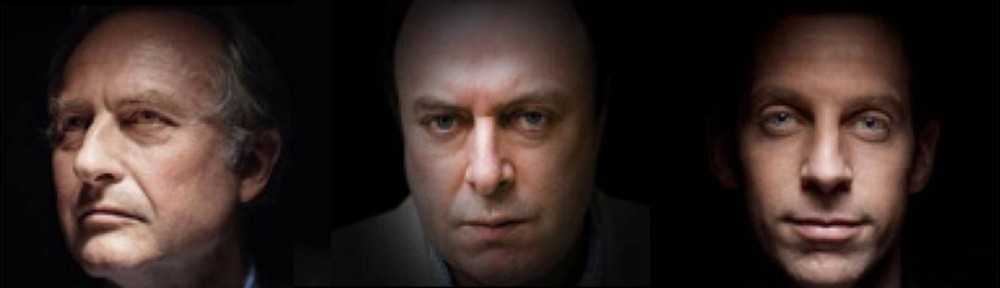
Jiddu Krishnamurti (May 11, 1895 – February 17, 1986)
Indian born speaker and writer on philosophical and spiritual subjects

The division in our lives is the structure of thought, which is the action of the observer who thinks himself separate. He further thinks of himself as the thinker, as something different from his thought. But there can be no thought without the thinker and no thinker without the thought. So the two are really one. He is also the experiencer and, again, he separates himself from the thing he experiences. The observer, the thinker, the experiencer, are not different from the observed, the thought, the experienced. This is not a verbal conclusion. If it is a conclusion then it is another thought which again makes the division between the conclusion and the action which is supposed to follow that conclusion. When the mind sees the reality of this, the division can no longer exist. This is the whole point of what we are saying. All conflict is this battle between the observer and the observed. This is the greatest thing to understand.

 ~ J. Krishnamurti Online

QUOTATION: Galileo Galilei / “Sense, Reason, and Intellect”

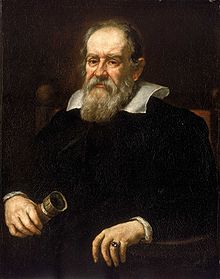
Galileo GalileiGalileo Galilei (February 15, 1564 – January 8, 1642)
Italian physicist, mathematician, astronomer, and philosopher
who played a major role in the Scientific Revolution.

I do not feel obliged to believe that the same God who has endowed us with sense, reason, and intellect has intended us to forgo their use.