 h/t: Being Liberal
INJUSTICE: “Shelby County v. Holder; Preclearance Requirements of the Voting Rights Act of 1965” / Justice Ruth Joan Bader Ginsburg
1
h/t: Being Liberal

It has now been a year since I entered this embassy and sought refuge from persecution.
As a result of that decision, I have been able to work in relative safety from a US espionage investigation.
But today, Edward Snowden’s ordeal is just beginning.
Two dangerous runaway processes have taken root in the last decade, with fatal consequences for democracy.
Government secrecy has been expanding on a terrific scale.
Simultaneously, human privacy has been secretly eradicated.
A few weeks ago, Edward Snowden blew the whistle on an ongoing program – involving the Obama administration, the intelligence community and the internet services giants – to spy on everyone in the world.
As if by clockwork, he has been charged with espionage by the Obama administration.
The US government is spying on each and every one of us, but it is Edward Snowden who is charged with espionage for tipping us off.
It is getting to the point where the mark of international distinction and service to humanity is no longer the Nobel Peace Prize, but an espionage indictment from the US Department of Justice.
Edward Snowden is the eighth leaker to be charged with espionage under this president.
h/t: WikiLeaks
h/t: Too Many Questions
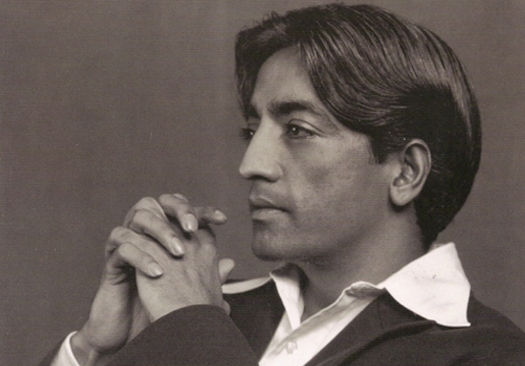 Jiddu Krishnamurti (May 11, 1895 – February 17, 1986)
Indian born speaker and writer on philosophical and spiritual subjects
One is afraid to think apart from what has been said by the leaders because one might lose one’s job, be ostracized, excommunicated, or put into a concentration camp. We submit to authority because all of us have this inward demand to be safe, this urge to be secure. So long as we want to be secure in our possessions, in our power, in our thoughts we must have authority, we must be followers; and in that lies the seed of evil, for it invariably leads to the exploitation of man by man. He who would really find out what truth is, what God is, can have no authority, whether of the book, of the government, of the image, or of the priest; he must be totally free of all that. This is very difficult for most of us because it means being insecure, standing completely alone, searching, groping, never being satisfied, never seeking success. But if we seriously experiment with it, then I think we shall find that there is no longer any question of creating or following authority because something else begins to operate which is not a mere verbal statement but an actual fact. The man who is ceaselessly questioning, who has no authority, who does not follow any tradition, any book or teacher, becomes a light unto himself. – Hamburg 1956,Talk 2
 The focus of this book is on the growing economic, political and cultural gap that has emerged in the United States between political leaders elected to govern and the citizenry whom they represent. It is also about the pernicious gap between ruling financial and corporate elites and the rest of society and how it has intensified the growth of a political and cultural landscape that is as anti-intellectual and devoid of a culture of questioning as it is authoritarian. I argue in this book that the deepening political, economic and moral deficit in America is inextricably connected to an education deficit, which is currently impacting young people most of all by starving them of both the economic resources and the formative educational experiences required to help them develop into knowledgeable and engaged citizens. The book begins with the premise that the crisis of schooling cannot be disconnected from the economic crisis – fueled by endless wars, a bloated military-industrial complex, and vast disparities in wealth and income. I argue throughout the book that as the United States proceeds headlong on a reckless course of civic illiteracy, which serves to legitimate and bolster a malignant gap in income, wealth and power, the end point is sure to entail the destruction of current and future possibilities for developing the educational institutions and formative culture that advance the imperatives of justice and democracy.
The book takes up the theme of the educational deficit by analyzing how recent attacks on youth can be linked to systemic attempts by a corporate and financial elite, conservative think tanks, and other right-wing forces to dismantle the social state and undermine opportunities for critical education, civic courage, and actions that make a world more just and democratic. These attacks range from the militarization of schools and the reduction in social services to the ongoing criminalization of a wide range of youth and adult behaviors and an increasing disinvestment in policies that would provide jobs, health care, and a future for young people.
Examining the regressive educational apparatuses, conservative politics, and cultures of cynicism that have dominated the United States in recent years,America’s Education Deficit and the War on Youth describes and analyzes how American society is increasingly infused by real and symbolic forms of violence promoted by a range of intersecting forces, including neoliberal policymaking, militarization, religious fanaticism, corporate elitism, the violation of civil liberties, unconstitutional forms of surveillance, the disinvestment in public and higher education, and persistent racism. Despite widespread calls for electoral reform, the nation has arrived at such a crisis in governance that it cannot possibly begin to redress prevailing issues through political reform alone. Education must be taken seriously as a matter of primary importance among anyone who believes in the promise of US democracy.
In addition to documenting the authoritarian and morally malicious policies and actions of a government beholden to corporate, religious and military interests, America’s Education Deficit and the War on Youth invites the reader to consider the possibilities for democratic renewal embodied by the ongoing actions of various modes of resistance that are emerging among young people, workers, feminists, and other individual and social movements that are demonstrating the importance of critical education, hope, and peaceful resistance against a creeping authoritarianism. All but abandoned by the adult generation, youth, with others are beginning to take matters into their own hands and are teaching themselves the power of democratic expression in a society that has all but relinquished its claim to democracy.
 “A MAN WITH A CONVICTION is a hard man to change. Tell him you disagree and he turns away. Show him facts or figures and he questions your sources. Appeal to logic and he fails to see your point.” So wrote the celebrated Stanford University psychologist Leon Festinger (PDF), in a passage that might have been referring to climate change denial—the persistent rejection, on the part of so many Americans today, of what we know about global warming and its human causes. But it was too early for that—this was the 1950s—and Festinger was actually describing a famous case study in psychology.
[…]
The theory of motivated reasoning builds on a key insight of modern neuroscience (PDF): Reasoning is actually suffused with emotion (or what researchers often call “affect”). Not only are the two inseparable, but our positive or negative feelings about people, things, and ideas arise much more rapidly than our conscious thoughts, in a matter of milliseconds—fast enough to detect with an EEG device, but long before we’re aware of it. That shouldn’t be surprising: Evolution required us to react very quickly to stimuli in our environment. It’s a “basic human survival skill,” explains political scientist Arthur Lupia of the University of Michigan. We push threatening information away; we pull friendly information close. We apply fight-or-flight reflexes not only to predators, but to data itself.
We’re not driven only by emotions, of course—we also reason, deliberate. But reasoning comes later, works slower—and even then, it doesn’t take place in an emotional vacuum. Rather, our quick-fire emotions can set us on a course of thinking that’s highly biased, especially on topics we care a great deal about.
[…]
In Kahan’s research (PDF), individuals are classified, based on their cultural values, as either “individualists” or “communitarians,” and as either “hierarchical” or “egalitarian” in outlook. (Somewhat oversimplifying, you can think of hierarchical individualists as akin to conservative Republicans, and egalitarian communitarians as liberal Democrats.)
h/t: Planet Atheism
 Acclaimed Mexican author and thinker had visas denied and was tracked when he did visit US, newly public files reveal.
Carlos Fuentes, who died in 2012, was denied visas in the 1960s because US authorities regarded him as a communistsubversive.
The FBI and US state department closely monitored the Mexican author Carlos Fuentes for more than two decades because he was considered a communist and a sympathiser of Cuba’s Fidel Castro, recently released documents show.
The documents posted on the FBI’s website show the US denied Fuentes an entry visa at least twice in the 1960s. In one of the memoranda Fuentes is described as “a leading Mexican communist writer” and a “well-known Mexican novelist with long history of subversive connections”.
Fuentes died in 2012 at age 83 after suffering an internal haemorrhage.
 h/t: Matti the Atheist
 Always Question Authority