“Did you ever ask yourself how it happens that government and capitalism continue to exist in spite of all the evil and trouble they are causing in the world?” the anarchist Alexander Berkman wrote in his essay “The Idea Is the Thing.” “If you did, then your answer must have been that it is because the people support those institutions, and that they support them because they believe in them.”
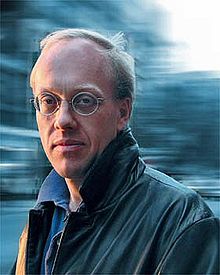
Berkman was right. As long as most citizens believe in the ideas that justify global capitalism, the private and state institutions that serve our corporate masters are unassailable. When these ideas are shattered, the institutions that buttress the ruling class deflate and collapse. The battle of ideas is percolating below the surface. It is a battle the corporate state is steadily losing. An increasing number of Americans are getting it. They know that we have been stripped of political power. They recognize that we have been shorn of our most basic and cherished civil liberties, and live under the gaze of the most intrusive security and surveillance apparatus in human history. Half the country lives in poverty. Many of the rest of us, if the corporate state is not overthrown, will join them. These truths are no longer hidden.
Category Archives: Occupy Wall Street
NOAM CHOMSKY: “Obama’s Policies Are Creating Terrorism Around the World” / Laura Flanders
http://blip.tv/grittv/noam-chomsky-on-secrecy-terrorism-and-google-6604821
If ever you accused Barack Obama of fearing to offend or suffering from lack of spine, you have to hand it to him now: President Obama is acting more and more like a leader every day, one specific leader in fact: George W. Bush.
Take the recent disclosures about the National Security Agency’s massive spying on the world. The data dragnet mimics the worst of the Bush administration.
It’s hypocritical in the extreme to gather data in the name of preventing terrorism while the administration’s own policies are creating terrorism around the world, says MIT professor emeritus, Noam Chomsky in this GRITtv exclusive interview.
ECONOMIC INEQUALITY: Joseph Stiglitz / “The Price of Inequality: How Today’s Divided Society Endangers our Future”
Related articles
- Joseph Stiglitz on “The Price of Inequality: How Today’s Divided Society Endangers our Future” (democracynow.org)
- Joseph Stiglitz Explains the Price of Inequality (wnyc.org)
- Joseph Stiglitz: The Middle Class Has Been Screwed Over The Last Decade (businessinsider.com)
ECONOMIC AUSTERITY: Joseph Stiglitz / “On Occupy and Why U.S.-Europe Austerity Will Only Weaken Economic Recovery”
Related articles
- Joseph Stiglitz on Occupy Wall Street & Why US-Europe Austerity Will Only Weaken Economic Recovery (democracynow.org)
- Krugman and Stiglitz: Our Most Widely Ignored Public Intellectuals (economistsview.typepad.com)
CAPITALISM: Interview / Richard Wolff on Challenging Capitalism in His New Book, “Occupy the Economy”
Can we challenge capitalism and prevail, considering that the top one percent control 50% of the available capital and the top five percent some 70% of the nation’s private funds? Richard Wolff is a closely followed Truthout contributor on economics. Currently, you can obtain his just-released “Occupy the Economy: Challenging Capitalism” directly from Truthout. If you want to know about alternatives to the current destructive course of our economy and how we, as a nation, got to this point, get your copy of “Occupy the Economy” by clicking here.
The following is an interview with Richard Wolff by Truthout staff member Matt Renner.
Matt Renner: In your introduction to the book, you discuss New York City Mayor Michael Bloomberg’s “cleanliness” excuse for clearing the original Occupy Wall Street encampment at Liberty Square. Why do you think so many public officials and right-wing pundits describe the occupiers as “unclean”?
Richard D. Wolff: Their problem has been, and continues to be, that they have no response to Occupy’s basic attack on the inequity and antidemocratic social conditions summarized in the confrontation of, “1 percent against 99 percent.” They know that the vast majority of Americans feel the truth of Occupy’s social criticism, experience it in their lives, and sympathize with protest against and efforts to change a system with such unjust outcomes. So, they can refute little and need instead to distract public opinion from what Occupy focuses on.
One way to do that is to assert the existence of and then condemn some other quality or dimension of Occupy. In Bloomberg’s pathetic example, the best he and his advisers could come up with was a reference to Zuccotti Park as being “unclean” so as to then position the mayor and the police as militant janitors. Everyone who knows even a little about New York City knows that the mayor and the police preside over many filthy subway tunnels, highways, streets, empty lots and abandoned buildings without doing anything to clean them. So, suddenly asserting the importance of cleanliness simply exposed them to the ridicule such a position deserved. I suspect something similar is underway when others, perhaps taking their cue from Bloomberg in New York, decided to follow the cleanliness ploy.
SOCIAL ACTIVISM: Chris Hedges / Why OWS Frightens the Corporate Elite
“I don’t waste any emotional or intellectual energy on these elections. All hope is in the street. All hope is through acts of civil disobedience. We may not win, but if we’re going to win that’s the only place we are going to win.”
Book Excerpt: “Occupy the Economy: Challenging Capitalism” / Richard Wolff
For the last half-century, capitalism has been a taboo subject in the United States. . . . Politicians repeated, robot-style, that the “U.S. is the greatest country in the world” and that “capitalism is the greatest economic system in the world.” Those few who have dared to raise questions or criticisms about capitalism have been either ignored or told to go live in North Korea, China or Cuba as if that were the only alternative to pro-capitalism cheerleading.
[…]
Questioning and criticizing capitalism have been taboo, treated by federal authorities, immigration officials, police and most of the public alike as akin to treason. Fear-driven silence has substituted for the necessary, healthy criticism without which all institutions, systems, and traditions harden into dogmas, deteriorate into social rigidities, or worse. Protected from criticism and debate, capitalism in the United States could and has indulged all its darker impulses and tendencies. No public exposure, criticism and movement for change could arise or stand in its way as the system and its effects became ever more unequal, unjust, inefficient and oppressive. Long before the Occupy movement arose to reveal and oppose what U.S. capitalism had become, that capitalism had divided the 1 percent from the 99 percent.
[…]
Across the pages that follow, what emerges is the central importance of how capitalism very particularly organizes production: masses of working people generate corporate profits that others take and use. Tiny boards of directors, selected by and responsible to tiny groups of major shareholders, gather and control corporate profits, thereby shaping and dominating society. That tiny minority (boards and major shareholders) of those associated with and dependent upon corporations make all the basic decisions—how, what, and where to produce and what to do with the profits. The vast majority of workers within and residents surrounding those capitalist corporations must live with the results of corporate decisions. Yet they are systematically excluded from participating in making those decisions. Nothing more glaringly contradicts democracy than how capitalism organizes the corporate enterprises where working people produce the goods and services without which modern life for everyone would be impossible.
From: Occupy the Economy: Challenging Capitalism By Richard Wolff
Chris Hedges: Colonized by Corporations
. . . We have been, like nations on the periphery of empire, colonized. We are controlled by tiny corporate entities that have no loyalty to the nation and indeed in the language of traditional patriotism are traitors. They strip us of our resources, keep us politically passive and enrich themselves at our expense. The mechanisms of control are familiar to those whom the Martinique-born French psychiatrist and writer Frantz Fanon called “the wretched of the earth,” including African-Americans. The colonized are denied job security. Incomes are reduced to subsistence level. The poor are plunged into desperation. Mass movements, such as labor unions, are dismantled. The school system is degraded so only the elites have access to a superior education. Laws are written to legalize corporate plunder and abuse, as well as criminalize dissent. . . .
[…]
The danger the corporate state faces does not come from the poor. The poor, those Karl Marx dismissed as the Lumpenproletariat, do not mount revolutions, although they join them and often become cannon fodder. The real danger to the elite comes from déclassé intellectuals, those educated middle-class men and women who are barred by a calcified system from advancement. Artists without studios or theaters, teachers without classrooms, lawyers without clients, doctors without patients and journalists without newspapers descend economically. They become, as they mingle with the underclass, a bridge between the worlds of the elite and the oppressed. And they are the dynamite that triggers revolt.
This is why the Occupy movement frightens the corporate elite. What fosters revolution is not misery, but the gap between what people expect from their lives and what is offered. This is especially acute among the educated and the talented. They feel, with much justification, that they have been denied what they deserve. They set out to rectify this injustice. And the longer the injustice festers, the more radical they become.
[…]
The power of the Occupy movement is that it expresses the widespread disgust with the elites, and the deep desire for justice and fairness that is essential to all successful revolutionary movements. The Occupy movement will change and mutate, but it will not go away. It may appear to make little headway, but this is less because of the movement’s ineffectiveness and more because decayed systems of power have an amazing ability to perpetuate themselves through habit, routine and inertia. The press and organs of communication, along with the anointed experts and academics, tied by money and ideology to the elites, are useless in dissecting what is happening within these movements. They view reality through the lens of their corporate sponsors. They have no idea what is happening.
[Fifteen] Major Differences Between Occupy Wall Street And The Tea Party Protests
Article by Matthew Desmond
I read an article recently, which compared the origins of the Occupy Wall Street movement to the origins of the Tea Party movement. As someone who has paid attention to both movements, I believe nothing could be further from the truth. Below are just 15 differences between the Occupy Wall Street protests, and the Tea Party movement.
1. Occupy Wall Street is a grassroots movement, funded by people around the world, without corporate sponsorship.
The Tea Party is an AstroTurf movement, receiving most of its funding from corporate sponsorship, and Fox News and its supporters.2. Occupy Wall Street wants less corporate influence over our Government.
The Tea Party wants less Governmental influence over corporations.3. Occupy Wall Street didn’t receive mainstream media coverage until several weeks after it began.
The Tea Party held rallies across the country sponsored by Fox News, and even small rallies with minimal turnout received attention from other media outlets.4. Occupy Wall Street protesters are unarmed.
The Tea Party protesters openly carried a large variety of guns, including assault rifles.5. Over 1,000 Occupy Wall Street Protesters have been arrested.
Zero Tea Party Protesters have been arrested.
The Corporate Media’s Attempt to Kill the Occupy Movement
. . . Since September, the mainstream press in the US has systematically ignored and demonized the Occupy movement. The nakedness of the class bias in this case, however, was especially jarring: the size and significance of the protests were downplayed, reports of police brutality were largely ignored, and the movement was portrayed as violent and dangerous. Many of the most prominent US news outlets, such as The New York Times, practically ignored the protests altogether. These shameful distortions by the corporate press display the function of the media as an organ of the rule of “the 1 percent,” and reveal how threatened elites are by organized, direct action and democratic participation.
[…]
The Tea Party, a movement which serves rather than threatens corporate interests, has received front-page coverage in virtually all of the nation’s national newspapers for events that were smaller and less significant than this week’s May Day protests. Yet, a truly substantial social movement with genuine emancipatory potential and a broad base of support among Americans is largely considered un-newsworthy by the corporate press. When the demonstrations were covered, crude caricatures masquerading as objective news ruled the day.