Aphorism: On Christian Charity

By Madison S. Hughes (05.01.2012)

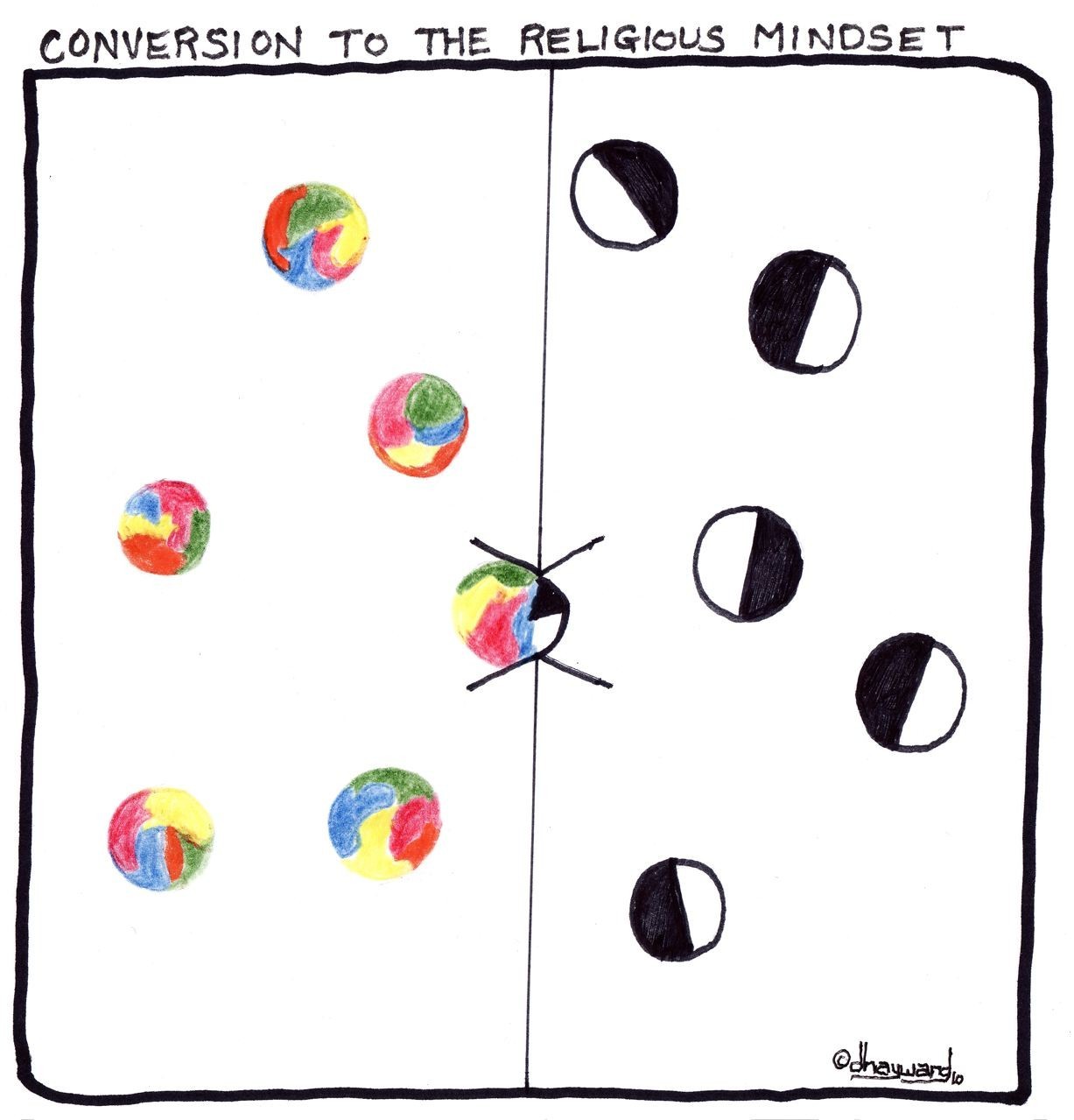
Churches in general and the Catholic Church in particular, are nothing more than organized tribal cults. They give to their respective tribes, as would any primal tribe; however, these modern-day mendicants mooch off of their secular brethren through tax-exemptions and other Christian privileges purposefully to give back to their primal tribes. They give not out of a sense of compassion to their fellow human beings, but out of a sense of community to their fellow limited and literal-minded tribe members.

Highly Religious People Are Less Motivated by Compassion Than Are Non-Believers

“Love thy neighbor” is preached from many a pulpit. But new research from the University of California, Berkeley, suggests that the highly religious are less motivated by compassion when helping a stranger than are atheists, agnostics and less religious people.

[…]

In the study, the link between compassion and generosity was found to be stronger for those who identified as being non-religious or less religious.

“Overall, we find that for less religious people, the strength of their emotional connection to another person is critical to whether they will help that person or not,” said UC Berkeley social psychologist Robb Willer, a co-author of the study. “The more religious, on the other hand, may ground their generosity less in emotion, and more in other factors such as doctrine, a communal identity, or reputational concerns.”

[…]

“Overall, this research suggests that although less religious people tend to be less trusted in the U.S., when feeling compassionate, they may actually be more inclined to help their fellow citizens than more religious people,” Willer said.

Read more . . .

Losing Your Religion: Analytic Thinking Can Undermine Belief

People who are intuitive thinkers are more likely to be religious, but getting them to think analytically even in subtle ways decreases the strength of their belief, according to a new study in Science.

[…]

Analytic thinking undermines belief because, as cognitive psychologists have shown, it can override intuition. And we know from past research that religious beliefs—such as the idea that objects and events don’t simply exist but have a purpose—are rooted in intuition. “Analytic processing inhibits these intuitions, which in turn discourages religious belief,” [British Columbia psychologist, Ara] Norenzayan explains.

Read more . . . 

Instinctive Thinkers More Likely to Believe in a Personal God – and Less Likely to be Atheists

Late last year some fascinating research revealed that people who take a more deliberative approach to problem solving – rather than just going with their instincts – are also less religious. Now some independent research not only confirms those findings, but also extends them to show how there is a progressive link thinking style and decreasing religious beliefs.

[…]

The key results are shown in the figure. People who believe in a personal god are disproportionately likely to have got every question wrong.

Pantheists, who believe in god as an impersonal force, did better. Deists, who believe in an impersonal god who does not intervene in the universe, did better still, and agnostics even better. Atheists were the most likely to give correct answers.

Read more . . .

via: The Atheism News Magazine