 h/t: Matti the Atheist
SOCIALISM: “Socialism in America” / John Steinbeck
Reply
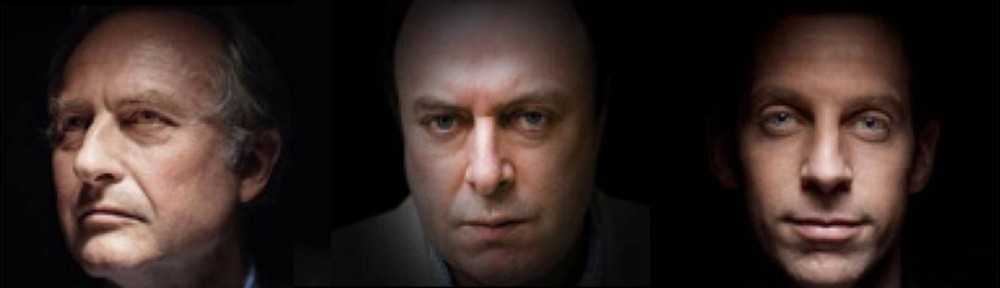
h/t: Matti the Atheist
 h/t: Being Liberal
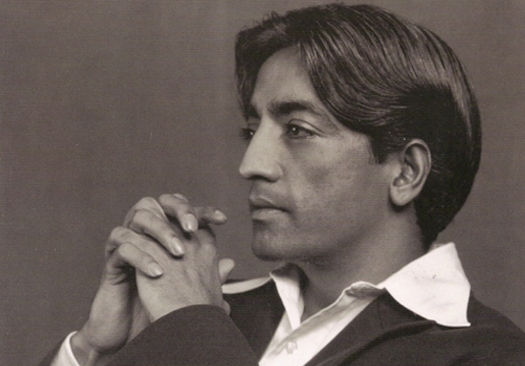 Jiddu Krishnamurti (May 11, 1895 – February 17, 1986)
Indian born speaker and writer on philosophical and spiritual subjects
The division in our lives is the structure of thought, which is the action of the observer who thinks himself separate. He further thinks of himself as the thinker, as something different from his thought. But there can be no thought without the thinker and no thinker without the thought. So the two are really one. He is also the experiencer and, again, he separates himself from the thing he experiences. The observer, the thinker, the experiencer, are not different from the observed, the thought, the experienced. This is not a verbal conclusion. If it is a conclusion then it is another thought which again makes the division between the conclusion and the action which is supposed to follow that conclusion. When the mind sees the reality of this, the division can no longer exist. This is the whole point of what we are saying. All conflict is this battle between the observer and the observed. This is the greatest thing to understand.
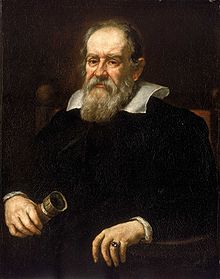 Galileo Galilei (February 15, 1564 – January 8, 1642)
Italian physicist, mathematician, astronomer, and philosopher
who played a major role in the Scientific Revolution.
I do not feel obliged to believe that the same God who has endowed us with sense, reason, and intellect has intended us to forgo their use.
Jiddu Krishnamurti (May 11, 1895 – February 17, 1986)
Indian born speaker and writer on philosophical and spiritual subjects
Fear is one of the greatest problems in life. A mind that is caught in fear lives in confusion, in conflict, and therefore must be violent, distorted and aggressive. It dare not move away from its own patterns of thinking, and this breeds hypocrisy. Until we are free from fear, climb the highest mountain, invent every kind of God, we will always remain in darkness. – Freedom from the Known,40
Jiddu Krishnamurti (May 11, 1895 – February 17, 1986)
Indian born speaker and writer on philosophical and spiritual subjects
And what is yourself, the individual you? I think there is a difference between the human being and the individual. The individual is a local entity, living in a particular country, belonging to a particular culture, particular society, particular religion. The human being is not a local entity. He is everywhere. If the individual merely acts in a particular corner of the vast field of life, then his action is totally unrelated to the whole. So one has to bear in mind that we are talking of the whole not the part, because in the greater the lesser is, but in the lesser the greater is not. The individual is the little conditioned, miserable, frustrated entity, satisfied with his little gods and his little traditions, whereas a human being is concerned with the total welfare, the total misery and total confusion of the world. – Freedom from the Known,13
Society—especially capitalist societies, but also some earlier types such as feudalism—is divided by class, with a minority constituting a ruling class that lives by exploiting the direct producers. Thus, the majority is exploited and hence oppressed.
[…]
. . . [O]ne of capitalists’ favorite ideological ploys: individualism. We are the masters of our own fate, not society and its culture. If we fail, it is our own fault. We simply did not try hard enough or follow the right path. Individualism favors self-blame and a refusal even to look for social causes.
[…]
Enforced subordination calls forth coping reactions and leads to identities grounded in how well we manage to cope.
Examples of this kind of coping include what can be called “the good soldier” and “the sexy woman.” In the former, a person prides him or herself on the ability to demonstrate undying loyalty to a superior. In the latter, a woman prides herself on her ability to manipulate men in a world where men are dominant.
Related articles

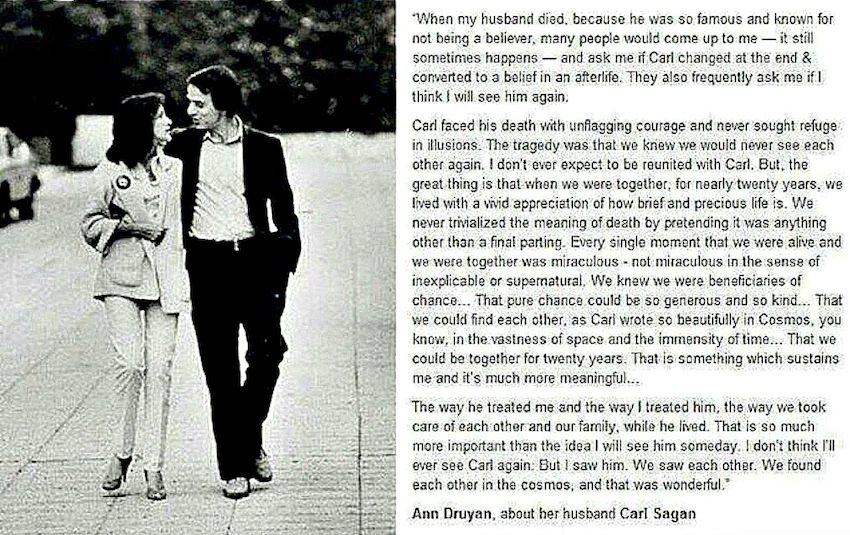


 Always Question Authority