h/t: Planet Atheism
h/t: Our Daily Train
ANTITHEISM: Christopher Hitchens / Christianity / “The Utter Arrogance of Absolute Power”
Reply
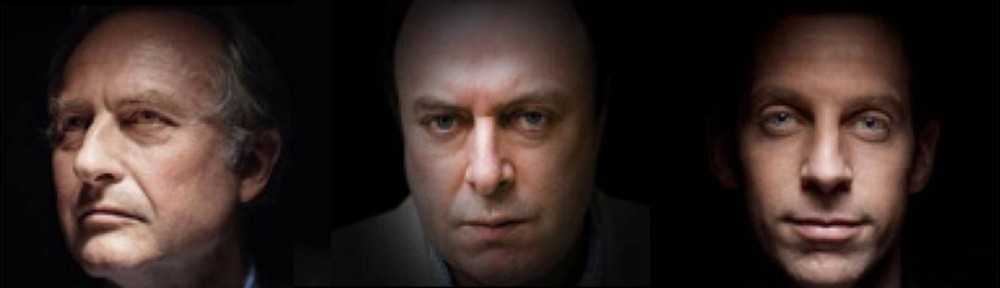
h/t: Planet Atheism
h/t: Our Daily Train
“I’m not even an atheist so much as I am an anti-theist; I not only maintain that all religions are versions of the same untruth, but I hold that the influence of churches, and the effect of religious belief, is positively harmful. Reviewing the false claims of religion I do not wish, as some sentimental agnostics affect to wish, that they were true. I do not envy believers their faith. I am relieved to think that the whole story is a sinister fairy tale; life would be miserable if what the faithful affirmed was actually the case.”
~ Christopher Hitchens
By Madison S. Hughes (07.19.2012)
Religious Privilege: A Nonconscious Ideology
History is paved with the pervasiveness of religious privilege, and in contemporary United States the zeitgeist of religious privilege, especially Christian privilege, is at an historical zenith. Religious privilege has so saturated our society that it is the status quo. To pronounce discontent with this implicit entitlement would be the equivalent of a flailing fish expressing oneself on the bank of the River Styx. A mere mention of the existence of religious privilege ignites a cry of war on “religious freedom” from those of the privileged religious right. Religious privilege is pandemic, and its correlative problems, which range from group divisiveness to genocidal death, are plethoric. In a constitutionally secular society like the United States the privileging of any specific ideology is a threat to its democratic principles, and a trail littered with the crumbs of religious privilege ultimately leads to a theocracy not a democracy. Religious privilege is pervasive and problematic. The first step of problem solving is to identify the problem that the privileging of religion represents, which is that the privileging of any ideology in a democratic society undermines the bedrock of democracy itself. This paper will take the axiomatical first step of problem solving, the ability to identify the problem, and consider a few of the spectres haunting our secular society.
In a predominantly nonreflective consumer culture, of which one may easily argue we are part, it is intellectually undemanding to understand how the existence of religious privilege, and its negative corollary impact, escapes “folks.” In Lewis Schlosser’s 2003 article “Christian Privilege: Breaking a Sacred Taboo,” published in the Journal of Multicultural Counseling and Development, he explains:
One possible explanation for the existence of Christian privilege is the notion of a “nonconscious ideology” (Bem & Bem, 1970, p. 89). Bem and Bem first defined the concept of a nonconscious ideology to describe how implicit beliefs and attitudes are used to maintain the status quo in terms of gender inequality. They used the analogy of a fish and its environment to illustrate their concept of nonconscious ideology. A fish does not know its environment is wet, because that is all it knows and all it has ever experienced. The fish has no idea that anything else exists besides water because it has never had to think about any other possibilities. (Schlosser 47)
The nonreflective folks that constitute the majority of contemporary society are too busy chasing the shiny objects of their next desires to reflect long enough to recognize the nonconscious ideology of religious privilege, for most folk have no idea that anything else exists; however, some salient spectres are not so translucent.
Religious Privilege may be used as a defense to circumvent one’s civic “duty” to country. Richard Dawkins addresses this in his “Undeserved Respect” section of his book The God Delusion:
By far the easiest grounds for gaining conscientious objector status in wartime are religious. You can be a brilliant moral philosopher with a prizewinning doctoral thesis expounding the evils of war, and still be given a hard time by a draft board evaluating your claim to be a conscientious objector. Yet if you say that one or both of your parents is a Quaker you sail through like a breeze, no matter how illiterate you may be on the theory of pacifism or, indeed, Quakerism itself. (Dawkins 21)
Interestingly, it is worth noting that the Republican politician, Richard Milhous Nixon was a Quaker. Although he never saw combat, he did serve in the United States Navy, and did not claim conscientious objector status, but as a Quaker he well could have. Had he done so, this would not have disqualified him from later becoming the 37th President of the United States, and as Commander-in-Chief of the United States Military sending 21,041 non-conscientious objectors to their ultimate deaths in Vietnam (Wiener). Religious privilege is not limited only to those threatened by death on the battlefield, no, it is also reserved for those whose health is threatened here in the Community Colleges of California.
There are various fee waiver programs available to college students. One such program offered in California Community Colleges is the Board of Governor’s Fee Waiver Program (BOGW). This is primarily awarded to those that can prove a financial need based on low-income—not religious privilege. “For eligible California residents, the Board of Governors (BOG) Fee Waiver permits enrollment [tuition] fees to be waived” (BOG). Another fee waiver program available to California Community Colleges students is the Health Fee waiver. “However, provisions in the Education Code . . . exempt students from the health fee who depend exclusively upon prayer for healing in accordance with the teachings of a bona fide religious sect, denomination, or organization” [emphasis added] (Bruckman). To be clear, a struggling college student, in whatever dire circumstance they may be bound, may live with constant hunger pangs wondering from where the next meal is going to come, but because they do not depend exclusively upon prayer for healing must pay a Health Fee. However, this struggling college student’s wealthy classmate, who is not burdened with such unfortunate circumstance, that claims to depend exclusively upon prayer for healing would have his/her Health Fee waived. This is pure, in-your-face religious privilege, and if one were to demand a revocation of such blatant injustice the reactive cry of a “war on religious freedom” would be as predictable as Roman Catholic Bill O’Reilly’s annual cry of the “war on Christmas” coupled with his simultaneous silence on the pandemic of predator priests raping children.
Child rape is considered such a vile act that even among prisoners child rapists are often segregated from the general population for protection of their lives. However, child rape is no so reviled when committed by a Catholic Priest. In fact, religious privilege acts a refuge for the priesthood with total disregard to their victims. In his book, God Is Not Great: How Religion Poisons Everything, Christopher Hitchens implicitly addresses how we, as a nonconscious ideological society, euphemistically allow religious privilege to label Catholic Priests guilty of child rape instead as child abusers:
Again, how shall we reckon the harm done by dirty old men and hysterical spinsters, appointed as clerical guardians to supervise the innocent in orphanages and schools? The Roman Catholic Church in particular is having to answer this question in the most painful of ways, by calculating the monetary value of child abuse in terms of compensation. Billions of dollars have already been awarded, but there is no price put on the generations of boys and girls who were introduced to sex in the most alarming and disgusting ways by those whom they and their parents trusted. “Child abuse” is really a silly and pathetic euphemism for what has been going on: we are talking about the systematic rape and torture of children, positively aided and abetted by a hierarchy which knowingly moved the grossest offenders to parishes where they would be safer. (Hitchens 227)
The fourth estate of our nonconscious ideological society extends its religious privilege not only euphemistically, but quantitatively as well. Recently, this was evident in the national media’s asymmetrical coverage of the “child abuse” verdicts of former Penn State college football coach Jerry Sandusky and U.S. Catholic Priest Monsignor William Lynn.
On Friday, June 22, 2012, Jerry Sandusky, now a household name to many, was convicted of 45 counts of child sexual molestation. A July 16, 2012 Google search of “Jerry Sandusky verdict” yielded a News results total of 9,780, and “Coach Jerry Sandusky verdict” yielded 30,100 News results. A three-fold increase in News results was realized when Jerry Sandusky’s secular title “Coach” was added. Hold that thought.
On that same day, within hours of each other, in a landmark clergy-abuse trial Monsignor William Lynn, a name not even recognized by most fundamental Catholics, was convicted of child endangerment making him the first U.S. church official branded a felon for covering up abuse claims. A July 16, 2012 Google search of “William Lynn verdict” yielded a News results total of 1,540, and “Monsignor William Lynn verdict” yielded 1,440 News results. Not only did the overall News results decline, but also noticeable was that the News results total decreased when William Lynn’s “religious” title “Monsignor” was prefixed to his name.
Religious privilege is cancerous to a secular society. The nonconscious ideology of religious privilege has no place in a democracy, and absolutely no place in a secular society. We have shown how religious privilege can rear its ugly head anywhere from the highest office in the land to the battlefields on which our parents, spouses, and siblings give their lives. Currently, out of undeserved and unjustified “respect” for religious privilege, we are giving credence to the concept of superstition trumping science in the form of prayer for healing to exempt students from paying a health fee in our institutions of higher learning. Finally, and most disturbingly, history has shown that the pandemic of Catholic Priests raping our innocent children reassure religious privilege regarding persecution and prosecution for the heinous serial child rape crimes for which they have committed, and will no doubt continue to commit. Religious privileges must be identified, and not allowed to become a nonconscious ideology.
Works Cited
“BOG Fee Waiver.” CCCApply. California Community Colleges Chancellor’s Office, 2012. Web. 15 July 2012.
Bruckman, Steve. Implementation of AB 982 (Laird). Digital image. California Community College Chancellor’s Office. N.p., n.d. Web. 15 July 2012.
Dawkins, Richard. The God Delusion. New York: Houghton Mifflin, 2006. Print.
Hitchens, Christopher. “Is Religion Child Abuse.” God Is Not Great: How Religion Poisons Everything. 1st ed. New York: Twelve, 2007. 227-28. Print.
Schlosser, Lewis Z. “Christian Privilege: Breaking a Sacred Taboo.” Journal of Multicultural Counseling and Development 31.January (2003): 44-51. Http://wiki.uiowa.edu/download/attachments/39006632/Christian+Privilege.pdf. University of Iowa Wiki Service. Web. June-July 2012.
Wiener, Jon. “Was Nixon Worse?” Truthdig. Zuade Kaufman, 11 Dec. 2006. Web. 15 July 2012.
h/t: Dead-Logic
Related articles
 h/t: Atheism
[…]
Once people start mentioning being an atheist casually, as merely one facet of their lives and not their defining characteristic, you know that it has become mainstream.
In fact, it has reached a stage that I get surprised only when I hear writers and artists and other intellectuals mention that they are religious, even mildly so. I do not explicitly seek out atheist writers, so the fact that I encounter so few religious ones must mean something. At the very least, it may signify that the intellectual class as a whole is abandoning religion.
(2) The popular religion that developed in the USA, especially along the frontier and in the South, was anti-intellectual. Unlike in Italy, where the Catholics have a hierarchy and a trained priesthood, the dominant form of Christianity in the USA comes out of evangelical traditions and ‘revivalism’, where anyone with a spattering of Bible knowledge and a good shouting voice could start a church. This led to a very simplistic, literalist, bible-based theology. The broader education and humanist philosophy of the priests in catholic (and anglican and lutheran) churches in Europe mitigated against this trend and produced a religion which is in some ways more ‘porous’.
(3) More generally, the USA has an anti-intellectual culture. In most of continental Europe people look up to and respect ‘book learning’ and being a civilised, cultured human being. In the USA (in most parts) this would be looked down on – it’s what you DO that matters, how much money you make. This anti-intellectualism means that those who have a rational, scientific view of existence can easily be criticised as being ‘out of touch’ with ‘good honest god-fearing Americans’. (Read in redneck voice): ‘Them danged atheists thinks they is better than us folks, just cos they done got themselves a college edjikatishion’. It’s like the horrible reverse parody of the democratic ethos.
(4) Being part of a protestant church is a major commitment. It’s not something you just do as a social ritual, like catholicism can be. You have to make a choice, profess Jesus, get baptised by immersion, sign the members’ roll, turn up to meetings, sit on committees. This tends to harden the edges of the ‘in-group’ and the ‘out-group’. In a catholic country, everyone (or nearly so) is culturally catholic, even if they do not believe in god or go to church; you can’t be a ‘cultural baptist’ – you are either In or Out (and, according to the Ins, everything Out is evil).
(5) After the second world war, the USA had a massive internal propaganda system designed to attack socialism and the left. Communists were ‘atheists’, Communists were bad and anti-American, ergo atheists were bad and anti-American.
(6) The USA does not have a good welfare system. Indeed, the whole country is based on a sort of individualist myth, where the only reason that one guy is working 70 hours a week and struggling to get by with two minimum wage jobs and no healthcare, while someone sits by their pool and has a private jet, is that the first one is ‘lazy’ (i.e. unfavoured by God – remember, Protestant God Wants You to Work Hard) and the second is ‘hardworking’ (i.e. Blessed by God). This means that: (i) there is a lot of fear – fear of sickness, fear of unemployment, fear of annoying the boss, fear of random economic actions outside your control. Fear drives people into fearful, nasty, exclusive versions of religion – a ‘hunker down’ against ‘the world’; (ii) people need the social network and support provided by a church, because the state provides so little – thus atheists are a threat to people because people are terrified of being convinced by them, having to leave the church, and thus losing their social network and support system.
(7) This is the crucial one – it draws on 1 and 5, but goes beyond them and is vitally relevant today: There is, in the USA, a thing called ‘Christianity’ that has little to do with Christianity as it is generally understood in Europe, or in the longer view of the Christian tradition. It is a heavily nationalistic, militaristic, masculine, authoritarian cult, with Jesus as the Cadillac-Driving All-American Hero who has come to save his Chosen People from Gayness, Socialised Medicine, Arabs and Long Haired Hippies. This might best be called, “Amerireligion”. This was deliberately created after the 1960s by the American right, who wanted a way to stop the changes begun by the Progressive Era and the New Deal and to restore the dominance of the old ruling class. The civil rights and anti-vietnam war era brought it to a head. The right saw an opportunity to appeal to the gut-instincts of the white working class blue collar American male by playing on his prejudices – particularly on matters such as race, alternative lifestyles and the sexual revolution. So there was a deliberate demonisation and vilification of those who were seen as ‘different’ from that red-blooded white-skinned American male ideal – they were ‘liberal hippy tree hugging dirty commie atheist bastards’ – not to be trusted, because they were ‘anti-American’ (when ‘American’ is defined by the hard right). So, basically, American christians hate atheists because their religion is really a sort of tribal nationalism, and they’ve been played for fools by right-wing politicians.
How do you get poor and middle class people to vote for tax cuts for billionaires, constant war, erosion of civil liberties, and destruction of public services? Easy, tell them that if they don’t American Jesus will cry – and then the Gays and the Foreigners and the Nasty Atheists – and all who don’t Love American Jesus will continue to shaft them. Why are they unemployed? Not because NAFTA killed the jobs, but because God angry with America for teaching evolution. It’s the ultimate ‘bait-n-switch’. So what’s the answer to the current economic crisis – the worst in American history since the Great Depression? Is it a massive public investment and job-creation programme like FDR did? No, that would be Communistic Atheism. Instead, we must appease the All-Blessing God of America – by banning pornography!
The level of cognitive dissonance must be overwhelming. Faced with that, no wonder so many American Christians act with rage and hostility to the mere presence of atheists.
It’s sad.
Source: CiderDrinker
Now more than ever, the United States needs to change its laws surrounding religious subsidies. Last year, the state of Florida cut over $1.3 billion from the budget meant for public schools as well as $1.1 billion for police and firefighter pensions. If Florida had collected property taxes on religious institutions, the revenue would have been $2.2 Billion, almost enough to cover both of these budgetary expenses. In fact, the debate over religious tax exemptions has recently been distilled down to one number: 71 billion dollars. That’s the total amount that the government forgoes every year in religious subsidies, and clearly, there are places that this money could be put to use.
h/t: Planet Atheism
One complaint made about some atheist activists is that they are in fact anti-religious and anti-theistic bigots who are just expressing their personal bigotry, not arguing on behalf of atheists’ rights and liberty. There is a legitimate point to be made here, in that generalizing about an entire class of people for the actions of only some members is technically incorrect. What’s missing, though, is an appreciation for how the “silent” majority perpetuate and benefit from injustice.
I don’t think it’s a coincidence that this particular disagreement is not in the least bit new. Liberation and civil rights movements in the past have recognized that there is always a “silent” majority in privileged classes who do not actively oppress or discriminate, but at the same time help perpetuate and benefit from injustice precisely through their silence and inaction. They may not intend this and they may not even be conscious it, but this does not alter their complicity and it is because of this complicity that generalizations are made.
[…]
Generalizations made by a despised and discriminated-against minority cannot harm a privileged and powerful class — this is true whether it’s atheists generalizing about Christians, feminists generalizing about men, gays generalizing about straights, blacks generalizing about whites, etc. Those members of a privileged class who are supposedly giving the rest a bad name are, however, causing real harm to others. Some of that harm is even due to their generalizations about despised and excluded minorities which are made precisely to ensure that the marginalized remain powerless.
When other members of a privileged class — the ones who insist that they “aren’t like that” — expend more resources and worry over the former than the latter, then they are tacitly abetting and complicit in the harm being caused. Atheist generalizations about Christians or religious theists do not lead to any religious believers being excluded from power, being denied equality, or being forced into a second-class status.


 Always Question Authority