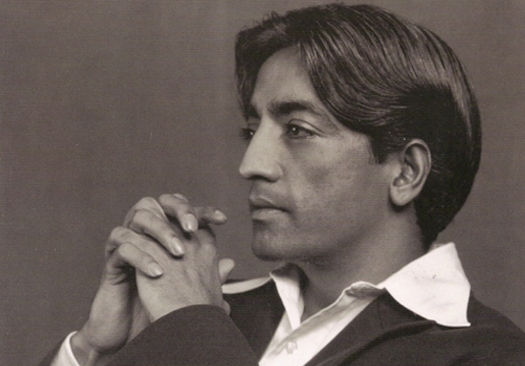
~ Krishnamurti, Freedom from the Known, pp 51-52
Jiddu Krishnamurti (May 11, 1895 – February 17, 1986)
Indian born speaker and writer on philosophical and spiritual subjects
h/t: Tamiem FreeThinker
~ Krishnamurti, Freedom from the Known, pp 51-52
Jiddu Krishnamurti (May 11, 1895 – February 17, 1986)
Indian born speaker and writer on philosophical and spiritual subjects
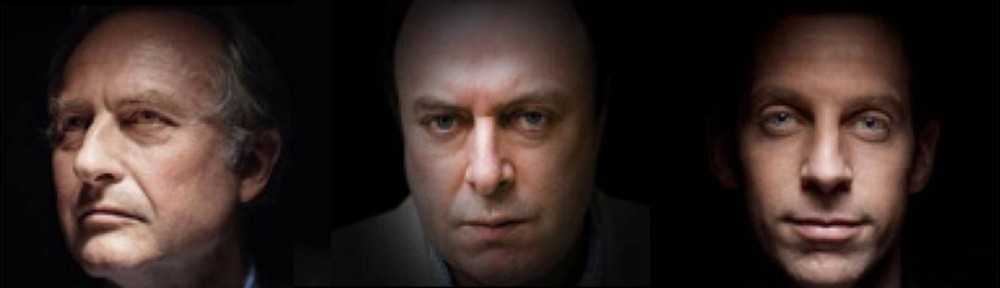
There’s an interesting video making the viral rounds. Bill Maher on his excellent show, Real Time, had on author Sam Harris, actor Ben Affleck, writer Nicholas Kristof, and political operative Michael Steele as guests. The discussion, debate is a better term, was about Islamophobia.
Maher and Harris argued that criticizing Islam is necessary and is not bigotry or discrimination. As is the tendency when accusations of racism and intolerance are flying, the debate got a bit heated.
Affleck said that Harris’s “argument is, ‘You know, black people, they shoot each other'” and “gross and racist.” Kristof said that Maher’s criticism of Islam has “a tinge of how white racists talk about African-Americans and define blacks.”
It is a bit frustrating to watch because the two sides are talking past each other. Maher and Harris are clearly correct. Affleck, Kristal and Steele are making valid points, but not against the arguments Maher and Harris raised.
By Madison S. Hughes (09.19.2014)
My view on suicide. I do not care if you commit suicide; I just don’t! Even if I knew you, I would neither care, nor make any attempt to prevent you from doing so. That is strictly your choice, and yours alone. Suffice it to say, if you did know me, I imagine that I would be quickly crossed off of your Christmas card list with this revelation; however, before you do that, hear me out, then please, cross me off the list anyhow.
A Cosmopolitan view on suicide. The religion of Islam promises seventy-two virgins for the successful act of suicide. Samurai warriors commit harakiri for duty and honor; moreover, Kamikaze pilots did it for glory, and to evade the dishonor of defeat or surrender. Lastly, the Jains defend a person’s right to end his or her own life; for, like the Hindus, they value nonattachment, including nonattachment to one’s temporal body.
The Christian view on suicide. Conversely, the Christian Creator does not directly address suicide in the Bible; nevertheless—for several specious reasons—Christians claim, even for first time offenders, the act of committing suicide to be an unforgivable sin, punishable by eternal damnation. Do the Christians have a corner on the world’s righteous behavior market—history clearly proves otherwise—or is it possible that when one peels back all the layers of the pious onion, one simply finds at the center a core of self-righteous ego? When the Christian claims grave concern for another choosing to take their life, one can’t help but wonder, is it truly out of a genuine concern for the parting, or is it an unrecognized ego’s firm grip on attachment; I submit it is the latter. In the opening paragraph I requested that you cross me off of your Christmas card list. I would rather you keep your money, and spend it on your loved ones. Why? Well, because I care!
Jiddu Krishnamurti (May 11, 1895 – February 17, 1986)
Indian born speaker and writer on philosophical and spiritual subjects
One is afraid to think apart from what has been said by the leaders because one might lose one’s job, be ostracized, excommunicated, or put into a concentration camp. We submit to authority because all of us have this inward demand to be safe, this urge to be secure. So long as we want to be secure in our possessions, in our power, in our thoughts we must have authority, we must be followers; and in that lies the seed of evil, for it invariably leads to the exploitation of man by man. He who would really find out what truth is, what God is, can have no authority, whether of the book, of the government, of the image, or of the priest; he must be totally free of all that. This is very difficult for most of us because it means being insecure, standing completely alone, searching, groping, never being satisfied, never seeking success. But if we seriously experiment with it, then I think we shall find that there is no longer any question of creating or following authority because something else begins to operate which is not a mere verbal statement but an actual fact. The man who is ceaselessly questioning, who has no authority, who does not follow any tradition, any book or teacher, becomes a light unto himself.
– Hamburg 1956, Talk 2