The rewriting of history by the power elite was painfully evident as the nation marked the 10th anniversary of the start of the Iraq War. Some claimed they had opposed the war when they had not. Others among “Bush’s useful idiots” argued that they had merely acted in good faith on the information available; if they had known then what they know now, they assured us, they would have acted differently. This, of course, is false.
[…]
The critique that I and other opponents of war delivered, no matter how well grounded in fact and experience, turned us into objects of scorn by a liberal elite that cravenly wanted to demonstrate its own “patriotism” and “realism” about national security. The liberal class fueled a rabid, irrational hatred of all war critics. Many of us received death threats and lost our jobs, for me one at The New York Times. These liberal warmongers, 10 years later, remain both clueless about their moral bankruptcy and cloyingly sanctimonious. They have the blood of hundreds of thousands of innocents on their hands.
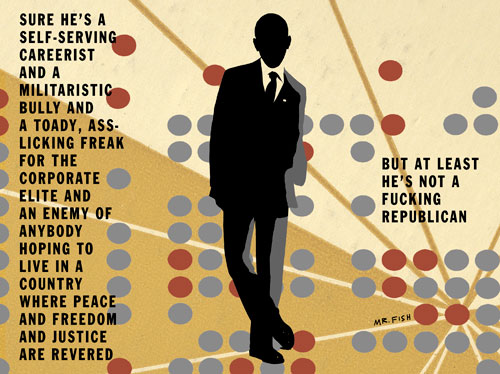
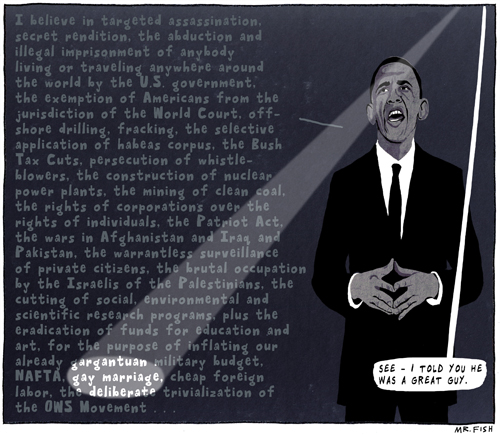
The power elite, especially the liberal elite, has always been willing to sacrifice integrity and truth for power, personal advancement, foundation grants, awards, tenured professorships, columns, book contracts, television appearances, generous lecture fees and social status. They know what they need to say. They know which ideology they have to serve. They know what lies must be told—the biggest being that they take moral stances on issues that aren’t safe and anodyne. They have been at this game a long time. And they will, should their careers require it, happily sell us out again.
[…]
Julien Benda argued in his 1927 book “The Treason of Intellectuals”—“La Trahison des Clercs”—that it is only when we are not in pursuit of practical aims or material advantages that we can serve as a conscience and a corrective. Those who transfer their allegiance to the practical aims of power and material advantage emasculate themselves intellectually and morally.
[…]
“The desire to tell the truth,” wrote Paul Baran, the brilliant Marxist economist and author of “The Political Economy of Growth,” is “only one condition for being an intellectual. The other is courage, readiness to carry on rational inquiry to wherever it may lead … to withstand … comfortable and lucrative conformity.”
INTELLECTUALISM: “The Treason of the Intellectuals” / Chris Hedges
2

 Always Question Authority