 h/t: The Richard Dawkins Foundation for Reason and Science (Official)
DIALECTIC: “The Right to Make an Ass of Yourself”
1
The war on Christmas. The war on marriage. Wars on schools, on prayer, on the sanctity of life – we’ve heard countless times that a culture war rages in America. If you believe the fundamentalists, they’re merely defending themselves against an overwhelming tide of secularist persecution.
But a recent report by the Council for Secular Humanism and the University of Tampa confirms that this persecution is really a myth. In fact, the report estimates that the federal government subsidizes churches to the tune of at least $71 billion per year.
The Washington Post called these numbers a “lowball,” and estimates the real number is probably much higher thanks to local tax subsidies, sales tax subsidies and fund-raising subsidies, among other benefits. When these benefits are considered the number is closer to $82.5 billion per year.
By Madison S. Hughes (06.21.2012)
Atheism, Agnosticism and Antitheism
It is by our beliefs, knowledge and values that we define ourselves, and are judged by others. Many are willing to kill, or be killed for such abstract concepts without even a rudimentary understanding of the abstraction for which they are all too willing to meet their maker. Atheism, agnosticism and antitheism are three commonly misunderstood terms that describe beliefs, knowledge and values respectively. Analytically defining each word will show a direct correlation between each term, and their respective abstract concept for which they describe. It will prove beneficial to any reader’s future conversations, correspondence, or consternations concerning atheism, agnosticism, and antitheism.
Atheism is a term that describes one’s rejection of supernatural belief. Simply put, a theist is one with a belief in a supernatural deity, or deities; while an atheist is one without a belief in a supernatural deity, or deities. The American Atheist organization founded in 1963 by “Madalyn Murray O’Hair, the noted atheist activist, [who] as the result of her successful battle against mandatory school prayer, and Bible recitation” [was responsible for their removal from public schools] defines atheism as follows (About):
Atheism is the lack of belief in a deity, which implies that nothing exists, but natural phenomena (matter), that thought is a property or function of matter, and that death irreversibly and totally terminates individual organic units. This definition means that there are no forces, phenomena, or entities which exist outside of, or apart from physical nature, or which transcend nature, or are “super” natural, nor can there be. Humankind is on its own. (Atheism)
When it comes to a belief in the supernatural one must either be a theist, or an atheist, for no other alternatives are available. This is not a false dilemma. One cannot kind of, sort of believe, but not really. It would be analogous to kind of, sort of being dead; it is not possible. One is either dead or alive. Likewise, one is either a theist or an atheist. In both cases there are no other alternatives available. Atheism is concerned with belief.
Often, because of the negative emotive connotations associated with the word atheist, people will incorrectly use the term agnostic to describe their lack of belief in an intellectually vain attempt to avoid being labeled the pejoratively and socially stigmatic term atheist. It is intellectually dishonest to do so, for “agnosticism is the position of believing that knowledge of the existence or non-existence of god is impossible. . . . The agnostic holds that human knowledge is limited to the natural world, that the mind is incapable of knowledge of the supernatural” (Agnosticism). Agnosticism is not an undecided position concerning belief between a theist, and an atheist. As previously shown theism, and atheism describe belief. One cannot use the term agnostic as a surrogate to describe one’s belief. Agnosticism is concerned with knowledge.
“Antitheism is active opposition to theism. . . . it typically refers to direct opposition to organized religion, or to the belief in any deity” (Antitheism). An antitheist values truth over unity, while it is observable that theists value unity over truth. For example, an antitheist will overtly, and without reservation, claim that anyone who believes in the story of a talking snake is irrational. Conversely, the theists would not concern themselves with the antitheist’s claimed irrationality of a talking snake so long as the unity of their cult, church, or community is maintained.
Most antitheists are so because they “take the view that theism is dangerous or destructive” (Antitheism). Many antitheists are strident in their opposition to theism. The late Christopher Hitchens who in his 2001 book Letters to a Young Contrarian, wrote, “I hold that the influence of churches, and the effect of religious belief, is positively harmful” (Antitheism). Antitheists look at the negative effect of religious belief on society. They believe that the influence of the churches is unnecessary for positive effects to be made in society. Secular institutions such as the Red Cross, Doctors without Borders, Planned Parenthood, Amnesty International, PlanUSA, etc. do so demonstratively with neither a need for the promise of salvation, nor the fear of damnation. Antitheism is concerned with values.
The metaphysical misunderstanding of abstract concepts such as belief, knowledge and values need not continue to thrive in a culture of intolerance. A simple analytical understanding of the definitions of atheism, agnosticism, and antitheism clearly shows their respective correlation to belief, knowledge and values respectively.
Atheism is concerned with belief.
Agnosticism is concerned with knowledge.
Antitheism is concerned with values.
Works Cited
“About.” American Atheists. Ed. Admin. American Atheists, 15 Feb. 2012. Web. 18 June 2012.
“Agnosticism.” The Skeptic’s Dictionary. Ed. Robert T. Carroll. The Skeptic’s Dictionary, 19 May 2012. Web. 19 June 2012.
“Antitheism.” Wikipedia. Wikimedia Foundation, 07 June 2012. Web. 19 June 2012.
“Atheism.” American Atheists. Ed. Admin. American Atheists, 15 Feb. 2012. Web. 18 June 2012.
Related articles
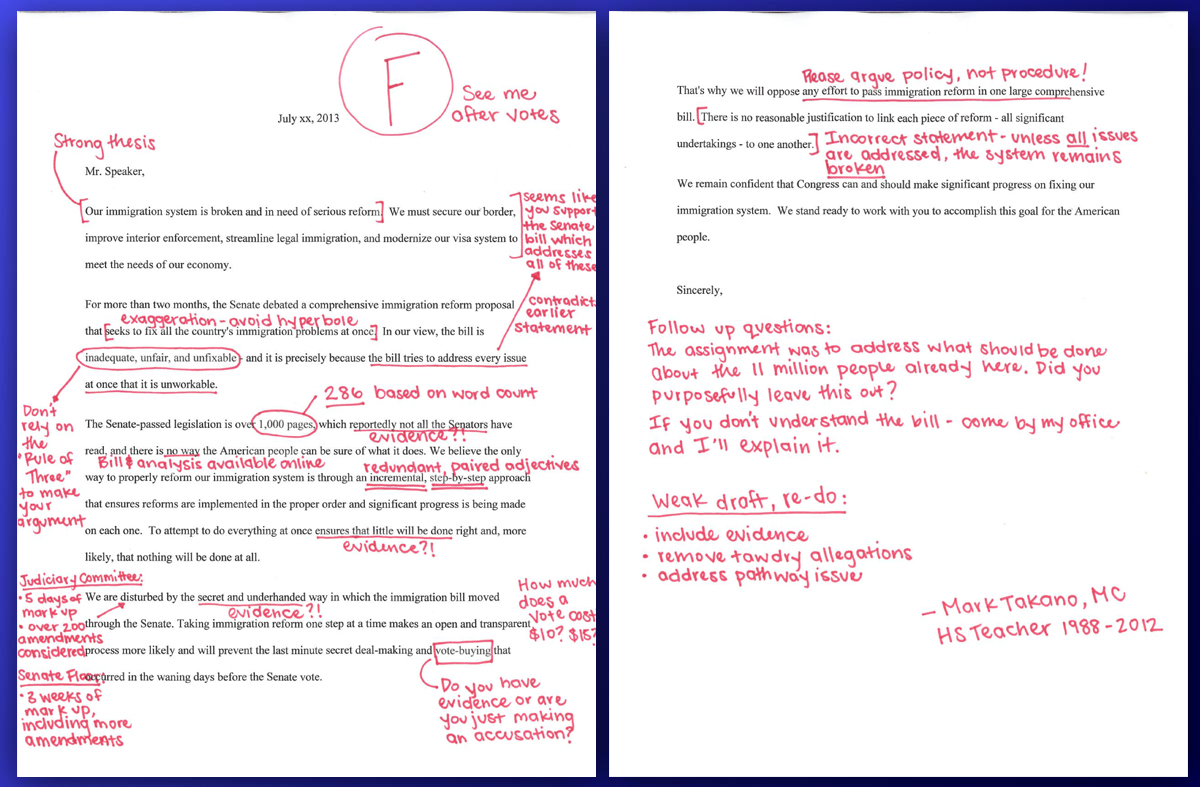 Click on image to enlarge.
h/t: The Huffington Post
h/t: scpr.org
As it turns out, the reason most Christians are so difficult to budge from their religious views is because they know so little about their religion. This may seem counter-intuitive, but this is the essence of the Dunning-Kruger Effect, discovered and described by psychologists David Dunning and Justin Kruger, both then of Cornell University, in a 1999 paper titled: “Unskilled and Unaware of It: How Difficulties in Recognizing One’s Own Incompetence Lead to Inflated Self-Assessments.”
The D-K Effect was frequently suggested historically, notably by Charles Darwin –
“Ignorance more frequently begets confidence than does knowledge”
– and Bertrand Russell –
“One of the painful things about our time is that those who feel certainty are stupid, and those with any imagination and understanding are filled with doubt and indecision.”
In a series of studies, Dunning and Kruger found this pattern across many skills, including reading comprehension, operating a motor vehicle, and playing chess or tennis. Apparently, those displaying the D-K Effect are so lacking in competence that they are even unaware of their incompetence, thus they tend to overestimate their level of skill and fail to recognize skill in others. Conversely, people with high levels of skill or knowledge tend to underestimate their standing relative to others. It seems that the more one knows, the more he realizes how little he knows.
Interestingly, but not surprisingly, Dunning and Kruger also found the Effect operative in broad tests of logical reasoning skills.
The D-K Effect goes a long way toward explaining why those with the least competence in their religion are the most sure they are right about it. Similarly, those who know the least about science are the most certain that it has nothing important to say about how the world works. And, in general, those who are the least adept at critical thinking are the most confident they have the answers.
By Madison S. Hughes (06.05.2013)

God is dead!
“Being ‘a Nietzschean’ is no more possible than following someone else’s orders
to be free! After all, it was Nietzsche himself who insisted that ‘Those who
understand me, understand that I can have no disciples’” (Soccio, 477).
This essay will embrace Nietzsche’s philosophy because he proposed that God is dead, life is meaningless, and fate trumps faith. Ultimately, he provided an alternative philosophy of life that is life affirming. The philosophy of Friedrich Nietzsche (1844-1900) has many distracters, for a myriad of reasons. Undoubtedly, most of those in opposition to Nietzsche’s philosophy base their objections on a misperceived threat to their firmly indoctrinated religious beliefs. While this essay may not dissuade those distracters from their religious beliefs, for that is not its purpose, it may help clarify a few of their misperceptions. To illustrate, we begin with one of philosophy’s most contentious, yet misunderstood quotes.
Nietzsche first proposed that God is dead in his 1882 book The Gay Science when he declared,
‘God is dead. God remains dead. And we have killed him.’ By this Nietzsche means that society no longer has a use for God; the belief does not in any way help the survival of the species, rather it hinders. (Jackson 56)
Clearly we cannot hold Nietzsche solely responsible for God’s death, nay; Nietzsche was more like a messenger. “Nietzsche claimed he was the first to have “discovered” the death of God. In part, he meant that the idea of God has lost its full creative force, its full power” (Soccio, 468). Recall that Nietzsche witnessed the world through the great transformation of a rural agrarian society rapidly morphing into vast urban sprawls caused by the industrial revolution. He was born less than fifty years after great minds of the scientific revolution nearly liberated humanity from the clench of the Church in the 17th and 18th centuries. While Nietzsche and other great minds of his day could see the dethronement of God before their eyes,
[t]he full extent of the dethronement of God is not yet felt by the great masses, who still believe that they believe in God. Yet if we dig deep into our own psyches, Nietzsche prophesied, we will discover that we no longer have ultimate faith in God: Our true faith is in scientific and technological progress. (468)
“And even though some of us may sense that the old religions are dead and dying, [many] remain unable to face the consequences of life without God” (469).
While the conviction of Supernatural belief provides many with inner comfort, the external Cosmos is not privy to such conviction, and, like it or not, the universe lacks objective meaning and purpose. “Copernicus and Galileo had forever changed our sense of scale: The earth is a tiny, virtually invisible speck in a massive, purposeless universe. ‘What are we doing when we unchained the earth from the sun’” (469)? What’s more, “Darwin had forever altered our sense of ourselves as God’s special creation. The new image of merely human beings is ignoble: We are but one species among millions struggling to survive, descendants of some primordial ooze” (469). These astronomic, and evolutionary biological discoveries led many to a great sense of emptiness.
According to Nietzsche, the death of God leads to nihilism. From the Latin word for ‘nothing,’ nihilism refers to the belief that the universe lacks objective meaning and purpose. . . . Nietzsche predicted that nihilism would be the wave of the future (our present). He predicted that as more and more people perceive religious values to be empty and science as having no meaning or purpose to offer us, a sense of emptiness would initially prevail: It all amounts to nothing. Life is a cosmic accident. There is no Supernatural order; no divinely or rationally ordained goal. (470)
One must be careful not to mistake Nietzsche as a nihilist. He is saying that both Supernatural belief, and superficial values imposed by the Church have proven only to shackle humanity’s mind, and as time goes on will be shown to be fatuous. Nietzsche, like his pessimistic predecessor, Arthur Schopenhauer, had a great appreciation for the aesthetics. Many of us agree, and are quite comfortable with the fact, that the universe lacks objective meaning and purpose; however, the masses are not so content with these facts, and most require faith and external authority to get them through the human condition. Nietzsche offers a viable alternative approach to life for those seeking meaning in a postmodern world.
In the infancy of humanity, the benighted masses relied on faith to provide solace for the unexplainable and uncomfortable realities of the human condition. Humankind has evolved from its insipid infancy to the adolescent age of postmodernism. However, this maturity is not without its price, for it requires that we, as individuals, now take individual responsibility for our own existence. Nietzsche expressed this transition from faith to fate when he stated:
In the absence of God . . . we must redeem ourselves with the sacred Yes to life expressed through amor fati, the love of our specific fate expressed as joyous affirmation and delight that everything is exactly as and what it is. (476)
In his 1882 comment titled “For the New Year,” Nietzsche expressed amor fati quite eloquently when he penned,
Amor fati: may that be my love from now on! I want to wage war against the ugly. I do not want to accuse, I do not want even to accuse the accusers. May looking away be my only form of negation! And, in all: I want to be at all times hereafter only an affirmer. (478)
“Nietzsche saw nihilism as a positive affirmation of life, to be freed of the burden of hope in an afterlife, in salvation. You should love your fate without the need of fictions and false securities to comfort you” (Jackson 103).
Since God is dead, life is meaningless, and fate trumps faith, it is clear that an alternative philosophy of life is necessary, and Nietzsche provided an alternative philosophy of life that is life affirming. Surely Nietzsche distracters have not been dissuaded from their religious beliefs; however, maybe, just maybe, a few of their misperceptions have been clarified.
“Inasmuch as at all times, as long as there have been human beings, there have
been herds of men (clans, communities, tribes, people, states, churches) and
always a great many people who obeyed, compared with the small number
of those commanding . . . it may fairly be assumed that the need for
[herding together] is now innate in the average man. . . .”
~ Friedrich Nietzsche
Works Cited
Jackson, Roy. Teach Yourself Nietzsche. First ed. United States: McGraw-Hill, 2008. Print.
Soccio, Douglas J. Archetypes of Wisdom: An Introduction to Philosophy. Seventh ed. United States: Wadsworth, 2010. Print.
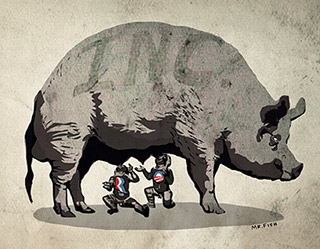
The November election is not a battle between Republicans and Democrats. It is not a battle between Barack Obama and Mitt Romney. It is a battle between the corporate state and us. . . .
[…]
All the major correctives to American democracy have come through movements and third parties that have operated outside the mainstream. Few achieved formal positions of power. These movements built enough momentum and popular support, always in the face of fierce opposition, to force the power elite to respond to their concerns. Such developments, along with the courage to defy the political charade in the voting booth, offer the only hope of saving us from Wall Street predators, the assault on the ecosystem by the fossil fuel industry, the rise of the security and surveillance state and the dramatic erosion of our civil liberties.
“The most common way people give up their power is by thinking they don’t have any,” Alice Walker writes.
It was the Liberty Party that first fought slavery. It was the Prohibition and Socialist parties, along with the Suffragists, that began the fight for the vote for women and made possible the 19th Amendment. It was the Socialist Party, along with radical labor unions, that first battled against child labor and made possible the 40-hour workweek. It was the organizing of the Populist Party that gave us the Immigration Act of 1924 along with a “progressive” tax system. And it was the Socialists who battled for unemployment benefits, leading the way to the Social Security Act of 1935. No one in the ruling elite, including Franklin Roosevelt, would have passed this legislation without pressure from the outside.
Related articles
- What’s wrong with lesser evilism (dandelionsalad.wordpress.com)

In an innovative interdisciplinary study, neurobiological experts, radiologists and humanities scholars are working together to explore the relationship between reading, attention and distraction – by reading Jane Austen.
Surprising preliminary results reveal a dramatic and unexpected increase in blood flow to regions of the brain beyond those responsible for “executive function,” areas which would normally be associated with paying close attention to a task, such as reading, said Natalie Phillips, the literary scholar leading the project.
[…]
Pioneering in a number of respects, her research is “one of the first fMRI experiments to study how our brains respond to literature,” Phillips said, as well as the first to consider “how cognition is shaped not just by what we read, but how we read it.”
Critical reading of humanities-oriented texts is recognized for fostering analytical thought, but if such results hold across subjects, Phillips said it would suggest “it’s not only what we read – but thinking rigorously about it that’s of value, and that literary study provides a truly valuable exercise of people’s brains.”
It seems like this election season “religious liberty” is a hot topic. Rumors of its demise are all around, as are politicians who want to make sure that you know they will never do anything to intrude upon it.
[…]
Quick Questions.” Just pick “A” or “B” for each question.
1. My religious liberty is at risk because:
A) I am not allowed to go to a religious service of my own choosing.
B) Others are allowed to go to religious services of their own choosing.2. My religious liberty is at risk because:
A) I am not allowed to marry the person I love legally, even though my religious community blesses my marriage.
B) Some states refuse to enforce my own particular religious beliefs on marriage on those two guys in line down at the courthouse.3. My religious liberty is at risk because:
A) I am being forced to use birth control.
B) I am unable to force others to not use birth control.[…]
10. My religious liberty is at risk because:
A) I am not allowed to teach my children the creation stories of our faith at home.
B) Public school science classes are teaching science.



 Always Question Authority